


Staggered Renewal Planting
Sow or plant a few new clumps every 2–3 years in nearby spots so flowering remains dense as older plants naturally decline after several seasons.

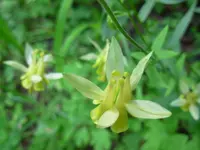
Aquilegia flavescens, commonly called yellow columbine, is a hardy perennial wildflower from mountain regions of western North America. It typically grows in clumps with airy, branching stems and soft, fernlike foliage.
The nodding, bell-shaped yellow flowers have long spurs that attract bees, butterflies, and hummingbirds. Plants usually form loose colonies in meadows, open woods, and rocky slopes.
Aquilegia flavescens adapts well to cooler climates and is generally easy to grow if given light, well-drained soil and consistent moisture. Gardeners who learn how to care for yellow columbine often find it reliable for naturalistic borders and wildlife-friendly plantings.

Care Difficulty
Moderate Care

Light Preference
Partial Sun

Water Requirements
Moderate Water

Temperature Preference
Cold Hardy

Hardiness Zone
3–8

Soil Texture
Loamy, Sandy, Rocky

Soil pH
Acidic (5.5–6.5), Slightly acidic (6.5–7.0)

Soil Drainage
Moist but well-drained

Fertilization
Minimal (feed rarely)
Scan your plant to receive care tips personalized for your specific plant
Available on iOS and Android
This mountain perennial prefers cool, bright conditions with some protection from harsh midday sun.
This species prefers consistently moist, well-drained soil rather than extremes of drought or saturation.
This hardy perennial is adapted to cool summer temperatures and cold winters typical of mountain regions.
Aquilegia flavescens handles a wide humidity range and does not usually need special humidity management.
Aquilegia flavescens prefers cool, moist, well‑drained, humus‑rich soil.
This species can grow in containers for several years if the setup manages moisture and root depth carefully.
This mountain perennial is light-feeding, so fertilizer supports bloom quality but is not essential in rich soils.
Thoughtful pruning keeps Aquilegia flavescens compact, healthy, and flowering well.
This species is more often transplanted in the garden than grown long term in containers, due to its taproot and preference for stable sites.
Reproduction of this columbine is most practical from seeds, as mature plants dislike heavy disturbance.
This species is cold hardy and usually needs minimal winter care in the ground across most temperate climates.

Plant Health Check
Not sure what's wrong with your plant? Check your plant's health inside the app.
This species is native to subalpine and alpine meadows of western North America and is especially common between roughly 1,800–3,000 m, where it thrives in cool summers and long winters.
Although known for its soft yellow flowers, wild populations often show pale cream, pink-tinged, or slightly bicolored blooms, reflecting natural genetic variation within the species.
Its relatively short, slightly curved nectar spurs are well matched to bumblebees and other long-tongued bees, illustrating a classic example of pollinator-driven flower shape evolution.

This columbine frequently hybridizes with nearby Aquilegia species in the wild, producing natural swarms of intermediate plants that have been used by botanists to study how pollinators and elevation gradients drive columbine evolution.
This species is highly attractive to hummingbirds, bumblebees, and various solitary bees, which seek its nectar and pollen. Planting several together can help support local pollinator populations and improve fruit set in nearby flowering plants.
Keep your plants happy and healthy with plant identification, disease detection, and easy care guidance.

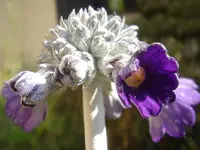
round-headed Himalayan primrose
Primula capitata
 POPULAR
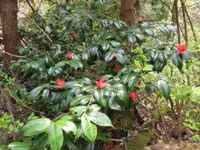
Japanese camellia
Camellia japonica
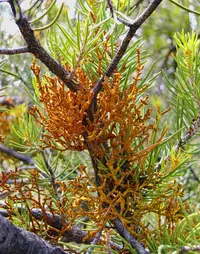
pinyon dwarf mistletoe
Arceuthobium divaricatum
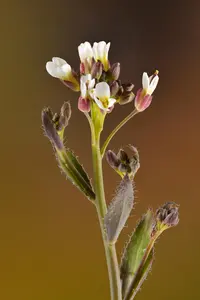
hairy rockcress
Arabis hirsuta
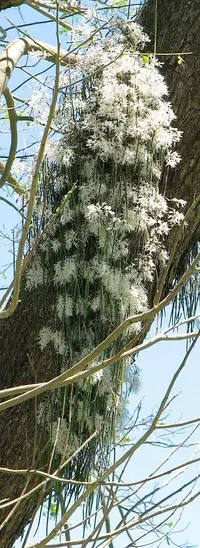
Thin Pencil Orchid
Dendrobium teretifolium
 POPULAR
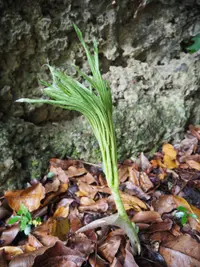
Amorphophallus henryi
Amorphophallus henryi
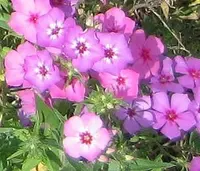
annual phlox
Phlox drummondii
Dendrobium fractiflexum
Dendrobium fractiflexum