


Host selection
Establish this parasite only on healthy, established pinyon pines with good vigor, since weak hosts decline quickly and cannot support long-term mistletoe growth.

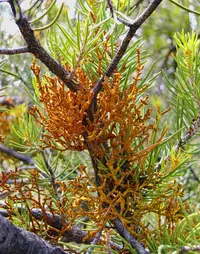
Pinyon dwarf mistletoe, Arceuthobium divaricatum, is a tiny parasitic flowering plant that lives on pinyon pine branches rather than in soil. It forms short, yellow‑green to orange shoots that emerge from swollen areas on the host’s twigs, giving an unusual, broomed appearance to affected branches.
This species occurs mainly in dry pine woodlands of the southwestern United States and northern Mexico. It is highly specialized and depends on its host trees for water and nutrients, which makes it difficult to cultivate or care for pinyon dwarf mistletoe in typical garden or indoor settings.

Care Difficulty
Hard Care

Light Preference
Full Sun

Water Requirements
Low Water

Temperature Preference
Cold Hardy

Hardiness Zone
4–8

Soil Texture
Sandy, Loamy, Rocky

Soil pH
Slightly acidic (6.5–7.0), Neutral (7.0)

Soil Drainage
Well-drained

Fertilization
Minimal (feed rarely)
Scan your plant to receive care tips personalized for your specific plant
Available on iOS and Android
This parasitic species relies on host pinyon pine exposure, so light needs follow the host tree rather than the mistletoe itself.
Water needs are entirely linked to the host pinyon pine, since Arceuthobium divaricatum taps host xylem rather than its own roots.
This species is adapted to the temperature regime of high-desert and montane pinyon pine habitats.
Humidity is not a significant factor for Arceuthobium divaricatum, which is a parasitic plant living on pinyon pine tissues rather than in ambient air moisture.
Soil conditions mainly matter for the host tree, since this species is a stem parasite that taps into host tissues rather than soil.
This species is not suitable for container growing because it relies on living pinyon hosts and cannot complete its life cycle in an isolated pot.
This parasitic species relies on its pinyon host for nutrients and does not benefit from direct fertilization.
Pruning focuses on managing host tree health rather than shaping Arceuthobium divaricatum itself.
This mistletoe is not suited to container culture, so management focuses on transplanting or managing the host tree instead.
Intentional propagation is generally avoided because this parasitic plant can harm pinyon hosts and surrounding trees.
This species and its pinyon hosts are naturally cold hardy in their native range and usually need no special winter care.

Plant Health Check
Not sure what's wrong with your plant? Check your plant's health inside the app.
This dwarf mistletoe is specialized primarily on pinyon pines (Pinus edulis and close relatives), and does not typically infect the wider range of conifers that many other Arceuthobium species can parasitize.
The plant produces only small, reduced shoots above the bark, while most of its body remains embedded in the host’s tissues, drawing water and nutrients directly from the pinyon tree.
It is native to high-elevation pinyon–juniper woodlands of the southwestern United States, where it plays a documented role in deforming and sometimes killing local pinyon pine populations.

This species is one of the dwarf mistletoes that use explosive seed discharge, forcibly shooting sticky seeds several meters so they can adhere to nearby pinyon pine branches and establish new infections.
This species spreads very aggressively on pinyon pines. Seeds are explosively discharged and stick to nearby branches, where they germinate and penetrate host tissues, gradually weakening and deforming trees if not monitored and removed during forestry management.
Keep your plants happy and healthy with plant identification, disease detection, and easy care guidance.

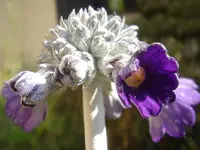
round-headed Himalayan primrose
Primula capitata
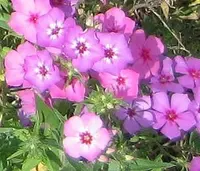
annual phlox
Phlox drummondii
 POPULAR
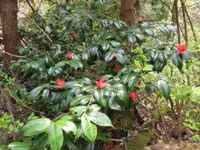
Japanese camellia
Camellia japonica
Saharan Rattlepod
Crotalaria saharae
hairy rockcress
Arabis hirsuta
Dendrobium fractiflexum
Dendrobium fractiflexum
Thin Pencil Orchid
Dendrobium teretifolium
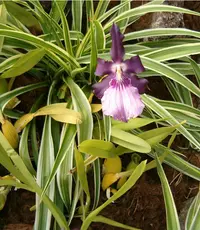
Miltonia moreliana
Miltonia moreliana