Saharan Rattlepod Care (Crotalaria saharae)

About Saharan Rattlepod

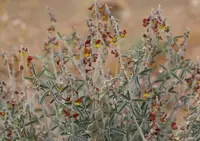
Saharan rattlepod, Crotalaria saharae, is a small, drought-adapted shrub from arid North African regions. It belongs to the legume family and often grows in poor, sandy soils. The plant typically forms a low, branching mound with narrow leaves and yellow pea-like flowers, followed by inflated seed pods that dry and rattle in the wind. Its slow, compact growth habit makes it interesting for dry gardens and specialized collections.

This species is adapted to intense sun, low humidity, and minimal rainfall, so it dislikes consistently wet or heavy soils. Understanding how to care for Saharan Rattlepod starts with mimicking its native dry, open habitat as closely as possible.

Main Plant Requirements

Care Difficulty

Moderate Care

Light Preference

Full Sun

Water Requirements

Low Water

Temperature Preference

Warm Climate

Hardiness Zone

9–11

Soil Texture

Sandy, Loamy, Rocky

Soil pH

Slightly acidic (6.5–7.0), Neutral (7.0)

Soil Drainage

Well-drained

Fertilization

Minimal (feed rarely)

Get Personalized Care Plan

Scan your plant to receive care tips personalized for your specific plant

Available on iOS and Android

How to Care for the Saharan Rattlepod

This desert legume thrives in strong sun but benefits from some protection during the hottest hours in mild to hot climates.

  • Provide 6–8 hours of direct sun daily; full sun in the morning with light afternoon shade suits most sites.
  • Tolerates open, all-day sun in dry, breezy conditions, but leaves may scorch in still, reflected heat near walls or paving.
  • In cooler seasons, more direct light supports compact growth of Saharan Rattlepod, while prolonged shade causes lanky stems and poor flowering.

This drought-adapted shrub prefers infrequent, deep watering and fast-draining soil.

  • Allow the top 5–8 cm of soil to dry fully before watering; in arid climates this may mean long gaps between waterings.
  • Use very free-draining, sandy or gravelly soil so excess water runs off quickly, reducing root-rot risk in Crotalaria saharae.
  • In cooler seasons and overcast periods, cut watering sharply; yellowing, soft foliage suggests overwatering, while dull, crisping leaves suggest underwatering.

This species is adapted to hot, dry regions and needs warm conditions for best performance.

  • Aim for 70–90°F (21–32°C) during active growth; plants remain functional up to about 100°F (38°C) if soil is not waterlogged.
  • Avoid frost; growth stops below about 50°F (10°C), and foliage or young shoots may be damaged at 32°F (0°C) and lower.
  • In regions with cool winters, position plants in the warmest, sunniest microclimate to extend the growing season and support stable Crotalaria saharae care.

This desert legume prefers dry air and does not need extra humidity.

  • Target 20–40% relative humidity, similar to arid indoor air or outdoor desert-edge conditions.
  • Saharan Rattlepod tolerates very dry air but may show humidity stress as soft, overly lush growth in persistently humid spaces.
  • If grown in a damp climate, increase air movement with a fan or open window and space plants apart to reduce leaf wetness.

This species favors lean, very well-drained, sandy soil that mimics desert-edge conditions.

  • Use a mix of roughly 60–70% coarse sand or grit with 30–40% low-organic potting mix or loam to keep it fast-draining.
  • Ensure water runs through in seconds and the surface dries quickly; standing water or prolonged wetness around the roots promotes rot.
  • Aim for slightly acidic to neutral pH, around 6.0–7.2, which supports nutrient availability without encouraging excessive foliage at the expense of flowers.
  • To improve aeration for Crotalaria saharae, add perlite or fine gravel and avoid dense composts, high-peat mixes, or clay-heavy garden soil.

This plant can be grown in containers if drainage and root space are managed carefully.

  • Choose a deep, narrow pot that allows a strong taproot to develop without circling, which supports better drought tolerance.
  • Select a heavier clay or ceramic container outdoors to prevent tall, branching stems from tipping the pot in strong wind.
  • Elevate the pot on feet or bricks so drainage holes never sit in collected runoff, keeping the root zone sharply drained.

This desert-adapted shrub needs minimal feeding, so keep fertilization light to avoid lush, weak growth.

  • Use a low-dose balanced fertilizer (for example 5-5-5) or a thin layer of compost in spring for Saharan Rattlepod grown in poor, sandy soil.
  • Feed once at the start of the warm growing season; avoid multiple applications in fertile ground.
  • Apply at half the manufacturer’s recommended strength to prevent salt buildup in the root zone.
  • Do not fertilize in winter or during dormancy, when growth is very slow.

Pruning Crotalaria saharae is mainly corrective, helping maintain a sound framework and healthy flowering wood.

  • Carry out light pruning in late winter or very early spring before strong new growth starts.
  • Remove dead, diseased, crossing, or inward-growing stems with clean, sharp hand pruners.
  • Shorten overly long shoots to encourage a bushier shape and better flower display.
  • Disinfect blades between plants to limit the spread of fungal and bacterial problems.

This species is usually grown in the ground, so transplanting young plants correctly matters more than frequent repotting.

  • Transplant in late winter to early spring when temperatures are mild and soil is workable.
  • Look for slow growth, roots circling the pot, or soil drying very fast as signs a potted plant needs a larger container.
  • Move up only 1 pot size, using a sharply drained, sandy mix to limit waterlogging stress on roots.
  • Water thoroughly after transplanting, then keep soil just lightly moist until new growth shows that roots have re-established.

Crotalaria saharae is most often propagated from seed, which suits its natural life cycle and arid-habitat adaptation.

  • Sow fresh seed in late winter to mid-spring for best germination and strong seedling growth.
  • Scarify the hard seed coat lightly with sandpaper, then soak 6–12 hours to improve water uptake.
  • Use a free-draining sandy mix, keep temperatures around 68–75°F, and maintain only light, even moisture.
  • Provide bright light and good air movement; thin or transplant seedlings once true leaves appear.

In mild, dry climates this shrub is relatively cold tolerant and usually needs only modest winter attention.

  • Tolerates light frost but may suffer damage if temperatures drop well below freezing for extended periods.
  • Apply a 5–8 cm layer of dry, coarse mulch around the root zone in late fall, keeping it off the stems.
  • In colder regions, grow in containers and move plants to a bright, frost-free spot for winter.

Care Tips

Root-zone mulching

Apply a 2–3 cm layer of coarse mineral mulch such as gravel or decomposed granite around the root zone to reduce soil temperature and evaporation while keeping the stem base itself bare and dry to prevent rot.

Low-input staking

In windy sites, use low, discreet loop-stakes or small shrub rings to support young stems until they lignify, avoiding tight ties that cut into the soft tissue.

Targeted pinching

Lightly pinch back the tips of very young shoots once or twice early in the growing season to encourage a bushier habit without pushing the plant into excessively lush, weak growth.

Dry-climate pest checks

Inspect stems and leaf undersides every few weeks for spider mites and scale, using a hand lens if possible, and treat early with a firm water spray or horticultural soap rather than waiting for visible decline.

Seed pod management

If self-sowing is not desired, remove rattling mature pods before they split, but leave a small number on well-established plants if you want to collect seed for growing Saharan Rattlepod in new areas of the garden.

Common Pests and Diseases

Cowpea aphid

This pest commonly colonizes young shoots and flower buds, sucking sap and causing curling, yellowing, and sticky honeydew that can attract sooty mold. Infestations are more frequent on plants grown with excess nitrogen or in sheltered, low-airflow spots.

Solution

Prune off heavily infested tips, then wash remaining stems and leaves with a strong jet of water to dislodge aphids. If populations persist, apply insecticidal soap or a light horticultural oil, repeating every 5–7 days until new growth appears clean, and reduce high-nitrogen fertilization to make plants less attractive.

Leaf-mining flies

These insects create winding, pale tunnels inside the leaves as larvae feed between upper and lower leaf surfaces. Symptoms include blotchy or serpentine mines that may cause premature leaf drop in severe cases.

Solution

Remove and destroy mined leaves as soon as damage is noticed to break the life cycle. For continued activity, use sticky traps to monitor adult flies and apply a systemic insecticide labeled for leaf miners only if damage is extensive and cultural control is not sufficient.

Fusarium wilt

This disease is caused by soilborne Fusarium fungi and leads to gradual yellowing, one-sided wilting, and eventual collapse of stems, often starting on a single branch. Symptoms include brown discoloration in the stem’s vascular tissue when cut open.

Solution

Remove and destroy affected plants including roots, and avoid replanting Crotalaria in the same soil for several years. Improve drainage, avoid overwatering, and use clean, disease-free seed or nursery stock to reduce the risk of infection when growing Saharan Rattlepod.

Powdery mildew

This disease appears as a white, powdery coating on leaves and stems, leading to distortion, reduced flowering, and premature leaf drop in humid, crowded plantings. Symptoms include dull, grayish patches that spread over time, especially in partial shade.

Solution

Increase spacing and airflow, avoid overhead watering, and remove the most affected leaves to reduce spore load. If needed, apply a sulfur-based or potassium bicarbonate fungicide according to label directions, treating at the first sign of the white coating to keep it from spreading.

Interesting Facts

Seed pod rattling

The mature pods of this species dry to a hard shell with loose seeds inside that rattle in the wind, a trait that inspired the common name Saharan rattlepod and may help startle small herbivores or attract dispersal agents.

Desert-adapted foliage

Its small, often narrow leaves reduce surface area and water loss, an adaptation to arid Saharan habitats where evaporation pressure and solar radiation are high.

Soil nitrogen enrichment

Like other legumes, it hosts nitrogen-fixing bacteria in root nodules, allowing it to grow on poor sandy soils while gradually enriching the surrounding substrate with bioavailable nitrogen.

FAQs about Saharan Rattlepod

This desert legume is very attractive to bees and various solitary wasps, which visit its yellow flowers for nectar and pollen. Butterflies may visit occasionally, but bees are the main pollinators in most gardens.

Grow Healthy Plants with Botan Care

Keep your plants happy and healthy with plant identification, disease detection, and easy care guidance.

Botan plant care app — identify plants on mobile

Explore More Plants