Cool root zone
In warmer regions, mulch lightly with fine grit or sharp sand around the crown to keep the root zone cool and dry on the surface while allowing moisture to reach deeper roots.

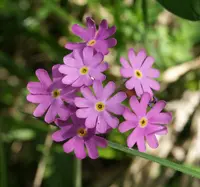
Bird's-eye primrose, Primula farinosa, is a small perennial from cool, damp habitats such as alpine meadows, fens, and wet grasslands in northern and central Europe. It forms low rosettes of farinose, or powder-dusted, leaves with slender stems topped by delicate pink to lilac flowers with yellow eyes.
The plant prefers consistently moist, lime-rich soils and cool conditions, which can make it more challenging in warmer or very dry gardens. It suits rock gardens, moist beds, and specialized collections where its need for steady moisture and good drainage can be met. Understanding these natural conditions helps guide how to care for Bird's-eye Primrose in cultivation.

Care Difficulty
Hard Care

Light Preference
Partial Shade

Water Requirements
Keep Soil Moist

Temperature Preference
Cold Hardy

Hardiness Zone
3–7

Soil Texture
Loamy, Silty, Peaty

Soil pH
Acidic (5.5–6.5), Slightly acidic (6.5–7.0)

Soil Drainage
Moist but well-drained

Fertilization
Light (every 4–6 weeks)
Scan your plant to receive care tips personalized for your specific plant
Available on iOS and Android
This alpine primrose prefers bright, cool conditions with gentle sun and consistent moisture.
This species needs evenly moist, not soggy, soil, reflecting its natural wet meadow habitat.
This cold-hardy primrose prefers cool conditions and does best with distinct seasons.
This species prefers consistently cool, moderately humid air to avoid leaf scorch and bud drop.
This alpine primrose requires moist, sharply drained, humus-rich soil to thrive.
This species can be grown successfully in containers when moisture and drainage are managed very carefully.
Primula farinosa is a light feeder that benefits from modest nutrition during active growth.
Primula farinosa needs only light pruning to stay tidy and flower well.
This species is more often transplanted in the garden than repotted indoors, as it prefers cool, moist outdoor sites.
Primula farinosa is commonly propagated by seed and by careful division of mature clumps.
Primula farinosa is cold hardy in many temperate climates but benefits from light winter protection in exposed sites.

Plant Health Check
Not sure what's wrong with your plant? Check your plant's health inside the app.
The leaves and flower stalks are covered with a fine white powdery coating called farina, which helps reduce water loss and may protect tissues from intense light in its open, sunny habitats.
This species is strongly tied to cool, lime-rich fens and wet meadows on calcareous substrates, so its wild populations often indicate stable, low-nutrient groundwater conditions.
Primula farinosa is naturally distributed across northern and central Europe into parts of Scandinavia and the Alps, showing clear adaptation to cool summers and cold winters with snow cover.

In parts of its European range, especially in the UK and Scandinavia, Primula farinosa is considered a conservation concern due to drainage of fens, fertilizer runoff, and habitat fragmentation, so some populations are monitored and protected as indicators of high-quality wetland ecosystems.
This species usually blooms in spring to early summer, often from late April to June, depending on climate. Individual flowers last about 1–2 weeks, but a clump can stay showy for several weeks as new buds open.
Keep your plants happy and healthy with plant identification, disease detection, and easy care guidance.