Mounting for airflow
Grow this species on cork bark or hardwood slabs with a thin pad of sphagnum around the roots to improve air movement, reduce rot risk, and allow quicker drying between waterings.

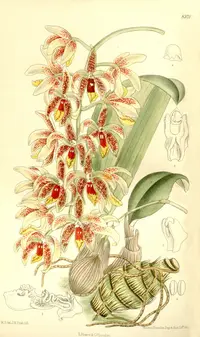
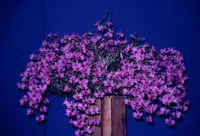
Dendrobium munificum is an epiphytic orchid, typically found growing on trees in warm, humid forests. It produces slender canes with alternating leaves and delicate, showy flowers.
This species comes from tropical regions of Asia, so it prefers stable warmth, bright filtered light, and good air movement. Its growth is somewhat seasonal, with active leafy growth followed by a defined flowering period.
Compared with many orchids, it can be moderately challenging, mainly because it dislikes prolonged overwatering and sudden environmental changes. Knowing how to care for Dendrobium munificum starts with providing airy orchid media, regular but careful watering, and consistent humidity.

Care Difficulty
Hard Care

Light Preference
Bright Indirect Light

Water Requirements
Moderate Water

Temperature Preference
Tropical / Frost Sensitive

Hardiness Zone
Unknown

Soil Texture
Sandy, Organic-rich

Soil pH
Acidic (5.5–6.5)

Soil Drainage
Well-drained

Fertilization
Moderate (every 2–4 weeks)
Scan your plant to receive care tips personalized for your specific plant
Available on iOS and Android
This orchid prefers bright, filtered light that mimics high canopy woodland conditions.
Watering should balance consistent moisture with fast drainage to protect the roots.
This species prefers intermediate to warm conditions with stable temperatures across the year.
This orchid prefers moderately high, stable humidity to maintain plump canes and long-lasting flowers.
This epiphytic orchid needs a very airy, fast-draining medium rather than dense potting soil.
This species is well suited to container growing when the pot supports its upright, cane-forming habit.
Healthy growth in Dendrobium munificum benefits from light, precise fertilization rather than heavy feeding.
Pruning needs are modest and focus on maintaining plant health and flower performance.
Repotting is infrequent and mainly needed when the orchid outgrows its pot or medium breaks down.
Propagation is possible but slow and usually done by division of mature clumps rather than seed.
Winter care focuses on preventing cold damage and moderating water for this warmth-loving orchid.

Plant Health Check
Not sure what's wrong with your plant? Check your plant's health inside the app.
This species is native to montane forests of Papua New Guinea, where it grows as an epiphyte on trees in cool to intermediate, humid conditions.
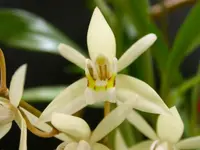
The plant produces relatively short, clustered inflorescences from the upper nodes of its canes, carrying several flowers that often open around the same time, creating a concentrated floral display.
Its flowers show the typical three-lobed lip of the genus, but with species-specific proportions and coloration that help orchid specialists distinguish it from closely related New Guinea Dendrobium species and support accurate Dendrobium munificum care instructions.
Lack of flowering is usually linked to insufficient light, skipping a cooler, drier rest after new canes mature, or excess nitrogen fertilizer. Provide bright conditions, a defined rest period, and balanced feeding to trigger flower bud initiation.
Keep your plants happy and healthy with plant identification, disease detection, and easy care guidance.