


Offset management
Remove and replant offsets only when they have at least 3–4 mature leaves and visible roots, then pot them in a dry, gritty mix and withhold water for 5–7 days to let any small wounds callus.

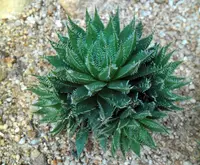
Haworthia bolusii is a small, rosette-forming succulent from arid regions of South Africa. It stays compact, which makes it suitable for windowsills and small indoor spaces. The plant has tight rosettes of slender, often translucent-tipped leaves that form clumps over time. Its slow growth and drought tolerance reduce day-to-day maintenance needs. Haworthia bolusii adapts well to indoor conditions if given bright, indirect light, a gritty, fast-draining soil mix, and infrequent watering. These traits make it straightforward for those who want to learn how to care for Haworthia bolusii without complicated routines.

Care Difficulty
Easy Care

Light Preference
Bright Indirect Light

Water Requirements
Low Water

Temperature Preference
Tropical / Frost Sensitive

Hardiness Zone
10–11

Soil Texture
Sandy, Loamy, Rocky

Soil pH
Slightly acidic (6.5–7.0), Neutral (7.0)

Soil Drainage
Well-drained

Fertilization
Minimal (feed rarely)
Scan your plant to receive care tips personalized for your specific plant
Available on iOS and Android
This small succulent prefers bright, gentle light rather than harsh, direct sun.
Watering should mimic brief desert rains followed by dry periods.
This species prefers moderate warmth and avoids temperature extremes.
This species prefers dry indoor air and does not require elevated humidity.
Use a very fast-draining, mineral-rich mix to protect the roots from rot.
This compact succulent is very suitable for container growing.
This succulent has modest nutrient needs, so fertilizing Haworthia bolusii should stay light and infrequent.
Pruning Haworthia bolusii is minimal and focused on hygiene rather than shaping.
This species grows slowly and prefers slightly tight pots, so repotting is only needed occasionally.
Propagation is most successful from offsets, which this species produces around the base of mature rosettes.
This succulent is not frost hardy and needs indoor protection in most temperate climates during winter.

Plant Health Check
Not sure what's wrong with your plant? Check your plant's health inside the app.
This species develops translucent leaf tips that act as light windows, channeling sunlight deeper into the rosette so inner tissues can photosynthesize even when most of the plant is shaded by rocks or soil.
The fine, white filaments along the leaf margins form a web-like fringe that helps scatter intense sunlight and may reduce air movement across the leaf surface, limiting water loss in its arid Karoo habitat.
In the wild it often grows partially sunk into gritty, rocky soils in the Eastern Cape Karoo, using surrounding stones and debris as natural shade and temperature buffers in a highly seasonal, semi-arid climate.
This species often blooms modestly and irregularly. Lack of flowers is usually normal, especially indoors. Flowering is more likely when the plant is mature, not recently repotted, and has experienced a slight cool, dry rest in winter.
Keep your plants happy and healthy with plant identification, disease detection, and easy care guidance.

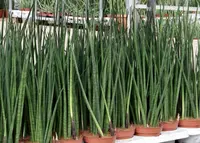
Dracaena bacularis
Dracaena bacularis
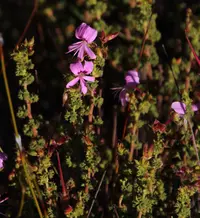
Rose-camphor Storksbill
Pelargonium englerianum
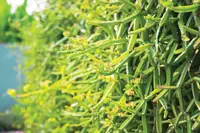
Veld Grape
Cissus quadrangularis
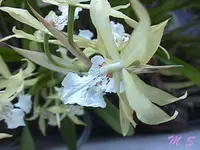
yellowish miltonia
Miltonia flavescens

tree cholla
Cylindropuntia imbricata
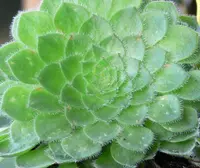
Saucer plant
Aeonium tabuliforme
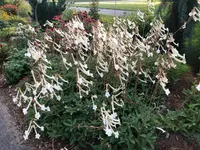
trumpet-flowered sinningia
Sinningia tubiflora
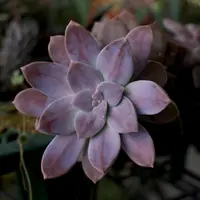
Graptopetalum superbum
Graptopetalum superbum