Offset division timing
Only divide and repot offsets when their individual rosettes are at least 2–3 cm wide, which reduces transplant shock and allows new plants to establish faster.

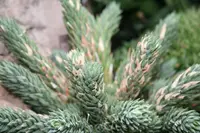
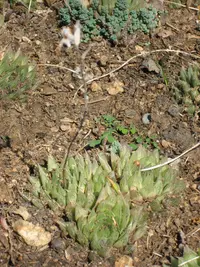
Blue haworthia (Haworthiopsis glauca) is a compact, slow-growing succulent known for its stiff, narrow, blue-green leaves arranged in tidy rosettes. The leaves often have a slightly rough texture and pointed tips, giving the plant an architectural, upright look.
This species is native to arid regions of South Africa, where it grows in rocky, well-drained habitats and often shelters under taller plants or rocks. Its drought tolerance and modest size make it suitable for small pots, windowsills, and indoor collections.
Haworthiopsis glauca adapts well to typical indoor conditions, which helps explain how to care for Blue Haworthia successfully. It generally prefers bright, indirect light, infrequent watering, and a gritty, fast-draining soil mix.

Care Difficulty
Easy Care

Light Preference
Bright Indirect Light

Water Requirements
Low Water

Temperature Preference
Tropical / Frost Sensitive

Hardiness Zone
10–11

Soil Texture
Sandy, Loamy, Rocky

Soil pH
Slightly acidic (6.5–7.0), Neutral (7.0)

Soil Drainage
Well-drained

Fertilization
Minimal (feed rarely)
Scan your plant to receive care tips personalized for your specific plant
Available on iOS and Android
Haworthiopsis glauca prefers bright, indirect light and tolerates some direct sun if introduced gradually.
This succulent stores water in its leaves and needs infrequent, controlled watering.
This species prefers warm, stable conditions and does not tolerate frost.
This succulent tolerates typical indoor humidity and rarely needs special humidity management.
This species needs a very fast-draining, mineral-heavy mix that dries quickly between waterings.
This compact succulent is very suitable for container growing.
Haworthiopsis glauca needs only light feeding, as this succulent naturally grows in nutrient-poor soils, so focus on modest, dilute applications.
Pruning Haworthiopsis glauca is minimal and mostly cosmetic, aimed at keeping rosettes clean and well-shaped.
Repotting Haworthiopsis glauca is infrequent, mainly to refresh the mix and provide space for offsets rather than to drive faster growth.
Propagation of Haworthiopsis glauca is commonly done by separating offsets, with leaf cuttings and seeds used less often by home growers.
Winter care for Haworthiopsis glauca focuses on keeping it dry, frost-free, and in adequate light, especially in cold climates.

Plant Health Check
Not sure what's wrong with your plant? Check your plant's health inside the app.
This species forms tight, spiraled columns of narrow, pointed leaves, an arrangement that reduces direct sun exposure on each leaf surface in its native arid habitats of South Africa.
In the wild, it often grows tucked among rocks and gravel, and its bluish-green, rough-textured leaves blend visually with the surrounding stone, helping protect it from herbivores and harsh sun.
Haworthiopsis glauca uses crassulacean acid metabolism (CAM), a photosynthetic pathway where stomata open mainly at night to take in CO₂, minimizing water loss during hot, dry days.

This species develops an extensive fibrous root system that can shrink and retract slightly during prolonged drought, drawing the plant deeper into crevices and helping it survive highly variable rainfall in its native range.
Brown leaf tips or patches usually result from underwatering, very strong sun, or salt buildup from fertilizer. Check roots for dryness, flush the soil occasionally, and move the plant out of harsh, direct midday light.
Keep your plants happy and healthy with plant identification, disease detection, and easy care guidance.