Foxglove Care (Digitalis purpurea)

Also known as: common foxglove, lady's glove, purple foxglove
Foxglove

About Foxglove

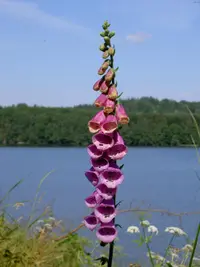
Foxglove (Digitalis purpurea) is a short-lived perennial or biennial flowering plant known for its tall, upright flower spikes. It is commonly grown in cottage-style and mixed borders. Each spike carries many tubular, bell-shaped flowers, usually purple, pink, or white with spotted throats. Plants form a low rosette of leaves in their first year, then send up flowering stems the next season.

Digitalis purpurea is native to western Europe but is widely grown in temperate gardens. It prefers cool summers, moist but well-drained soil, and partial sun. Once established, it can self-seed, which makes it easier to maintain in suitable spots. Gardeners who learn how to care for Foxglove usually find it moderately easy to keep going from year to year.

Main Plant Requirements

Care Difficulty

Moderate Care

Light Preference

Partial Shade

Water Requirements

Regular Water

Temperature Preference

Cool Climate

Hardiness Zone

4–9

Soil Texture

Sandy, Loamy, Organic-rich

Soil pH

Acidic (5.5–6.5), Slightly acidic (6.5–7.0)

Soil Drainage

Moist but well-drained

Fertilization

Light (every 4–6 weeks)

Get Personalized Care Plan

Scan your plant to receive care tips personalized for your specific plant

Available on iOS and Android

How to Care for the Foxglove

Digitalis purpurea prefers bright conditions without intense afternoon heat.

  • Provide 4–6 hours of sun daily, ideally morning sun with light or dappled shade from midday onward.
  • Plant in a spot with partial shade, especially in hotter regions, to prevent leaf scorch and premature flower decline in Foxglove.
  • In cooler climates, it tolerates more direct sun, but in summer monitor for wilting or bleached foliage and increase shade if this appears.

This species prefers consistently moist but not saturated soil.

  • Water when the top 2–4 cm of soil feels dry, applying enough to moisten the root zone without leaving standing water.
  • Use well-drained, humus-rich soil so Digitalis purpurea roots do not sit in water, which encourages rot and yellowing leaves.
  • In cooler or rainy seasons reduce watering, while in hot, dry weather increase frequency if leaves droop, edges crisp, or soil dries within 1–2 days.

This plant is adapted to cool to mild climates with moderate seasonal variation.

  • Active growth is best at 55–75°F (13–24°C), with strong rosettes forming in cool spring and autumn conditions.
  • Established plants tolerate down to about 10–15°F (-12 to -9°C) with mulch, but young rosettes are more vulnerable to sudden hard frosts.
  • In hot spells above 85–90°F (29–32°C), provide afternoon shade, maintain soil moisture, and expect flowering to shorten if heat is prolonged.

Digitalis purpurea tolerates a wide humidity range and rarely needs special humidity control outdoors.

  • Prefers ambient outdoor humidity around 40–60% but adapts well slightly above or below this range.
  • Handles relatively dry air if soil moisture is consistent and roots do not dry out completely between waterings.
  • Watch for crisp leaf edges and stalled flower spikes as signs of low-humidity plus drought stress, especially for Foxglove in hot, windy sites.

Digitalis purpurea grows best in cool, moist, well-aerated ground with reliable drainage.

  • Use a loamy, crumbly structure enriched with 20–30% compost to retain moisture yet stay airy around the roots.
  • Ensure drainage by incorporating coarse sand or fine grit into heavy clay and avoiding any site where water pools after rain.
  • Aim for slightly acidic to neutral pH, roughly 6.0–7.0, which supports nutrient uptake and strong flowering.
  • Avoid compacted or constantly waterlogged soil, and lightly loosen the top 5–8 cm each season to improve aeration without disturbing deep roots.

This species can be grown in containers if the pot supports its tall, top-heavy growth.

  • Choose a deep, heavy container that resists tipping when flower spikes reach full height and catch wind.
  • Select a pot with several large drainage holes so excess water exits quickly, preventing root rot in the dense root mass.
  • Use a loam-based mix that holds moisture but does not stay soggy, adjusting with added grit in plastic pots that retain more water.

Digitalis purpurea needs only modest feeding in average garden soil to maintain healthy flowering.

  • Apply a light layer of garden compost or well-rotted manure around plants in early spring to enrich the soil.
  • Use a balanced, slow-release granular fertilizer (around 10-10-10) at half strength once in spring for Foxglove.
  • Avoid high-nitrogen feeds that promote soft, leafy growth at the expense of flower spikes.
  • Do not feed in late fall or winter, when plants are semi-dormant and growth has slowed.

Pruning Digitalis purpurea is mainly about tidying and managing flowering rather than shaping the plant.

  • Cut back spent flower spikes to the basal leaves after blooming to encourage side shoots or a light rebloom.
  • Leave a few spikes to mature and dry if seed collection or self-sowing is desired, then remove them cleanly.
  • Trim away dead, yellowing, or damaged leaves at the base throughout the season using clean, sharp scissors or pruners.
  • Late fall, remove collapsed foliage in cold regions to reduce fungal disease carryover into the next season.

Digitalis purpurea is usually grown in beds and borders, so transplanting young plants is more common than repotting mature ones.

  • Transplant seedlings or young rosettes in early spring or early fall, avoiding periods of extreme heat or frost.
  • Move plants if growth is weak, overcrowded, or if roots circle the pot in container-grown specimens.
  • Lift plants with a generous soil plug, disturbing roots as little as possible and replant at the same depth.
  • Water thoroughly after transplanting, then keep soil evenly moist for 1–2 weeks to reduce transplant shock.

New Digitalis purpurea plants are most often raised from seed, which germinates reliably under simple conditions.

  • Sow fresh seed in late spring to midsummer in trays or directly outdoors on the soil surface; do not bury deeply.
  • Provide bright, indirect light and consistent moisture at 60–70°F for best germination within 2–3 weeks.
  • Thin or prick out seedlings once they have several true leaves, spacing them to reduce damping-off disease risk.
  • Allow some plants to flower and set seed; self-sown seedlings can be transplanted while small and well-rooted.

Digitalis purpurea is generally cold hardy in much of the US and needs only modest winter care in the ground.

  • In zones with freezing winters, leave the basal rosette and apply a 5–8 cm mulch around, not over, the crown.
  • Avoid waterlogged soil in winter, which increases crown and root rot risk in cold conditions.
  • For container plants, move pots into a sheltered, unheated but frost-free spot or heel them into the ground.

Care Tips

Staking Tall Spikes

Install slender stakes on the windward side when stems reach 30–40 cm, then loosely tie flower spikes with soft ties to prevent lodging and stem breakage in strong winds or heavy rain.

Managing Biennial Cycle

Mark first-year rosettes with unobtrusive labels so they are not weeded out, and plan staggered sowings over 2–3 years to keep flowering plants in the bed every season as older plants die off.

Targeted Deadheading

Remove spent side spikes promptly but leave one strong central spike per plant to mature seed, which encourages self-sowing and a natural renewal pattern when growing Foxglove in the same bed.

Controlled Self-Seeding

If volunteer seedlings appear too dense, thin them early to 20–30 cm spacing and transplant extras while small to new areas, avoiding overcrowding and weak, drawn plants.

Safe Handling Practices

Wear gloves when handling or cutting plants, keep tools dedicated to poisonous ornamentals if possible, and dispose of all clippings with household waste rather than compost used near edible crops.

Common Pests and Diseases

Aphids

These insects feed on tender stems and flower spikes, causing curling, distortion, and sticky honeydew that can lead to sooty mold on foxglove leaves and flowers.

Solution

Spray infested shoots with a strong stream of water to dislodge colonies, then treat remaining aphids with insecticidal soap or a light horticultural oil, making sure to coat undersides of leaves and flower stalks. Encourage natural predators such as ladybird beetles and avoid high-nitrogen fertilization, which promotes the soft growth aphids prefer.

Slugs and snails

These pests chew irregular holes in leaves, especially on young rosettes, and can severely disfigure or even kill first-year foxglove plants in damp, shaded beds.

Solution

Hand-pick slugs and snails in the evening, use beer traps or iron phosphate slug baits, and remove nearby debris or dense groundcover that provides hiding spots. Creating a drier soil surface with good drainage and spacing plants to improve airflow will also make the area less attractive to these pests.

Powdery mildew

This disease causes white, powdery patches on leaves, especially in crowded, shaded, or dry-but-humid conditions, and can lead to yellowing and premature leaf drop.

Solution

Remove and discard heavily infected leaves, then improve spacing and air movement around plants by thinning or staking flower spikes. Avoid overhead watering, irrigate at soil level early in the day, and if needed apply a sulfur or potassium bicarbonate fungicide labeled for ornamental plants at the first sign of symptoms as part of Digitalis purpurea care.

Leaf spot

This disease produces brown, tan, or purplish spots on leaves that may merge into larger dead areas, weakening the plant and reducing ornamental quality.

Solution

Promptly remove and discard affected leaves and any fallen plant debris to reduce pathogen spread. Water at the base of plants to keep foliage dry, rotate foxglove plantings in the garden, and in persistent cases use a preventive ornamental fungicide according to label directions during prolonged wet periods.

Crown rot

This disease leads to browning and collapse at the base of the rosette, often with yellowing outer leaves that wilt and detach easily in waterlogged or poorly drained soil.

Solution

Uproot and discard badly affected plants and avoid replanting foxglove in the same poorly drained spot. Improve drainage by amending soil with coarse organic matter or grit, plant on slight mounds or raised beds, and avoid overwatering or heavy mulching directly against the crown.

Interesting Facts

Source of heart drugs

Leaves of this species were the original natural source of cardiac glycosides such as digoxin and digitoxin, which are still used in modern medicine under strict medical supervision to treat certain heart rhythm and heart failure conditions.

Biennial life cycle

In most conditions this plant lives for 2 years, forming only a low rosette of leaves in the first year and sending up its tall flowering spike in the second year before setting seed and dying.

Specialized bee pollination

The tubular, downward-facing flowers are adapted for pollination by bumblebees, which crawl deep inside the corolla and brush against the stamens and stigma, transferring pollen efficiently between plants.

Botan icon

Did you know?

The characteristic purple flowers with their spotted patterns function as visual nectar guides, helping bees orient and move toward the nectar source inside the tube, which increases both pollination accuracy and efficiency for the plant.

FAQs about Foxglove

Lack of flowering often comes from plants being in their first year (they usually bloom in year 2), overcrowding, or poor nutrition. Excess shade or heat stress can also reduce flower spikes and shorten the blooming period.

Grow Healthy Plants with Botan Care

Keep your plants happy and healthy with plant identification, disease detection, and easy care guidance.

Botan plant care app — identify plants on mobile

Explore More Plants