spotted rock-rose Care (Tuberaria guttata)

Also known as: European frostweed
spotted rock-rose

About spotted rock-rose

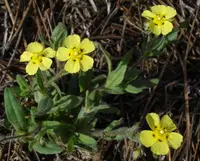
Spotted rock-rose (Tuberaria guttata) is a small annual wildflower in the rock-rose family, valued for its yellow petals marked with dark red spots. It forms low, branching clumps and produces many delicate, short-lived flowers that open in sunny weather. Leaves are small, often slightly hairy, and arranged along slender stems.

This species is native to Mediterranean regions and parts of western Europe but can naturalize in dry, open habitats elsewhere. It suits sunny, well-drained sites and often thrives in poor, sandy, or rocky soils. Once established, it shows good tolerance to drought, which simplifies how to care for spotted rock-rose in suitably dry climates.

Main Plant Requirements

Care Difficulty

Easy Care

Light Preference

Full Sun

Water Requirements

Low Water

Temperature Preference

Warm Climate

Hardiness Zone

7–10

Soil Texture

Sandy, Loamy, Rocky

Soil pH

Slightly acidic (6.5–7.0), Neutral (7.0)

Soil Drainage

Well-drained

Fertilization

Minimal (feed rarely)

Get Personalized Care Plan

Scan your plant to receive care tips personalized for your specific plant

Available on iOS and Android

How to Care for the spotted rock-rose

This Mediterranean annual thrives in bright, open sites with strong sun exposure.

  • Provide full sun for 6–8 hours daily; morning and midday sun promote compact growth and abundant flowering in spotted rock-rose.
  • Accepts light partial shade, especially with 3–4 hours of direct morning sun plus bright light the rest of the day, but flowering may decrease.
  • In very hot inland summers, give protection from intense late-afternoon sun to reduce leaf scorch and premature wilting, especially in shallow or dry soils.

This species prefers dry to moderately dry soil and is sensitive to prolonged wet conditions.

  • Allow the top 3–5 cm of soil to dry between waterings; in well-drained ground, this often means no extra irrigation beyond normal rainfall once plants are established.
  • During hot, dry spells, water deeply but infrequently, then wait until foliage looks slightly less turgid and surface soil is pale and dry before watering again.
  • Watch for yellowing, soft stems, or a sour smell as signs of overwatering in Tuberaria guttata, and crisp, browning leaf edges as an indicator of underwatering.

This plant is adapted to mild, dry climates with cool winters and warm, sunny summers.

  • Ideal growing temperatures are 60–75°F (16–24°C), which support steady vegetative growth and flower production in spring and early summer.
  • Plants tolerate brief dips to about 25–28°F (-4 to -2°C), but repeated hard frosts can damage foliage and reduce flowering the following season.
  • In hot regions, it handles up to 90–95°F (32–35°C) if soil is well drained and roots are not waterlogged, but flowering often declines in peak heat.

This species tolerates a wide humidity range and rarely needs special humidity management outdoors.

This annual prefers light, fast-draining mineral soils that do not stay wet for long.

  • Use sandy or gravelly soil with a lean structure, such as 60% coarse sand or grit mixed with 40% low-organic garden soil.
  • Aim for slightly acidic to neutral pH around 6.0–7.0 to support healthy root function in Tuberaria guttata.
  • Avoid clay-heavy, compacted, or water-retentive mixes that hold standing moisture and promote root rot.
  • To improve drainage in marginal sites, raise the planting area or container and blend in sharp sand or fine gravel throughout the root zone.

This species can grow in containers if the pot mimics its naturally dry, fast-draining conditions.

  • Choose a wide, shallow pot to match its relatively shallow root system and reduce the risk of waterlogged lower layers.
  • Use a gritty, low-organic mix and elevate the pot on feet so drainage holes never sit in collected runoff.
  • Select unglazed terracotta rather than plastic if extra evaporation is needed to keep the mix on the dry side between waterings.

Tuberaria guttata is adapted to low-nutrient soils and needs only light feeding in cultivation.

  • Use a light application of compost or a low-dose balanced NPK fertilizer in early spring for plants grown in poor soil.
  • Apply at most 1–2 times during the growing season, avoiding heavy or repeated feeding that encourages weak, leafy growth over flowers.
  • Dilute liquid feeds to 1/2–1/4 strength and water onto moist soil, never onto dry roots.
  • Stop feeding in late summer so the plant can harden growth before winter and rest with no fertilizer over dormancy.

Pruning Tuberaria guttata is minimal and focuses on cleanliness and maintaining a compact form.

  • In late spring to mid-summer, shear or pinch back spent flower stems to encourage a tidier mound and repeat blooming.
  • Remove dead, damaged, or diseased shoots at any time using clean, sharp scissors or hand pruners to limit infection risk.
  • Thin out crowded stems lightly to improve airflow and reduce foliar disease in humid or wet conditions.
  • Avoid heavy structural cuts; this short-lived plant responds best to light grooming rather than hard pruning.

This species is usually grown in the ground, so care focuses more on transplanting young plants than on frequent repotting.

  • Plant out Tuberaria guttata seedlings or small plugs in spring after frost risk passes, when soil is workable and draining well.
  • Transplant if growth stalls or plants are clearly outgrowing starter trays, but avoid disturbing roots once flowering begins.
  • For container-grown plants, shift to a slightly larger pot only when roots circle the drainage holes or the rootball dries very fast.
  • Water well before and after moving, handle the rootball gently, and keep newly transplanted plants shaded and evenly moist for a few days to limit stress.

Tuberaria guttata is most commonly propagated from seed, which suits its annual or short-lived perennial habit.

  • Sow seeds in late winter to early spring in trays or directly outdoors after frost, using a very free-draining sandy mix.
  • Press seeds onto the surface; they need light to germinate, so do not bury them deeply.
  • Maintain 60–70°F and gently moist conditions until germination, usually within 2–4 weeks.
  • Thin or prick out seedlings once they have 2–3 true leaves, then harden off before planting into the final site.

In mild climates Tuberaria guttata usually needs little winter attention, functioning mainly as an annual that self-seeds.

  • In regions colder than its usual range, treat plants as annuals and rely on natural reseeding rather than overwintering individuals.
  • Where winters are cool but not severe, a light gravel or sandy mulch can protect the root zone and improve drainage.
  • Container plants in marginal climates can be moved to a cold, bright, frost-free spot and kept just barely moist.

Care Tips

Encourage Self-Seeding

Allow some seed pods to mature and dry on the plant, then gently shake them over the desired area on a dry, calm day to promote a natural, low-effort succession of plants in the same spot.

Controlled Colony Edges

To keep clumps from spreading into unwanted areas, lightly cultivate or hoe a 5–10 cm bare-soil strip around the planting each spring, which disrupts stray seedlings without disturbing established plants.

Gravel Surface Mulch

Apply a very thin 0.5–1 cm layer of coarse sand or fine gravel around the crowns to reduce soil splash, improve drainage at the surface, and help seedlings anchor without smothering them.

Lean-Soil Companion Choice

Pair this species only with other low-nutrient, drought-tolerant plants so more vigorous neighbors do not outcompete it for light and space in lean, rocky beds.

Site Renewal Rotation

Every 3–4 years, open up a nearby patch of bare, well-drained ground and scatter collected seed there to maintain a healthy population and genetic diversity when growing spotted rock-rose in the same garden over time.

Common Pests and Diseases

Leaf spot fungus

This disease causes small brown to dark purple lesions on the leaves, often with a yellow halo and eventual tissue drying. Symptoms include premature leaf drop in humid or rainy weather.

Solution

Remove and discard affected leaves to reduce spore spread, avoid overhead watering, and increase spacing and airflow around plants. If the problem recurs in wet seasons, apply a copper-based fungicide according to label directions during periods of prolonged leaf wetness.

Rust

This disease produces orange to brown powdery pustules on the undersides of leaves, with pale or yellow patches visible on the upper surface. Symptoms include gradual weakening of the plant and reduced flowering when infection is heavy.

Solution

Prune out and destroy highly infected leaves and any volunteer plants that act as reservoirs. Improve air circulation, avoid wetting foliage, and use a registered rust-control fungicide in early stages if rust routinely appears in the planting area.

Aphids

These insects cluster on soft stems and flower stalks, sucking sap and causing curling or distortion of new growth. This pest also excretes sticky honeydew that can attract sooty mold on nearby foliage.

Solution

Dislodge colonies with a strong stream of water and pinch off heavily infested shoot tips. Encourage or introduce natural predators such as lady beetles, and use insecticidal soap or a horticultural oil spray, applied in the cool part of the day, to control persistent infestations as part of broader Tuberaria guttata care.

Spider mites

These pests are tiny sap-feeding arachnids that cause fine stippling, bronzing, and a dull appearance on leaves, sometimes with delicate webbing in dry, hot conditions. Symptoms include gradual leaf drying and reduced vigor when populations are high.

Solution

Rinse foliage thoroughly, including leaf undersides, to knock down mites and raise local humidity, which they dislike. For ongoing problems, apply insecticidal soap or a light horticultural oil, repeating at labeled intervals, and reduce drought stress by maintaining even soil moisture without waterlogging.

Interesting Facts

Oil-collecting bee partner

In parts of its range, this species is pollinated by specialized oil-collecting bees that gather secretions from small glands at the base of the petals instead of collecting nectar.

Temporary petal spots

The dark maroon to purple spots near the base of each yellow petal often fade as the flower ages, so older blooms can look quite different from freshly opened ones.

Early-succession specialist

This annual often colonizes thin, disturbed, or rocky soils where competition is low, completing its life cycle quickly before taller vegetation closes the habitat.

Botan icon

Did you know?

Tuberaria guttata is native to Mediterranean and Atlantic coastal regions but now occurs as a naturalized species in parts of western Europe and has been recorded as an introduced plant in some coastal areas of the British Isles, where it occupies mild, open habitats influenced by oceanic climates.

FAQs about spotted rock-rose

This species behaves as a short-lived annual or sometimes biennial, completing its life cycle quickly and relying on self-seeding. Plants usually die back after setting seed, so allowing seed drop is important to maintain a stable population.

Grow Healthy Plants with Botan Care

Keep your plants happy and healthy with plant identification, disease detection, and easy care guidance.

Botan plant care app — identify plants on mobile

Explore More Plants