Columnea strigosa Care

Columnea strigosa

About Columnea strigosa

Columnea strigosa is a trailing tropical plant in the African violet family, grown mainly for its bright tubular flowers and glossy foliage. It is often used in hanging baskets, where its long stems can cascade over the container edge.

This species is native to Central and South American cloud forests, where it grows as an epiphyte on trees in warm, humid, shaded habitats. It prefers bright, indirect light, consistent moisture without waterlogging, and a loose, airy potting mix.

These traits make it moderately challenging for beginners, as it dislikes drying out completely or sitting in heavy, compacted soil. Understanding how to care for Columnea strigosa helps maintain steady growth and reliable flowering indoors.

Main Plant Requirements

Care Difficulty

Moderate Care

Light Preference

Bright Indirect Light

Water Requirements

Moderate Water

Temperature Preference

Tropical / Frost Sensitive

Hardiness Zone

11–12

Soil Texture

Loamy, Peaty, Organic-rich

Soil pH

Acidic (5.5–6.5), Slightly acidic (6.5–7.0)

Soil Drainage

Moist but well-drained

Fertilization

Light (every 4–6 weeks)

Get Personalized Care Plan

Scan your plant to receive care tips personalized for your specific plant

Available on iOS and Android

How to Care for the Columnea strigosa

This trailing species prefers bright, indirect light with mild morning sun and protection from harsh midday rays.

  • Provide 4–6 hours of bright, filtered light each day, such as near an east- or north-facing window or under light shade outdoors.
  • Tolerates partial shade but flowering and compact growth decline in very dim conditions or deep shade.
  • Avoid strong midday or afternoon sun, which can scorch leaves and fade colors; increase light gradually in late winter and early spring.

Watering should keep the root zone evenly moist but never saturated to prevent rot.

  • Water when the top 2–3 cm of soil feels dry, allowing excess to drain fully to avoid standing water around roots.
  • In active growth and flowering, moisture demand rises; in cooler months, allow the top layer to dry a bit more before watering.
  • Signs of overwatering include yellowing, soft leaves, and a sour smell; underwatered plants show limp, thin leaves that perk up after thorough watering.

This species prefers consistently warm, frost-free conditions for stable growth and flowering.

  • Aim for 65–80°F (18–27°C) for best growth, with stable temperatures and moderate humidity for reliable Columnea strigosa plant care.
  • Protect from cold; growth slows below 60°F (16°C) and tissue damage can occur near 40°F (4°C) or with any frost exposure.
  • Tolerates brief heat up to 85–90°F (29–32°C) if humidity is moderate and soil does not dry out completely during hot, windy periods.

This species prefers consistently moist air and reacts quickly to dry indoor conditions.

  • Aim for 60–80% humidity for Columnea strigosa to keep foliage lush and reduce bud drop.
  • Tolerates short periods at 40–50%, but prolonged dry air leads to crisp leaf tips, shriveling stems, and aborted flowers.
  • Increase humidity with a pebble tray under the pot, grouping plants, or a small humidifier rather than misting leaves directly.

This plant needs a loose, airy, organic-rich mix that drains rapidly yet holds some moisture.

  • Use a base of peat or coco coir with added fine bark for structure and organic matter.
  • Improve drainage and aeration by blending in 30–40% perlite or pumice so roots receive both air and moisture.
  • A slightly acidic pH around 5.5–6.5 suits Columnea strigosa and supports nutrient uptake.
  • Avoid dense garden soil, heavy clay, or mixes that stay waterlogged, which quickly cause root rot.

This species is well suited to container growing, especially hanging baskets and high shelves.

  • Select a wide, shallow pot that matches its trailing root system and prevents unused, soggy lower soil.
  • Choose a lightweight but stable container so long stems can trail without tipping the pot.
  • Ensure drainage holes are large and unobstructed so water exits within seconds rather than pooling at the base.

Nutrient support improves flowering and foliage density in Columnea strigosa grown in containers.

  • Use a balanced liquid fertilizer (around 10-10-10 or 20-20-20) diluted to 1/4–1/2 strength for active growth.
  • Feed every 2–4 weeks in spring and summer, applying to moist soil to limit root burn.
  • Pause or reduce feeding to once every 6–8 weeks at very weak strength during fall and winter.
  • Organic options like light compost tea or a low-dose slow-release fertilizer can supplement but should not overwhelm the small root system.

Thoughtful pruning keeps Columnea strigosa compact, encourages branching, and improves flowering.

  • Plan main pruning after peak flowering, typically in late winter or early spring before strong new growth.
  • Remove dead, damaged, or crossing stems first, then thin congested sections to increase light and air flow.
  • Shorten leggy trailing stems by 1/3 to promote bushier growth and more flowering tips.
  • Use clean, sharp scissors or snips and make cuts just above a leaf node to encourage healthy new shoots.

Container-grown Columnea strigosa benefits from occasional repotting to maintain aerated, fresh substrate.

  • Check for roots circling the pot, emerging from drainage holes, or declining vigor as signs that repotting is needed.
  • Plan to repot every 2–3 years in late winter or early spring, just before the main growth flush.
  • Move to a pot only 2–5 cm wider, using a well-drained, airy mix and handling roots gently to reduce transplant shock.
  • Water lightly after repotting, keep in bright indirect light, and avoid heavy feeding for 2–3 weeks while roots recover.

New plants are most often produced from stem cuttings rather than seed.

  • Take 7–10 cm non-flowering stem cuttings in spring or early summer, using clean, sharp scissors.
  • Remove lower leaves, optionally dip the cut base in rooting hormone, and insert into moist, well-drained, sterile medium.
  • Maintain high humidity (cover with a vented dome or bag) and bright, indirect light at 70–75°F for reliable rooting.
  • Transplant rooted cuttings carefully into small pots and pinch tips once established to encourage branching.

This tropical species is frost tender and needs mild, stable conditions in winter.

  • Keep plants above 55–60°F; prolonged exposure below this range can damage foliage and stems.
  • Move outdoor containers indoors before the first frost, placing them in bright, indirect light.
  • Avoid cold drafts and sudden temperature swings, which can trigger leaf drop or stem dieback.
  • Reduce watering in winter, keeping the mix slightly moist but never saturated, since growth slows in cooler conditions.

Care Tips

Encourage Trailing Stems

Let stems hang over the edge of a pot or basket and gently redirect new growth with your fingers or soft garden ties so the plant develops a fuller, cascading form instead of a few long, bare shoots.

Rotate For Even Bloom

Turn the pot by 90° every 1–2 weeks so all sides receive similar light exposure, which reduces sparse, one-sided growth and helps maintain a balanced display of foliage and flowers.

Use Bottom-Watering Trays

Place the pot on a shallow tray and water from below for 15–20 minutes so the root ball moistens evenly, then discard excess water to lower the risk of stem rot at the soil surface.

Inspect Fuzzy Stems

Check the soft, fuzzy stems and leaf undersides every 1–2 weeks with a hand lens if possible, since early detection of spider mites or mealybugs on these sheltered surfaces makes treatment with insecticidal soap far more effective.

Post-Flowering Grooming

After the main flowering flush, lightly trim back spent flowering tips by 1–2 nodes to stimulate fresh side shoots and keep the plant compact, an important step in caring for Columnea strigosa over several years.

Common Pests and Diseases

Mealybugs

This pest often hides in leaf axils and along stems, sucking sap and causing distorted growth and sticky honeydew on leaves. Symptoms include yellowing foliage, stunting, and cottony white clusters, especially on dense, trailing shoots.

Solution

Isolate the plant, then dab visible insects with cotton swabs dipped in 70% isopropyl alcohol and gently wipe stems and leaf undersides. Follow with repeated applications of a mild insecticidal soap or neem oil every 7–10 days and thin dense growth to improve airflow, which supports long-term Columnea strigosa care.

Aphids

These insects cluster on tender shoot tips and flower stalks, feeding on sap and causing curling, sticky leaves and deformed buds. Honeydew may lead to black sooty deposits on foliage.

Solution

Rinse infested areas under a gentle stream of lukewarm water to dislodge colonies, then treat soft growth with insecticidal soap, ensuring full coverage of undersides of leaves. Repeat treatments weekly until new growth appears clean and reduce excess nitrogen fertilization that encourages soft, aphid-prone shoots.

Cyclamen mites

This pest attacks young leaves and shoot tips, leading to tight, deformed growth, failure of buds to open, and a rough or bronzed texture on new foliage. Symptoms include stunting at the growing tips while older leaves appear relatively normal.

Solution

Remove and discard all severely distorted shoot tips and flower buds, then increase spacing and airflow around the plant to reduce humidity right at the foliage. Treat remaining growth with a targeted miticide labeled for cyclamen mites, repeating as directed, and avoid overhead misting of the crown, which favors mite spread in dense Columnea foliage.

Botrytis blight

This disease causes soft, water-soaked spots on leaves, stems, and flowers that quickly turn brown and may develop gray, fuzzy mold in humid, still air. Symptoms include sudden collapse of flowers and spotting on older leaves, often starting on crowded inner stems.

Solution

Promptly remove and discard all affected leaves, stems, and flowers, and increase air movement around the plant by thinning dense growth and avoiding overcrowded shelves. Allow the surface of the potting mix to dry slightly between waterings, keep spent flowers trimmed, and in severe or persistent cases use a fungicide labeled for Botrytis on indoor ornamentals, following the product directions carefully.

Oedema

Symptoms include corky, blister-like bumps or rough patches on the underside of leaves when roots take up more water than leaves can transpire, common in cool, overly wet conditions. Leaves may become thickened, distorted, and speckled with tan or brown raised spots but roots remain healthy.

Solution

Reduce watering frequency so the top 2–3 cm of the potting mix dries before watering again and avoid cold, soggy substrate by using a free-draining, airy mix. Provide brighter filtered light and stable temperatures around 65–75°F, and improve air movement so leaves dry more quickly after any accidental splashing, which helps prevent new oedema lesions from forming.

Interesting Facts

Velvety tubular blooms

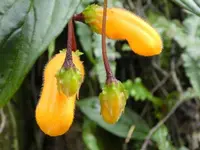
This species produces elongated tubular flowers with a dense covering of fine hairs, giving both the corolla and calyx a visibly velvety texture that helps trap a layer of still air around the flower surface.

Specialized hummingbird partner

In its native range in Central America, this epiphytic shrub has bright, narrowly tubular red flowers that are morphologically matched to the bill shape of local hummingbirds, which act as its primary pollinators.

Epiphytic cloud-forest habit

It typically grows as an epiphyte on mossy tree branches in moist premontane and montane forests, where it relies on organic debris and intercepted mist rather than deep soil for water and nutrients.

FAQs about Columnea strigosa

Poor flowering usually results from insufficient light, low humidity, or a lack of nutrients. Old, unpruned stems also flower less. Provide bright, filtered light, stable warmth, regular balanced feeding, and prune lightly after flowering to encourage new blooming shoots.

Grow Healthy Plants with Botan Care

Keep your plants happy and healthy with plant identification, disease detection, and easy care guidance.

Botan plant care app — identify plants on mobile

Explore More Plants