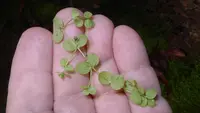
Neurotheca loeselioides Care

About Neurotheca loeselioides

Neurotheca loeselioides is a small, shrubby plant from tropical South America, often found in open, moist habitats such as campos and savannas. It belongs to the Melastomataceae family, which includes many sun-loving shrubs.

The plant typically forms a low, branched mound with simple leaves and small, delicate flowers that give it a fine-textured look. Its natural environment suggests a preference for consistent moisture, acidic to neutral soils, and good light.

In cultivation, it is uncommon and better suited to experienced growers who can match its humid, warm, and bright conditions. Understanding how to care for Neurotheca loeselioides starts with replicating its stable, mildly moist habitat without waterlogging the roots.

Main Plant Requirements

Care Difficulty

Moderate Care

Light Preference

Partial Shade

Water Requirements

Moderate Water

Temperature Preference

Warm Climate

Hardiness Zone

Unknown

Soil Texture

Loamy

Soil pH

Slightly acidic (6.5–7.0)

Soil Drainage

Well-drained

Fertilization

Minimal (feed rarely)

Get Personalized Care Plan

Scan your plant to receive care tips personalized for your specific plant

Available on iOS and Android

How to Care for the Neurotheca loeselioides

This species prefers bright, indirect light that mimics open woodland or forest-edge conditions.

  • Provide 4–6 hours of bright, filtered light each day; light through a sheer curtain or dappled shade under taller plants works well for Neurotheca loeselioides.
  • Allow morning sun in cooler climates, but protect from strong midday and afternoon sun, which can scorch leaves and cause pale, dry patches.
  • In summer, shift slightly deeper into partial shade if foliage yellows or curls; in winter, move to a brighter spot to compensate for shorter days.

Watering should keep the root zone evenly moist but never saturated or bone dry.

  • Before watering, let the top 2–3 cm of soil dry; then water slowly until the root zone is evenly moist, allowing any excess to drain away.
  • Use a loose, well-drained mix with added coarse material so water does not pool around roots, which increases risk of rot and sour, stagnant smells.
  • In warm, active growth, expect more frequent watering as soil dries faster; in cooler seasons, lengthen the interval and watch for wilt, crisp edges, or dull leaves as signs of underwatering.

Temperature conditions should resemble a mild, frost-free, subtropical to tropical climate.

  • Aim for 68–80°F (20–27°C) during active growth; this range supports steady metabolism and healthy leaf and root development.
  • Avoid temperatures below 50°F (10°C); brief drops to 45°F (7°C) may be tolerated but repeated chills or any frost can damage foliage and young stems.
  • In hot periods above 86°F (30°C), provide extra shade and airflow to limit heat stress, leaf scorch, and excessive moisture loss through transpiration.

This species prefers moderate air moisture but tolerates typical indoor ranges.

  • Aim for 50–65% humidity to support steady growth and reduce leaf edge browning.
  • It tolerates brief dips to 35–40%, but prolonged very dry air can cause curling, dull foliage, and stalled growth.
  • Increase humidity with a nearby humidifier, grouped plants, or a pebble tray rather than misting leaves directly.

Soil must be loose, well aerated, and free draining to keep roots healthy.

  • Use a mix of 50–60% fine bark or coco coir, 20–30% compost, and 20–30% perlite or pumice for structure and drainage.
  • Aim for slightly acidic to neutral pH, around 6.0–7.0, to keep nutrients available and avoid micronutrient lockout.
  • Ensure the mix never compacts; incorporate coarse materials like bark chips or perlite to maintain pore spaces for oxygen.
  • Avoid heavy clay, peat-only, or waterlogged substrates, which promote root rot and stress in Neurotheca loeselioides.

This species adapts well to container growing when the pot supports its root and moisture needs.

  • Choose a pot slightly deeper than wide so roots can anchor and moisture distributes more evenly through the profile.
  • Select a breathable material such as unglazed terracotta if the site is humid, to reduce the risk of chronically damp roots.
  • Add a raised internal grid or layer of coarse material above the drainage holes to prevent mix from sealing them while still allowing quick outflow.

This species usually grows in nutrient-poor habitats and generally does not need routine fertilization in garden or container culture.

Neurotheca loeselioides needs only light structural pruning to keep plants healthy and accessible.

  • Plan any shaping after main flowering finishes, so flower display is not reduced.
  • Use clean, sharp hand pruners to remove dead, diseased, or storm-damaged shoots at their base.
  • Thin congested interior stems to improve air movement and light penetration without over-opening the canopy.
  • Step back frequently while cutting to maintain a balanced, natural outline.

When grown in containers or moved from nursery bags, this species benefits from careful transplanting to limit root shock.

  • Look for roots circling the pot drainage holes, water running straight through, or stalled growth as signs it needs more space.
  • Schedule transplanting for mild weather in spring or early rainy season, avoiding extreme heat or drought.
  • Shift into a container or ground hole only 1–2 in wider, using a well-drained, slightly acidic mix or soil.
  • Handle the root ball gently, loosen only outer circling roots, water deeply, then shade lightly for 3–7 days to reduce stress.

Propagation of Neurotheca loeselioides is usually done from seed under controlled, warm conditions.

  • Collect ripe seed from mature capsules and sow promptly, as viability may drop in storage.
  • Sow on a free-draining, slightly acidic mix, barely covering the seed, and keep evenly moist but never waterlogged.
  • Maintain warm conditions around 70–80°F with bright, indirect light to encourage uniform germination.
  • Use a clear cover or humidity dome for higher humidity, then ventilate gradually as seedlings develop true leaves.

In mild, frost-free climates this species needs little special winter attention once established in the ground.

  • In regions with occasional light frost, apply a 5–8 cm mulch layer around the root zone, keeping it off the stems.
  • Move container plants to a sheltered porch or greenhouse whenever temperatures approach 32°F.
  • Reduce watering in cool, low-light periods so the soil stays slightly moist but not saturated.

Care Tips

Use deep containers

Choose a tall, well-drained pot so the relatively deep root system can develop fully, which reduces stress during dry spells and supports more stable growth when caring for Neurotheca loeselioides.

Rotate for even form

Turn the plant 90° every 2–3 weeks so stems and leaves receive light from different directions, helping maintain a balanced, upright habit instead of leaning toward a single light source.

Support young stems

Install small stakes or a low ring support around young or newly transplanted plants in windy or exposed spots to prevent stem breakage until the base has thickened.

Mulch to protect roots

Apply a thin, airy layer of fine bark or leaf mold over the root zone in outdoor or large-container specimens to buffer temperature swings and reduce surface crusting without keeping the soil waterlogged.

Monitor after repotting

After repotting, shade the plant lightly and avoid additional stress such as pruning or heavy feeding for 2–3 weeks, watching for wilting or leaf drop as signs to adjust light or watering until it re-establishes.

Common Pests and Diseases

Leaf spot

This disease causes small water-soaked spots that turn brown, often with a yellow halo on the softer, thin leaves. Symptoms include more severe damage on plants kept with poor air movement and frequent overhead watering.

Solution

Remove affected leaves, avoid wetting the foliage, and improve airflow around the plant. If spots continue to spread, use a copper-based or chlorothalonil fungicide labeled for ornamental plants, following the label carefully and reducing humidity around the foliage where possible for better Neurotheca loeselioides care instructions.

Anthracnose

This disease produces irregular tan to dark-brown lesions that may merge, leading to blighted leaf tips and margins. Symptoms include faster progression during warm, wet conditions or when leaves stay damp for long periods.

Solution

Prune and discard blighted leaves, water at the base of the plant, and keep foliage dry as much as possible. In persistent cases, apply a systemic fungicide labeled for anthracnose on ornamentals and reduce crowding so that leaves dry quickly after rain or misting.

Spider mites

These pests are tiny sap-sucking arachnids that cause fine stippling, dulling, and eventual yellowing of leaves, sometimes with delicate webbing on undersides. This pest thrives in hot, dry conditions and on plants under low humidity stress.

Solution

Rinse leaves thoroughly with a strong but gentle stream of water, focusing on the undersides, and repeat several times over 1–2 weeks. For heavier infestations, use insecticidal soap or a horticultural oil (such as neem oil) applied to all leaf surfaces, while also increasing ambient humidity and avoiding drought stress.

Scale insects

These insects appear as small, fixed bumps on stems and leaf veins and feed on sap, causing yellowing, stunting, and sticky honeydew on nearby surfaces. This pest often builds up on less visible stem sections in dense foliage.

Solution

Physically remove scales with a cotton swab dipped in alcohol on light infestations, then rinse the plant with water. For larger populations, apply a horticultural oil to thoroughly coat stems and leaf undersides, repeating according to product directions and inspecting regularly for new crawlers.

Interesting Facts

Atlantic rainforest specialist

This species is native to the coastal Atlantic Forest of southeastern Brazil, where it typically grows in open, sandy, nutrient-poor sites within restinga vegetation close to sea level.

Sand and sun tolerance

It is adapted to high light, heat, and periodic drought, developing a shrub-like habit and a root system capable of anchoring it in loose, shifting sandy soils.

Distinctive tubular flowers

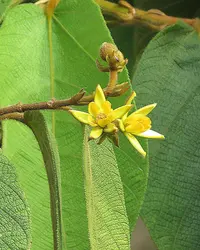
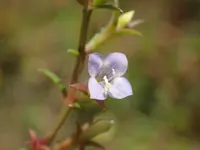
Its small, tubular, white to yellowish flowers develop in terminal clusters and are adapted for pollination by small insects that can access the narrow floral tube.

FAQs about Neurotheca loeselioides

This species performs best outdoors in warm, humid, frost‑free climates that resemble its native habitat. Neurotheca loeselioides indoor care is challenging because it needs strong light, stable warmth, and high humidity that typical homes rarely provide long term.

Grow Healthy Plants with Botan Care

Keep your plants happy and healthy with plant identification, disease detection, and easy care guidance.


Botan plant care app — identify plants on mobile

Explore More Plants