Frequent Trimming Regime
Trim back the top 2–3 cm every 7–10 days once established to keep stems dense, prevent lower leaf drop, and produce compact cushions instead of tall, leggy growth.

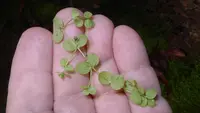
Shade mudflower, Micranthemum umbrosum, is a small aquatic and semi-aquatic plant often used in freshwater aquariums and paludariums. It forms dense, low mats of tiny round leaves on fine trailing stems.
In nature it occurs in moist, shaded stream banks and wetlands in the Americas, where it spreads quickly in cool, clean water. Its fast growth and small leaves make it popular for foreground or midground planting in tanks.
The main challenges are keeping stable water conditions and enough light without strong algae competition, so beginners should start slowly and observe growth. Once conditions are stable, it responds well, and learning how to care for shade mudflower becomes straightforward.

Care Difficulty
Moderate Care

Light Preference
Partial Shade

Water Requirements
Aquatic

Temperature Preference
Tropical / Frost Sensitive

Hardiness Zone
Unknown

Soil Texture
Loamy, Silty, Organic-rich

Soil pH
Acidic (5.5–6.5), Slightly acidic (6.5–7.0)

Soil Drainage
Waterlogged tolerant

Fertilization
Moderate (every 2–4 weeks)
Scan your plant to receive care tips personalized for your specific plant
Available on iOS and Android
This creeping aquatic and marginal plant prefers soft, filtered light rather than intense direct sun.
This species prefers consistently moist conditions and reacts quickly to drying out.
This plant grows best in mild, stable temperatures with protection from frost and extreme heat.
This species prefers consistently moist air, especially in warm rooms or near heaters.
Micranthemum umbrosum prefers fine-textured, moisture-retentive yet aerated substrate.
This plant suits shallow containers and foreground sections in aquariums or small trays.
Micranthemum umbrosum responds well to consistent but moderate nutrition for dense, healthy growth.
Micranthemum umbrosum benefits from thoughtful pruning to maintain compact, lush mats or bushes.
This plant is usually grown as an aquarium or paludarium foreground carpet that may need repositioning rather than classic repotting.
Micranthemum umbrosum plant care commonly includes routine propagation to thicken carpets and create new patches.
In indoor aquariums, this species needs minimal winter care, but outdoor or unheated setups require attention to temperature.

Plant Health Check
Not sure what's wrong with your plant? Check your plant's health inside the app.
This species is native to shaded stream banks and seeps in the southeastern United States, rather than being a typical tropical aquarium plant, which is why it tolerates cooler water and lower light better than many popular foreground aquatics.
In nature it grows as an amphibious plant, forming low creeping mats both submerged and in very shallow, wet soil, and can switch between small, round underwater leaves and slightly larger aerial leaves depending on water level.
In the wild it often occurs in very clean, slow-moving water or saturated soils, so its presence is considered an indicator of stable, undisturbed freshwater microhabitats in parts of its native range.
This species spreads moderately by creeping stems and rooting at the nodes. In suitable conditions it can form dense mats, but it is usually easy to control with regular trimming and by physically removing unwanted runners.
Keep your plants happy and healthy with plant identification, disease detection, and easy care guidance.