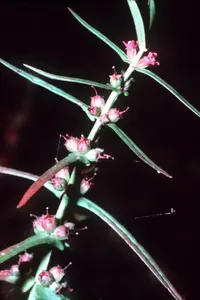
pink redstem Care (Ammannia latifolia)

Also known as: toothcups
pink redstem

About pink redstem

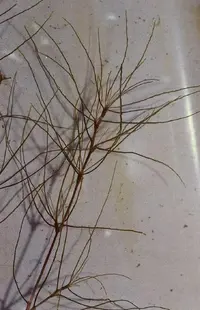
Pink redstem, Ammannia latifolia, is an aquatic and semi-aquatic plant often grown in aquariums and very wet garden settings. It develops upright, slender stems with narrow leaves that can take on pink to reddish tones under good light.

In nature, it occurs in warm, shallow waters, marsh edges, and periodically flooded fields, especially in tropical and subtropical regions. Its growth can be fast but somewhat demanding.

Stable water conditions, strong light, and nutrient-rich, fine-textured substrates support healthy growth, so beginners may need some practice to learn how to care for pink redstem.

Main Plant Requirements

Care Difficulty

Hard Care

Light Preference

Full Sun

Water Requirements

Aquatic

Temperature Preference

Tropical / Frost Sensitive

Hardiness Zone

10–12

Soil Texture

Silty, Loamy, Organic-rich

Soil pH

Acidic (5.5–6.5), Slightly acidic (6.5–7.0)

Soil Drainage

Waterlogged tolerant

Fertilization

Heavy (weekly, diluted)

Get Personalized Care Plan

Scan your plant to receive care tips personalized for your specific plant

Available on iOS and Android

How to Care for the pink redstem

Ammannia latifolia thrives in strong light and needs consistent sun exposure for compact, colored growth.

  • Provide 6–10 hours of direct sun daily; full sun to very bright conditions bring out the pink redstem coloration best.
  • Tolerates short periods of light shade, but prolonged shade leads to taller, weaker stems and duller leaves.
  • In summer, protect from extreme afternoon scorch in very hot climates by offering light filtered sun during the hottest 2–3 hours.

This species prefers constant moisture and reacts quickly to both drying out and stagnant, airless conditions.

  • Keep soil or substrate consistently moist; never allow it to dry completely, but avoid a slimy, anaerobic feel that indicates poor drainage.
  • Use the finger test: if the top 1–2 cm feel just moist, conditions are ideal; if wet and sour-smelling, reduce watering or improve drainage.
  • In warmer months, monitor more often as evaporation increases; in cooler periods, maintain moisture but reduce added water to prevent root rot in Ammannia latifolia.

This warm-climate aquatic plant grows best in stable, mild to warm temperatures without sudden swings.

  • Optimal growth occurs at 72–82°F (22–28°C); stems are sturdier and leaf color stronger within this range.
  • Avoid letting temperatures drop below 60°F (16°C); growth slows markedly and prolonged exposure near this level can damage tissue.
  • It tolerates short spikes to about 86–90°F (30–32°C) if water is well oxygenated, but is very sensitive to frost and should be protected from any near-freezing conditions.

This aquatic stem plant needs consistently high humidity around its emergent growth for stable health.

  • Aim for 70–90% humidity around any foliage growing above water to prevent leaf edge drying.
  • Dry air causes pale, curled, or crispy leaf tips and slowed stem growth on pink redstem.
  • Increase humidity with a covered tank, tight-fitting aquarium lid, or by grouping tanks to reduce evaporation loss.

This species grows rooted in fine substrate rather than conventional potting soil.

  • Use a fine-grained, nutrient-rich aquatic substrate or sand mixed with aquatic plant soil to anchor Ammannia latifolia securely.
  • Ensure the substrate layer is at least 5–7 cm deep so roots can spread and stabilize tall stems.
  • Slightly acidic to neutral conditions around pH 6.0–7.2 support nutrient availability and healthy coloration.
  • Avoid coarse gravel-only beds, hard alkaline substrates, or compacted mud that limits root penetration and gas exchange.

This species is suitable for container culture when grown in aquaria or water-filled tubs.

  • Choose a container with a broad base so tall, top-heavy stems do not tip the setup when fully grown.
  • Use a deep vessel that allows a substantial substrate layer plus enough water depth for upright, submerged growth.
  • Select rigid glass or thick plastic to resist bowing, which can disturb the root zone and loosen stems in the substrate.

Ammannia latifolia benefits from light, consistent nutrition during active growth but reacts poorly to heavy feeding.

  • Use a balanced liquid NPK fertilizer at 1⁄4–1⁄2 strength, suitable for aquatic or marginal plants.
  • Apply during the warm growing season every 2–4 weeks, depending on growth rate and water nutrient levels.
  • Reduce or stop feeding in cooler months when growth slows, especially in outdoor or unheated setups.
  • In nutrient-poor substrates, consider a slow-release aquatic tablet near the roots to support strong pink redstem coloration.

Pruning Ammannia latifolia maintains compact form, encourages bushier growth, and prevents overcrowding in dense plantings.

  • Best timing is during active growth in spring and summer, when recovery is fastest.
  • Trim back overlong, leggy, or crowded stems with clean, sharp aquascaping scissors or small shears.
  • Remove dead, shaded-out, or damaged stems at the base to improve light penetration and water circulation.
  • Topping healthy shoots just above a node stimulates side shoots, creating a fuller stand and more uniform appearance.

Transplanting Ammannia latifolia focuses on minimizing root disturbance while maintaining stable water and substrate conditions.

  • Look for signs such as roots circling a pot, stems lifting from the substrate, or slowed growth before moving plants.
  • Best timing is late spring to summer, when water temperatures are stable and growth is active.
  • Plan on dividing and replanting clumps every 6–12 months in high-energy aquaria where stems thicken and shade each other.
  • Gently remove stems, keep roots moist, trim damaged roots, and replant into fine, nutrient-rich substrate, then avoid major water chemistry changes for several days.

Ammannia latifolia is commonly propagated from stem cuttings taken during its active growing season.

  • Take 5–10 cm tip or mid-stem cuttings in late spring to summer, using clean scissors or a sharp blade.
  • Remove lower leaves so that bare stem nodes can sit in the substrate or water without rotting.
  • Plant cuttings upright in fine substrate or float them; provide bright light and stable, warm water.
  • Maintain gentle water flow and consistent nutrients to encourage quick rooting and new lateral shoot formation.

Winter care for Ammannia latifolia depends on climate and whether it is grown submerged indoors or outdoors.

  • In heated indoor aquaria, maintain stable warm water and normal lighting; no extra winter protection is needed.
  • Outdoors in mild climates, ensure water does not freeze solid; the plant is not frost tolerant when emersed.
  • For container or marginal setups in cold regions, move plants indoors or into a frost-free greenhouse before temperatures fall near freezing.

Care Tips

Substrate anchoring

Use a fine-grained, nutrient-rich aquarium substrate and gently pinch the lower 2–3 cm of stems into it with aquascaping tweezers so the roots anchor quickly and the plant does not float up in high flow tanks.

Staggered stem trimming

When stems reach the water surface, trim only 25–50% of them at a time and replant the healthy tops in open spaces to keep a dense stand without shocking the whole group at once.

Flow and placement

Place stems in moderate, indirect current rather than directly in front of a filter outlet so leaves can access dissolved CO2 and nutrients without being battered or uprooted by strong flow.

CO2 and nutrient balance

If tips stunt or lower leaves melt despite good light, slightly increase CO2 and ensure consistent macronutrient dosing instead of only raising light intensity, since Ammannia latifolia responds best to balanced conditions rather than extreme brightness.

Color optimization

For more intense red coloration when growing pink redstem, gradually increase light and keep nitrate on the moderate side while avoiding severe nutrient deficiency that would cause leaf loss or distorted growth.

Common Pests and Diseases

Algae overgrowth

Symptoms include green, brown, or reddish slimy films covering stems, leaves, and hardscape, especially under strong light and excess nutrients. This problem competes with the plant for light and can stunt or deform new growth.

Solution

Reduce light intensity or photoperiod to 6–8 hours, improve CO₂ stability, and balance fertilization so nitrate and phosphate are not excessive. Manually remove algae from leaves and glass, increase water changes, and add fast-growing stems or suitable algae grazers to outcompete algae when planning Ammannia latifolia care.

Staghorn algae

This pest algae forms coarse, branching gray-green tufts on older leaves and hardscape, often in tanks with unstable CO₂ and strong flow. This growth can smother lower stems and cause lower leaf loss.

Solution

Stabilize CO₂ levels, avoid large daily pH swings, and correct strong localized current directly on the stems. Manually cut off heavily infested leaves, spot-treat patches outside the tank with diluted liquid carbon or hydrogen peroxide before water changes, and prevent overfeeding and detritus buildup in the substrate zone around the plant base.

Nutrient deficiency chlorosis

This disease-like physiological problem shows as pale, yellowing, or pink-bleached new leaves while older foliage may stay relatively healthy. Symptoms indicate imbalanced macro or micronutrient supply rather than infection.

Solution

Check and correct the fertilization schedule to provide consistent nitrate, phosphate, potassium, and a complete trace mix, especially iron. Maintain stable CO₂, keep GH and KH within the species’ preferred range, and avoid large swings in water parameters to support steady growing pink redstem.

Melt from CO₂ shock

This condition appears as transparent, collapsing leaves and rapid stem deterioration after sudden CO₂ or parameter changes. Symptoms often follow an abrupt increase in CO₂ injection, major water chemistry shifts, or moving the plant between very different tanks.

Solution

Adjust CO₂ gradually over several days, keeping levels stable during the photoperiod, and avoid large temperature or KH/GH swings during water changes. Trim back melted tissue to healthy nodes, replant firm tops if needed, and allow time for new, adapted submerged growth to develop under stable conditions.

Snail grazing damage

These insects create pinholes, shredded margins, or missing soft tissue on younger leaves, especially when certain snail species become numerous and food is limited. Damage is often more visible on tender apical growth and recently planted stems.

Solution

Manually remove excess snails, reduce overfeeding, and siphon uneaten food and debris from the substrate. Use snail traps or introduce controlled numbers of natural predators where compatible, and keep plants healthy with good nutrition so they regrow faster than the grazing damage.

Interesting Facts

Amphibious growth form

This species naturally grows in periodically flooded habitats and can shift between submerged and emergent forms, changing leaf shape and texture depending on water depth and flow.

Color change in stems

Under strong light and adequate nutrients, the stems and upper leaves often develop pink to reddish tones, a trait that makes it popular in aquascaping as a midground or background accent plant.

Preference for still waters

In the wild, it is most often found in slow-moving ditches, marsh edges, and rice fields, indicating a tolerance for soft, muddy substrates and nutrient-rich, standing water conditions.

Botan icon

Did you know?

Ammannia latifolia is native to parts of the Americas but has become a locally naturalized species in some warm regions outside its original range, where it occupies human-made waterways and rice paddies without usually becoming a dominant invasive weed.

FAQs about pink redstem

Yellowing leaves usually come from nutrient deficiency, especially nitrogen or iron, or from poor water quality with high hardness. In submerged culture, insufficient light or unstable CO2 can also cause older leaves to yellow and deteriorate.

Grow Healthy Plants with Botan Care

Keep your plants happy and healthy with plant identification, disease detection, and easy care guidance.

Botan plant care app — identify plants on mobile

Explore More Plants