


Regular Thinning
Periodically remove the oldest, most tangled stems so light and water circulate better through the aquarium, which helps prevent lower foliage from yellowing and decaying.

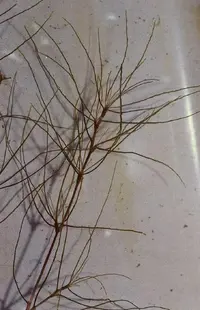
Southern waternymph (Najas guadalupensis) is a fast-growing, fully submerged aquatic plant commonly used in freshwater aquariums, ponds, and outdoor water features. It has fine, narrow, bright green leaves arranged along very slender stems, forming soft underwater thickets that provide shelter for fish and invertebrates.
This species is native to the Americas and is often found in still or slow-moving waters such as ditches, ponds, and quiet river margins. It adapts quickly when conditions are stable, which makes it relatively easy to care for southern waternymph.
The plant prefers clean, nutrient-rich water, moderate to bright light, and a stable environment without sudden changes. Its rapid growth habit can require regular trimming to prevent it from becoming invasive in closed systems.

Care Difficulty
Easy Care

Light Preference
Partial Sun

Water Requirements
Aquatic

Temperature Preference
Warm Climate

Hardiness Zone
6–11

Soil Texture
Sandy, Loamy, Organic-rich

Soil pH
Slightly acidic (6.5–7.0), Neutral (7.0)

Soil Drainage
Waterlogged tolerant

Fertilization
Minimal (feed rarely)
Scan your plant to receive care tips personalized for your specific plant
Available on iOS and Android
This submerged aquatic plant depends on stable, moderate light to support dense, healthy growth.
This fully aquatic species must remain constantly submerged in clean, well-oxygenated water.
This species grows best in consistently warm, unfrozen freshwater conditions.
This fully aquatic species depends on water conditions rather than room air humidity.
In aquaria, Najas guadalupensis anchors in substrate but does not rely on classic terrestrial soil.
This species is suitable for container culture in aquariums or outdoor tubs.
This submerged aquatic plant needs only light nutrient supplementation in typical fish-bearing aquariums or fertilized ponds.
Pruning helps Najas guadalupensis stay compact, prevents tangling, and maintains good water flow and light penetration.
This species is usually grown free-floating or lightly anchored, so transplanting focuses on repositioning stems rather than classic pot repotting.
This aquatic plant is routinely multiplied by stem cuttings, making expansion straightforward in most aquariums or ponds.
In mild climates and indoor aquariums, this plant needs minimal winter care, but outdoor setups in cold regions require planning.

Plant Health Check
Not sure what's wrong with your plant? Check your plant's health inside the app.
This submerged aquatic plant is native to much of the Americas, from the United States through Central America into parts of South America, and has also been reported as naturalized beyond its original range in some warm regions.
Dense underwater stands provide shelter and foraging surfaces for juvenile fish and invertebrates, making this species an important structural component of shallow freshwater habitats such as ponds, canals, and slow streams.
In aquariums it can root in substrate or grow freely as a floating mass, and responds quickly to increased nutrients and light, which is why many aquarists use it as a fast-growing background or nutrient-absorbing plant in Najas guadalupensis plant care.

This species is dioecious, meaning individual plants are either male or female, and it produces its tiny, inconspicuous flowers underwater, where pollination takes place within the aquatic environment rather than above the surface.
Yellowing leaves usually come from low nutrients, poor water quality, or sudden changes in hardness or pH. Check for low nitrates, very soft or very hard water, and improve fertilization and water stability to prevent stress.
Keep your plants happy and healthy with plant identification, disease detection, and easy care guidance.

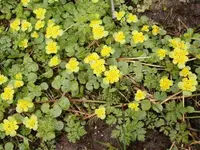
Alternate-leaved Golden-saxifrage
Chrysosplenium alternifolium
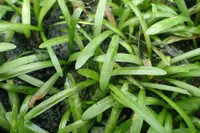
Dwarf Sagittaria
Sagittaria subulata
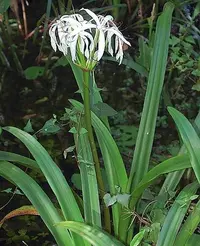
seven sisters
Crinum americanum
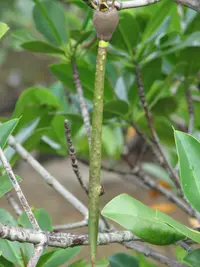
mangrove
Rhizophora mucronata
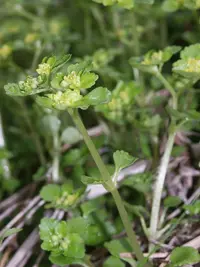
Opposite-leaved Golden Saxifrage
Chrysosplenium oppositifolium
mangrove
Rhizophora apiculata
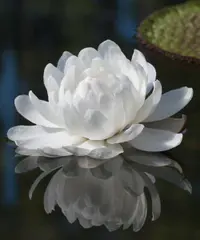
Amazon water lily
Victoria amazonica
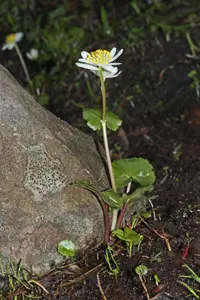
white marsh marigold
Caltha leptosepala