Streamside-style planting
Plant in shallow, wide trays or along the shaded edge of a pond liner or water feature so the roots stay evenly cool and moist, mimicking the plant’s natural stream-bank habitat.

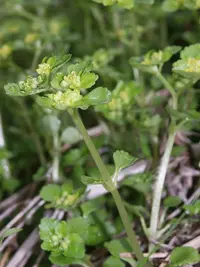
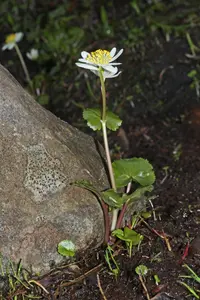
Opposite-leaved golden saxifrage, Chrysosplenium oppositifolium, is a small, low-growing perennial from cool, damp woodlands and stream edges in western and central Europe. It forms soft green mats with rounded, opposite leaves and tiny yellow-green flowers that create a subtle golden haze in spring.
This plant prefers shaded, consistently moist places and naturally spreads into ground-hugging patches, making it useful as a carpet in damp, cool gardens. Its need for reliable moisture and shelter from strong sun is the main factor that determines how easy it is to care for Opposite-leaved Golden Saxifrage.

Care Difficulty
Moderate Care

Light Preference
Shade

Water Requirements
Keep Soil Moist

Temperature Preference
Cold Hardy

Hardiness Zone
4–8

Soil Texture
Loamy, Silty, Organic-rich

Soil pH
Acidic (5.5–6.5), Slightly acidic (6.5–7.0)

Soil Drainage
Waterlogged tolerant

Fertilization
Minimal (feed rarely)
Scan your plant to receive care tips personalized for your specific plant
Available on iOS and Android
This shade-loving woodland perennial prefers cool, low-light sites that mimic stream banks and damp ravines.
This plant naturally grows in consistently moist to wet soils and does not tolerate drying out.
This cool-climate species is adapted to damp, shaded habitats with mild to cold conditions.
This streamside species needs consistently moist air, preferring cool, humid conditions to thrive.
This plant thrives in consistently moist, organic-rich, fine-textured soil that mimics a cool woodland stream edge.
This species can be grown in containers if consistently cool, moist root conditions are maintained.
This woodland groundcover needs minimal feeding, as Chrysosplenium oppositifolium is adapted to low-nutrient, moist habitats.
Pruning needs are light, mainly to keep Chrysosplenium oppositifolium tidy and healthy as a groundcover.
This species is usually grown in the ground, so focus on gentle transplanting rather than frequent repotting.
Chrysosplenium oppositifolium is commonly propagated by division, which keeps clumps vigorous and maintains desired coverage.
This hardy woodland perennial generally needs little winter attention in temperate climates.

Plant Health Check
Not sure what's wrong with your plant? Check your plant's health inside the app.
In spring the small flowers are surrounded by vivid yellow-green leaf-like bracts, which do most of the visual signaling to pollinators instead of the tiny petals.
This species naturally forms dense, low mats along cool, shaded stream banks and seeps in western and central Europe, helping stabilize moist soil and providing microhabitats for small invertebrates.
Its name reflects the distinctive opposite leaf pattern along the stems, with rounded, scalloped leaves appearing in paired sets rather than alternating.

Chrysosplenium oppositifolium is considered an indicator of ancient, undisturbed woodland and clean, well-oxygenated watercourses in parts of its native range, so its presence often signals a relatively intact, long-established habitat.
This species spreads steadily by short creeping stems and self-seeding, forming low carpets in damp, shady ground. It is usually manageable, but in ideal conditions can edge into nearby moist areas if not lightly contained.
Keep your plants happy and healthy with plant identification, disease detection, and easy care guidance.