


Adjust Salinity Gradually
When moving the plant between freshwater, brackish, and seawater, change salinity in small steps over several days to avoid salt shock and tissue damage.

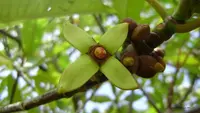
Rhizophora apiculata is a true mangrove tree, adapted to tidal coasts and brackish water. It develops arching stilt roots and pencil-like propagules that anchor in soft, salty mud.
This species forms dense stands along tropical shorelines in Southeast Asia and other Indo-Pacific regions, helping stabilize coasts and provide habitat for wildlife. Its specialized roots, salt management, and need for consistently wet, saline conditions make it challenging for beginners.
Those who want to care for mangrove at home usually grow it in controlled aquaria or specialized containers, with strong light, moving water, and carefully balanced salinity.

Care Difficulty
Hard Care

Light Preference
Full Sun

Water Requirements
Aquatic

Temperature Preference
Tropical / Frost Sensitive

Hardiness Zone
11–12

Soil Texture
Sandy, Silty, Organic-rich

Soil pH
Strongly acidic (4.5–5.5), Acidic (5.5–6.5)

Soil Drainage
Waterlogged tolerant

Fertilization
Minimal (feed rarely)
Scan your plant to receive care tips personalized for your specific plant
Available on iOS and Android
Rhizophora apiculata grows best with strong, consistent light similar to its natural coastal habitat.
Rhizophora apiculata is adapted to saturated, often saline conditions and must not be allowed to dry out completely.
This species prefers warm, stable tropical to subtropical temperatures year-round.
This coastal species prefers very high, stable humidity to mimic its natural tidal habitat.
Rhizophora apiculata performs best in a loose, waterlogged yet oxygenated substrate that mimics muddy coastal margins.
This species can be grown in containers if the setup is deep, heavy, and stable enough for its developing stilt roots.
This coastal species needs only light feeding in containers, since wild plants grow in nutrient-poor, tidal mud.
Pruning Rhizophora apiculata is mainly done to maintain structure and remove damaged growth in managed plantings.
In cultivation, this mangrove is more often transplanted between coastal or tank systems than repotted like a houseplant.
Rhizophora apiculata is usually propagated from viviparous propagules rather than from traditional cuttings or seed sowing.
This true tropical species is highly frost-sensitive and needs active winter management in temperate climates.

Plant Health Check
Not sure what's wrong with your plant? Check your plant's health inside the app.
This species develops strongly buttressed stilt roots with many fine rootlets concentrated in the upper mud layer, an adaptation that anchors it in soft, unstable marine sediments while maximizing oxygen uptake in low-oxygen soils.
Rhizophora apiculata excludes most salt at the root level through specialized filtration at the root surface, allowing it to grow in brackish estuaries and tidal zones that would kill most non-mangrove plants.
It is one of the dominant mangrove trees in many Southeast Asian and Indo-Pacific forests, where its dense stands stabilize shorelines, trap sediment, and create complex habitats for fish, crabs, and other coastal organisms.
The propagules of this species (the elongated, pencil-like seedlings that germinate while still attached to the parent tree) are buoyant and can survive long-distance dispersal by sea currents, allowing Rhizophora apiculata to colonize new shorelines far from the parent stand.
Growth is moderate under stable warm, salty, waterlogged conditions. Seedlings often add 20–50 cm per year, but growth slows if salinity, flooding depth, or nutrients are suboptimal. Container-grown specimens usually stay smaller and grow more slowly.
Keep your plants happy and healthy with plant identification, disease detection, and easy care guidance.

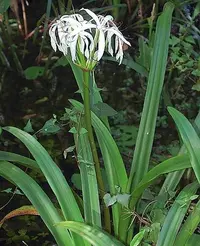
seven sisters
Crinum americanum
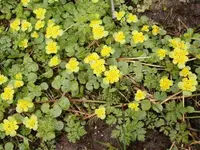
Alternate-leaved Golden-saxifrage
Chrysosplenium alternifolium

New Zealand red pine
Dacrydium cupressinum
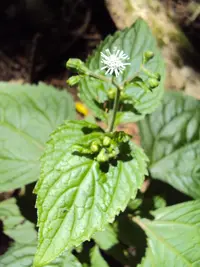
common medicineplant
Adenostemma lavenia
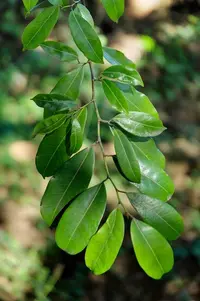
False Fig
Trilepisium madagascariense
Lecythis idatimon
Lecythis idatimon
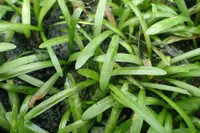
Dwarf Sagittaria
Sagittaria subulata

Persian ironwood
Parrotia persica