Early structural training
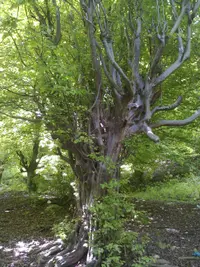
In the first 2–3 years, select a single strong leader and 3–5 well‑spaced scaffold branches, removing competing uprights so the tree develops a stable, open crown that can support its eventual size.

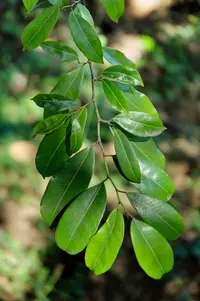
False fig, Trilepisium madagascariense, is a tropical evergreen tree from East Africa and Madagascar, usually grown indoors or in greenhouses in cooler climates. It develops a single trunk, dense rounded crown, and broad, glossy green leaves that give a lush, canopy-like look.
In nature it can become a large forest tree, but in containers its size is more manageable with pruning. Growth is fairly fast under warm, bright, and consistently moist conditions, so it suits growers who can offer stable indoor climates.
It prefers bright, indirect light, evenly moist but not waterlogged soil, and good drainage, which makes it moderately challenging for beginners learning how to care for False Fig.

Care Difficulty
Moderate Care

Light Preference
Partial Shade

Water Requirements
Regular Water

Temperature Preference
Tropical / Frost Sensitive

Hardiness Zone
11–12

Soil Texture
Loamy, Silty, Organic-rich

Soil pH
Acidic (5.5–6.5), Slightly acidic (6.5–7.0)

Soil Drainage
Moist but well-drained

Fertilization
Minimal (feed rarely)
Scan your plant to receive care tips personalized for your specific plant
Available on iOS and Android
This species prefers bright, filtered light that mimics a lightly shaded forest edge.
This tree prefers steadily moist, well-drained soil without long dry spells or standing water.
This tropical tree thrives in consistently warm, frost-free conditions.
This species prefers fairly humid air but adapts if extremes are avoided.
This tree prefers deep, moisture‑retentive but well‑aerated soil that does not stay waterlogged.
This species can be grown in large containers when kept pruned and given stable conditions.
This species benefits from moderate feeding when grown as a container or landscape specimen in active growth.
Pruning helps maintain safe structure and good light penetration in Trilepisium madagascariense, especially in cultivated or urban sites.
This tree is usually grown in the ground, so transplanting young plants correctly is more important than frequent repotting.
Propagation of this species is possible but often slower and is most practical for experienced growers or collections.
This tropical tree is frost-sensitive and needs careful winter management outside truly frost-free climates.

Plant Health Check
Not sure what's wrong with your plant? Check your plant's health inside the app.
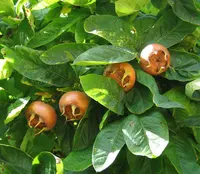
This species belongs to the Moraceae (mulberry/fig) family and produces fig-like, fleshy fruits that develop directly from the branches and trunk, a growth pattern known as cauliflory.
It is native to humid lowland and mid-elevation rainforests of Madagascar and nearby islands, where it forms part of the evergreen canopy and depends on consistently warm, moist conditions.
The fruits are an important food source for birds and mammals in its native range, helping sustain forest fauna while the animals disperse the tree’s seeds over distance.

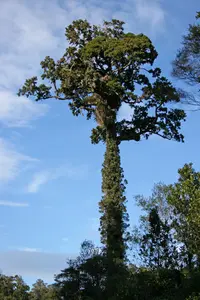
Mature trees can reach around 30 m tall with substantial buttressed trunks, making this species one of the larger broadleaf canopy components in parts of Madagascar’s remaining lowland rainforest.
This species is moderately fast-growing, especially in warm, humid climates with consistent moisture. Young plants can add noticeable height each year, but growth slows as the tree matures and root space or container size becomes limiting.
Keep your plants happy and healthy with plant identification, disease detection, and easy care guidance.