Sea Grapes Care (Caulerpa racemosa)

Sea Grapes

About Sea Grapes

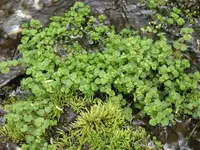
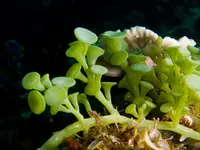
Sea grapes, Caulerpa racemosa, is a fast-growing marine macroalga often used in saltwater aquariums and refugiums. It forms long creeping stems covered in small round bead-like branches.

This alga naturally occurs in shallow tropical and subtropical seas, where it spreads across sand, rock, and seagrass beds. Its rapid growth and ability to outcompete other species make it both useful and potentially invasive.

In aquaria, it is valued for nutrient export and as a natural shelter for small organisms. To care for Sea Grapes, aquarists focus on stable water quality, moderate to strong light, and good water movement.

Main Plant Requirements

Care Difficulty

Moderate Care

Light Preference

Partial Shade

Water Requirements

Aquatic

Temperature Preference

Tropical / Frost Sensitive

Hardiness Zone

Unknown

Soil Texture

Sandy, Organic-rich

Soil pH

Alkaline (7.5–8.5)

Soil Drainage

Waterlogged tolerant

Fertilization

Minimal (feed rarely)

Get Personalized Care Plan

Scan your plant to receive care tips personalized for your specific plant

Available on iOS and Android

How to Care for the Sea Grapes

This marine alga prefers bright, filtered light that mimics shallow coastal waters.

  • Provide 6–10 hours of moderate, indirect light each day; in shallow outdoor setups, use light shade cloth to diffuse intense midday sun.
  • Sea Grapes tolerate partial shade, but growth becomes looser and slower if light falls below about 4 hours of useful illumination daily.
  • Avoid harsh, direct afternoon sun that penetrates clear water, which can bleach fronds; increase shade in summer and slightly increase exposure in low-light winter periods.

This species needs stable, clean seawater conditions rather than intermittent soil-style watering.

  • Maintain constant full submersion in well-circulated saltwater; do not allow Caulerpa racemosa to sit in stagnant or still water for long periods.
  • Use moderate flow so fronds move gently; weak flow with accumulating debris on fronds suggests insufficient circulation, while fronds tearing or detaching indicate excessive current.
  • Watch for yellowing, melting, or foul smell as signs of poor water quality or over-enrichment; improve filtration, partial water changes, and avoid heavy organic buildup in the substrate.

This tropical alga prefers warm, stable water temperatures typical of shallow reef environments.

  • Aim for 75–82°F (24–28°C) for best growth; this range supports steady photosynthesis and firm, grape-like fronds.
  • Avoid temperatures below 68°F (20°C); extended exposure near this level or lower slows growth, and near 60°F (16°C) tissue may die back.
  • Protect from extremes; above 84–86°F (29–30°C) can cause stress and pale fronds, so increase aeration and shading during heat waves and avoid any frost exposure.

This marine macroalga relies on fully submerged conditions rather than air humidity.

This seaweed anchors in substrate rather than true soil, so focus on stable, clean marine sand or rubble.

  • Use fine to medium marine sand or crushed coral that allows rhizoids to grip while water flows freely through it.
  • Maintain gentle water movement through the substrate to prevent anaerobic zones that can cause sections of the thallus to rot.
  • Keep marine aquarium pH stable around 8.0–8.4, since sudden pH swings stress Caulerpa racemosa and weaken holdfast attachment.
  • Avoid silty, compacted, or nutrient-loaded detritus layers, which trap gases and promote algae die-off under the substrate surface.

This species is suitable for containers such as marine aquariums or refugiums where it can be contained and managed.

  • Use a shallow, wide area of substrate so runners can spread horizontally without piling on top of each other.
  • Place rock or frag tiles partially buried in the substrate to give extra anchor points and reduce floating or dislodging.
  • Position the container where flow is moderate, avoiding direct pump outlets that can tear fronds or expose holdfasts.

This marine macroalga needs only light, controlled nutrition in closed systems, since excess nutrients cause instability.

  • Use a balanced liquid marine plant fertilizer at 1/4 strength, formulated for reef or macroalgae systems.
  • Dose during the active growth season every 2–4 weeks, based on nitrate and phosphate test results.
  • Reduce or pause dosing in low-light or slower winter periods to limit nuisance algae.
  • Focus on stable parameters and moderate nutrients rather than heavy feeding when caring for Sea Grapes.

Pruning Caulerpa racemosa maintains healthy spread, prevents overgrowth, and reduces the risk of sudden die-off in aquaria.

  • Trim during active growth, usually spring to early fall, when the plant recovers fastest.
  • Remove yellowing, damaged, or very dense fronds and runners to keep good water flow and light penetration.
  • Use clean aquascaping scissors and cut entire runner sections rather than tiny tips to limit stress.
  • Shape by thinning crowded areas, leaving evenly spaced runners to form a stable, low carpet or bushy clumps.

This species is usually transplanted within marine tanks rather than traditionally repotted, and prefers stable conditions.

  • Transplant when growth becomes too dense, shades other organisms, or traps detritus along the substrate.
  • Best timing is during stable, warm-season conditions when light and nutrients support quick recovery.
  • Every 6–12 months, lift and thin mats, then re-anchor healthy runners to sand, rubble, or dedicated macroalgae sections.
  • Reduce stress by avoiding major disturbance to holdfasts, matching lighting and flow, and keeping parameters stable during and after moves.

This macroalga is commonly propagated in aquaria by dividing runners rather than from spores.

  • Use vegetative division during strong growth, often in spring–summer under stable lighting and nutrients.
  • Select firm, richly green runners with multiple fronds and intact holdfasts for best establishment.
  • Cut sections 5–10 cm long using sterile scissors, avoiding crushed or torn tissue.
  • Anchor cuttings lightly in sand or rock, then provide moderate flow and stable salinity for rapid attachment and spread.

This tropical marine alga is not frost tolerant and must be kept in temperature-controlled water year-round.

  • Maintain stable aquarium temperatures around 72–78°F in winter using reliable heaters and monitoring.
  • Avoid placing tanks near cold windows or drafts that cause rapid temperature swings.
  • In cooler homes, insulate the aquarium sides or use a lid to reduce heat loss and evaporation.
  • Move any outdoor culture systems indoors before water temperatures fall below about 68°F.

Care Tips

Control Runner Spread

Regularly trim and remove older, creeping runners before they attach too deeply to rock or substrate, which helps prevent invasive overgrowth and makes long‑term maintenance of the aquascape easier.

Use Refugium Space

Grow this algae in a dedicated refugium chamber with moderate water flow so it can act as a nutrient export zone, then periodically harvest and discard excess biomass to keep nitrate and phosphate levels more stable.

Stabilize Lighting Cycle

Run the refugium or display lights on a consistent daily schedule, often opposite the main tank photoperiod, to reduce pH swings and keep growth more compact and controlled.

Quarantine New Fragments

Quarantine new fragments for 1–2 weeks in a separate container with clean, stable saltwater to observe for hitchhiking pests or problem algae before introducing them into the main system when growing Sea Grapes.

Support With Secure Anchors

Attach clumps lightly to porous live rock using reef‑safe clips, mesh, or gentle tying material so they root securely without shading corals or blocking important flow paths.

Common Pests and Diseases

Bryopsis algae

This pest competes strongly for light and nutrients and can rapidly overgrow Caulerpa fronds, causing shading and tissue stress. Symptoms include dark green, feathery tufts forming on rock and around the Caulerpa holdfasts.

Solution

Reduce dissolved nutrients through regular water changes and controlled feeding, and manually remove Bryopsis by gently pulling or scrubbing it off hard surfaces while avoiding damage to Caulerpa runners. Many aquarists also use elevated magnesium levels (with a reef-safe magnesium supplement) and strong, consistent protein skimming to suppress regrowth while improving overall Caulerpa racemosa plant care.

Hair algae overgrowth

This pest forms fine green strands that trap detritus and can smother Caulerpa blades, leading to light deprivation and localized dieback. Symptoms include tangled mats around fronds and reduced vigor despite normal lighting.

Solution

Manually siphon and twirl hair algae off the rockwork and Caulerpa, then lower excess nutrients by improving mechanical filtration, rinsing filter media, and moderating feeding. Increasing herbivorous clean‑up crew species, optimizing flow to prevent debris buildup, and maintaining stable CO2 and pH levels helps keep hair algae from re‑establishing.

Epiphytic cyanobacteria

This disease involves slimy, often reddish or dark films that grow over fronds and runners, blocking light and impairing gas exchange. Symptoms include slippery, sheet‑like coatings that peel away in mats and may trap air bubbles.

Solution

Siphon cyanobacteria off surfaces during water changes and increase water movement so no area around the Caulerpa remains stagnant. Lower dissolved nutrients by improving export (refugium maintenance, skimming, regular water changes) and reduce long photoperiods, while avoiding sudden, extreme light reductions that could stress the Caulerpa.

Caulerpa sudden meltdown

This disease is a stress response where the thallus rapidly turns pale, then translucent, releasing nutrients and causing the colony to disintegrate. Symptoms include rapid yellowing, a cloudy appearance in the water, and a strong, unpleasant odor from decaying tissue.

Solution

Immediately remove affected fronds and as much liquefying tissue as possible, then perform large partial water changes and use fresh activated carbon to remove released organics. To prevent recurrence, stabilize lighting duration, avoid large swings in temperature, salinity, and nutrients, and harvest Caulerpa regularly so it does not become overgrown and physiologically stressed.

Herbivorous fish grazing damage

This pest issue occurs when tangs, rabbitfish, or other strong grazers repeatedly eat or tear fronds faster than the plant can regrow. Symptoms include clipped, ragged blades, missing sections of runners, and thinning stands in accessible areas.

Solution

Provide alternative macroalgae or algae sheets to redirect grazing pressure and, if possible, separate Caulerpa into a refugium or protected section of the system. Maintaining strong overall plant health through stable parameters and moderate nutrient levels allows faster regrowth and helps the colony tolerate occasional grazing without collapsing.

Interesting Facts

Single-cell giant

This alga forms extensive carpets and grape-like branches, yet a continuous cytoplasm links the whole structure so it is technically a single cell with many nuclei rather than a colony of smaller cells.

Fast coastal colonizer

In suitable warm, shallow waters it spreads rapidly via creeping stolons and fragmentation, allowing it to quickly dominate disturbed sandy or rocky substrates and compete strongly with native seaweeds and seagrasses.

Chemical grazing defense

It produces secondary metabolites such as caulerpenyne, a defensive compound that makes its tissues less palatable to many herbivorous fish and invertebrates, helping it persist even in heavily grazed reef areas.

Botan icon

Did you know?

Some populations of this species in the Mediterranean and other introduced regions show reduced sexual reproduction and rely mainly on vegetative growth and fragmentation, which contributes to its success and persistence as an invasive marine alga.

FAQs about Sea Grapes

This species is edible and widely eaten raw in coastal cuisines. Always source it from clean, unpolluted water and rinse thoroughly. People with iodine sensitivity or thyroid disorders should consult a healthcare professional before frequent consumption.

Grow Healthy Plants with Botan Care

Keep your plants happy and healthy with plant identification, disease detection, and easy care guidance.


Botan plant care app — identify plants on mobile

Explore More Plants