mother of thyme Care (Thymus praecox)

Also known as: wild thyme
mother of thyme

About mother of thyme

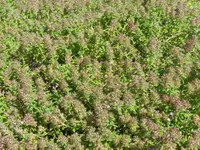
Mother of thyme (Thymus praecox) is a low, spreading perennial herb in the mint family, often used as a groundcover or edging plant. It forms dense, mat-like carpets of tiny aromatic leaves that stay attractive most of the year.

In nature it is native to parts of Europe, where it grows in rocky, well-drained, often sunny habitats. Small pink to purple flowers appear in clusters and attract bees and other pollinators.

This species is generally easy to grow because it tolerates poor soils, resists drought once established, and stays compact. Gardeners who learn how to care for mother of thyme usually find it adaptable in rock gardens, borders, and between paving stones.

Main Plant Requirements

Care Difficulty

Easy Care

Light Preference

Full Sun

Water Requirements

Low Water

Temperature Preference

Cold Hardy

Hardiness Zone

4–9

Soil Texture

Sandy, Loamy, Rocky

Soil pH

Slightly acidic (6.5–7.0), Slightly alkaline (7.0–7.5)

Soil Drainage

Well-drained

Fertilization

Minimal (feed rarely)

Get Personalized Care Plan

Scan your plant to receive care tips personalized for your specific plant

Available on iOS and Android

How to Care for the mother of thyme

This low, mat-forming thyme needs strong sun to stay dense, aromatic, and compact.

  • Provide 6–8 hours of direct sun daily; morning sun with light afternoon shade suits hot summer areas best.
  • Plant mother of thyme in open, unshaded spots; it tolerates light partial shade but becomes thinner, taller, and less fragrant with under 4–5 hours of sun.
  • In very intense summer sun, especially on reflective surfaces, monitor for scorched, bleached foliage and give slight afternoon shade if leaf tips crisp.

Thymus praecox prefers infrequent, light watering and dries quickly between soakings.

  • Water only when the top 2–4 cm of soil are completely dry; in many climates this means every several days in summer and far less in cool, wet seasons.
  • Ensure sharply drained soil or a slope so water never pools; standing moisture around the roots leads to rot and blackened, collapsing stems.
  • Watch foliage for cues: limp, dull leaves and very dry soil signal underwatering; yellowing, mushy stems with wet soil indicate overwatering.

This groundcover thyme is hardy and prefers cool to warm conditions rather than extreme heat.

  • Active growth is best at 60–75°F (16–24°C), with compact foliage and strong scent in mild spring and early summer weather.
  • Mature plants tolerate cold down to about -20°F (-29°C) with good drainage; winter wet is more damaging than low air temperature.
  • In hot spells above 90°F (32°C), growth slows; provide slightly more shade and avoid heat-reflecting surfaces that can scorch foliage.

This species prefers relatively dry air and usually does well in 30–50% humidity.

  • Mother of thyme tolerates typical indoor dry air and does not need extra humidification.
  • Humidity stress shows as limp growth and increased susceptibility to fungal spots rather than crisp leaf edges.
  • If air is extremely dry and hot, group pots together away from direct heating vents instead of using trays of water.

This plant prefers lean, fast-draining, slightly alkaline mineral soil.

  • Use a sandy or gritty mix such as 60% cactus soil with 40% coarse sand or small grit for strong aeration.
  • Aim for pH 7.0–8.0; add a small amount of crushed limestone or garden lime if soil is noticeably acidic.
  • In heavy native soil, raise the planting area 10–15 cm and mix in sharp sand or fine gravel to improve drainage.
  • Avoid peat-heavy, compacted, or water-retentive mixes, which promote root rot and winter losses for Thymus praecox.

This low, mat-forming thyme is well suited to container growing.

  • Choose a wide, shallow pot to match the shallow root system and encourage dense surface coverage rather than deep rooting.
  • Select unglazed terracotta if possible, as it allows faster evaporation and reduces the risk of chronically wet roots.
  • Ensure large, unobstructed drainage holes and elevate the pot slightly so excess water clears quickly after rain or watering.

This low-maintenance herb needs modest feeding to stay dense and aromatic without becoming lush and weak.

  • Use a light top-dressing of compost or a balanced slow-release fertilizer (around 10-10-10) at the start of spring growth.
  • Feed container-grown mother of thyme once in spring and again in midsummer; in the ground, a single spring feeding is usually enough.
  • Dilute liquid balanced fertilizer to 1/4–1/2 strength if used, and apply only to moist soil to avoid root burn.
  • Stop fertilizing in late summer, and do not feed in winter dormancy, to keep growth compact and cold-hardy.

Thoughtful pruning keeps Thymus praecox low, dense, and flowering well.

  • Trim lightly after flowering in late spring or early summer to maintain a tight, ground-hugging shape.
  • Remove dead, damaged, or woody stems with clean scissors or hand pruners, cutting back to healthy green growth.
  • Thin crowded patches to improve air flow and reduce risk of fungal disease in humid conditions.
  • Avoid cutting into old, leafless wood; leave some leafy tips on each stem to encourage regrowth.

This creeping thyme is more often transplanted in beds than kept long term in containers, but both are possible.

  • Plan repotting or transplanting for early spring or early fall, when temperatures are mild and soil moisture is stable.
  • Look for roots circling the pot, water running straight through, or slow growth despite good care as signs it needs more space.
  • When transplanting, lift plants with a soil clump, tease apart tight roots gently, and replant at the same depth in well-drained soil.
  • Water thoroughly after moving, then keep soil lightly moist (not wet) for 1–2 weeks to limit transplant shock.

New plants are commonly produced from established clumps, short cuttings, or seed.

  • Divide mature mats of Thymus praecox in early spring or early fall, replanting small rooted sections 15–20 cm apart.
  • Take 5–8 cm softwood tip cuttings in late spring, remove lower leaves, and root in a sandy, well-drained mix under bright shade.
  • Sow seeds on the surface of a free-draining mix in spring, pressing lightly but not covering, and keep evenly moist until germination.
  • Maintain warmth around 65–75°F and good air movement for cuttings and seedlings to reduce rotting and encourage strong roots.

This species is generally cold hardy in temperate climates and needs limited winter attention in the ground.

  • In regions with freeze–thaw cycles, apply a thin, breathable mulch (such as fine gravel or leaf mold) around, not over, the crowns.
  • Avoid waterlogged soil before and during winter, since saturated roots are more likely to rot in freezing conditions.
  • Move containers to a sheltered, unheated spot like a cold frame or against a house wall, and ensure drainage holes stay open.

Care Tips

Encourage Dense Mats

Lightly pinch or shear back young shoots after flowering to encourage tight, carpet-like growth and reduce gaps where weeds can establish when growing mother of thyme in larger areas.

Control Weed Competition

Lay a thin layer of coarse sand or fine gravel around plants in open ground to suppress tiny weed seedlings without holding excess moisture around the crowns.

Improve Winter Survival

In cold, wet climates, plant on a slight mound or raised edge so winter moisture drains away from the roots, reducing crown rot and winter kill.

Avoid Foot-Traffic Damage

Limit heavy or repeated foot traffic to defined stepping stones, since frequent compression of the stems and soil can thin out the mat and invite fungal problems.

Refresh Aging Patches

Every 3–4 years, lift small sections from the healthiest outer edges, replant them into prepared, free-draining spots, and discard the sparse center to keep the groundcover vigorous and uniform.

Common Pests and Diseases

Spider mites

This pest is favored by hot, dry conditions and can cause fine webbing, pale foliage, and a general gray, dusty look on leaves and stems.

Solution

Rinse plants thoroughly with a strong but controlled stream of water, then increase humidity slightly around the plants and improve air circulation; if needed, apply insecticidal soap or horticultural oil, making sure to coat the undersides of leaves and repeating treatments as the label directs.

Aphids

These insects cluster on young shoots and flower stems, sucking sap and causing curling, distortion, and sticky honeydew that can attract sooty mold.

Solution

Blast colonies off with water, then prune heavily infested tips and, if populations persist, use insecticidal soap or a light horticultural oil, applied in the early morning or evening to avoid leaf burn.

Leaf spot

This disease causes small brown or purplish spots on foliage that may merge into larger blotches, making the mat look patchy and thinning over time.

Solution

Remove and dispose of affected stems to reduce inoculum, avoid overhead watering, and improve spacing and airflow; in persistent cases, a thyme-safe fungicide labeled for foliar leaf spots can be used preventively during wet weather.

Crown and root rot

This disease develops in poorly drained or waterlogged soil, leading to yellowing, wilting, and collapse of whole patches starting from the center of the clump.

Solution

Improve drainage by raising the planting area or amending soil with grit, avoid overwatering, and remove severely affected plants; replant only in well-drained, open soil and consider using gravel mulch around crowns to keep bases dry and support Thymus praecox care in rainy climates.

Botrytis blight

This disease appears during cool, damp periods as gray, fuzzy mold on dense foliage, flowers, or damaged stems, often causing dieback in shaded or poorly ventilated areas of the mat.

Solution

Trim out and discard infected material, thin overcrowded patches to improve airflow, avoid wetting foliage late in the day, and if needed apply a suitable fungicide labeled for botrytis on edibles or herbs, following all label directions carefully.

Interesting Facts

Natural ground-weaving habit

This species forms very low, dense mats that creep between stones and over bare soil, making it one of the classic choices for living pathways and rock crevices in cooler European climates where it evolved.

Cold-hardy Mediterranean thyme

Unlike many culinary thymes, this plant is adapted to continental European and montane conditions and tolerates freezing winters and snow cover better than several close relatives, while still remaining evergreen in many climates.

High floral value for bees

Its small, pink to purple flowers are produced in dense clusters close to the ground and are rich in nectar, so short-tongued bees and other small pollinators frequently use it as a key foraging plant in dry, open habitats.

Botan icon

Did you know?

Genetic and morphological studies show that this plant is part of a complex of closely related creeping thymes that have diversified across Europe, so wild populations can form local ecotypes with distinct leaf size, hairiness, and growth form adapted to specific mountain, coastal, or steppe environments.

FAQs about mother of thyme

This species spreads slowly to moderately by creeping stems, forming low mats rather than running aggressively. It can fill gaps between stones or in borders over several seasons without usually overwhelming neighboring, similarly sized plants.

Grow Healthy Plants with Botan Care

Keep your plants happy and healthy with plant identification, disease detection, and easy care guidance.

Botan plant care app — identify plants on mobile

Explore More Plants