Sturdy vertical support
Install a strong trellis, wire panel, or taut strings 1.8–2.4 m high before planting so vines can attach immediately and avoid stem damage from later repositioning.

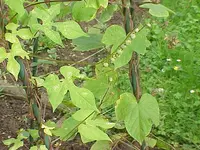
Firecracker vine (Ipomoea lobata) is a fast-growing, twining annual climber known for its showy, cascading flowers that shift from red to cream as they age. It is often grown on trellises, fences, or arches, where its slender stems and lobed green leaves quickly create a colorful vertical display.
This species is native to Central and South America, where it thrives in warm, sunny conditions. In gardens, it is considered relatively easy to grow if given full sun, regular moisture, and well-drained soil. Gardeners who understand how to care for Firecracker Vine usually find it a rewarding choice for seasonal color and quick coverage.

Care Difficulty
Moderate Care

Light Preference
Full Sun

Water Requirements
Moderate Water

Temperature Preference
Tropical / Frost Sensitive

Hardiness Zone
10–11

Soil Texture
Sandy, Loamy, Organic-rich

Soil pH
Acidic (5.5–6.5), Slightly acidic (6.5–7.0)

Soil Drainage
Well-drained

Fertilization
Light (every 4–6 weeks)
Scan your plant to receive care tips personalized for your specific plant
Available on iOS and Android
Ipomoea lobata thrives in bright, direct sun for strong growth and flowering.
This fast-growing climber prefers evenly moist but not saturated soil.
This species performs best in warm, frost-free conditions typical of summer annual vines.
This species adapts well to typical indoor humidity and rarely needs special adjustment.
Ipomoea lobata prefers light, free-draining soil that stays evenly moist but never waterlogged.
This vine grows very well in containers when given enough root space and support.
Ipomoea lobata responds well to modest feeding during its active growing season.
Pruning Ipomoea lobata helps manage its vigorous growth and maintain strong flowering.
This vine is usually grown as an annual and is more often transplanted outdoors than long-term repotted indoors.
Most gardeners propagate Ipomoea lobata from seed, which gives fast results in warm conditions.
In most climates this vine is grown as a frost-tender annual, so winter care focuses on season-end management.

Plant Health Check
Not sure what's wrong with your plant? Check your plant's health inside the app.
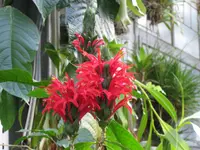
The flowers open pale yellow at the base and rich red at the tip, creating a distinct gradient along one side of the inflorescence that resembles a burning fuse or firework, which inspired common names like firecracker vine and Spanish flag.
The tubular flowers are arranged along only one side of the flowering stalk, a form known as secund, which makes the entire raceme appear as a colorful, slightly curved banner.
In cultivation across North America, this species is especially attractive to hummingbirds, which are well suited to its narrow tubular flowers and help transfer pollen as they feed on nectar.

This species is native to Mexico but has been widely adopted as an ornamental in temperate regions, where it is typically grown as an annual climber because it cannot tolerate prolonged frost and low winter temperatures.
Poor flowering usually comes from insufficient light, too much nitrogen fertilizer, or stress from drought, cold, or root disturbance. Focus on balanced nutrition and stable conditions; this will support reliable blooming without needing complex Firecracker Vine care instructions.
Keep your plants happy and healthy with plant identification, disease detection, and easy care guidance.