


Leaf support grid
Install a submerged plastic or stainless-steel mesh frame 10–20 cm below the water surface so young pads can rest on it, which reduces tearing from waves and helps them expand to full size.

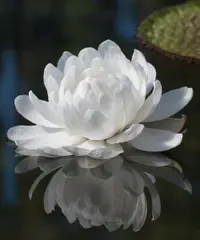
The Amazon water lily, Victoria amazonica, is a giant aquatic plant known for its huge round leaves that float on calm, warm water. Each leaf can form a dense, almost continuous raft-like cover on ponds or slow rivers.
This species is native to the Amazon Basin, where it grows in shallow, still freshwater. It produces large, fragrant flowers that open at night and change color after pollination.
In cultivation, it is considered challenging, mainly due to its need for consistently warm temperatures, high humidity, and large, deep water bodies. Those learning how to care for Amazon water lily should expect it to demand stable warmth, full sun, and nutrient-rich aquatic soil.

Care Difficulty
Hard Care

Light Preference
Full Sun

Water Requirements
Aquatic

Temperature Preference
Tropical / Frost Sensitive

Hardiness Zone
11–12

Soil Texture
Loamy, Silty, Organic-rich

Soil pH
Slightly acidic (6.5–7.0), Neutral (7.0)

Soil Drainage
Waterlogged tolerant

Fertilization
Moderate (every 2–4 weeks)
Scan your plant to receive care tips personalized for your specific plant
Available on iOS and Android
This tropical aquatic species needs strong, stable light to fuel its large leaves and flowers.
This giant water lily needs consistently deep, warm, still water rather than intermittent surface watering.
This tropical aquatic plant grows best in warm, stable conditions with no exposure to frost.
This species needs very high humidity to match its tropical aquatic habitat.
Victoria amazonica grows best in deep, heavy, organic-rich aquatic soil that stays waterlogged but stable.
This species can be grown in very large containers submerged in a pond, but only with careful setup.
Feed Victoria amazonica moderately to support strong leaf and flower production in warm water.
Pruning Victoria amazonica focuses on hygiene and maintaining open water surface for healthy growth.
Transplanting Victoria amazonica is usually done once early in the season to give the plant ample space.
Most Victoria amazonica propagation is done from seed under controlled warm-water conditions.
Victoria amazonica is a tropical water lily that cannot tolerate frost or prolonged cool water.

Plant Health Check
Not sure what's wrong with your plant? Check your plant's health inside the app.
The flowers heat themselves by several °C above air temperature during the first night of opening, which helps volatilize scent compounds and attract beetle pollinators. This heat production is a form of plant thermogenesis, powered by rapid respiration in specialized floral tissues.
Each flower is white on the first night and temporarily traps visiting beetles inside, then reopens the second night as a pink flower to release pollen-dusted insects. This color change signals that the flower has shifted from female phase to male phase and is no longer receptive.
The circular leaves can reach more than 2 m across and have a strong, ribbed underside that forms a lattice-like framework. This structure distributes weight and gives buoyancy, allowing the leaf to support substantial loads on calm water without tearing.

The species was originally described in 1837 from plants grown at the Royal Botanic Gardens, Kew, and was named in honor of Queen Victoria, becoming a symbol of Victorian-era fascination with tropical botany and engineering, including greenhouse design optimized to display its giant leaves and flowers.
Lack of flowering often comes from water that is too cool, shallow, or low in nutrients. Insufficient full sun or overcrowding also reduces blooms. Deep, warm, fertilized water and ample light are key for reliable flowering.
Keep your plants happy and healthy with plant identification, disease detection, and easy care guidance.

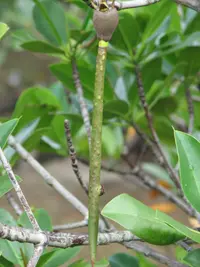
mangrove
Rhizophora mucronata
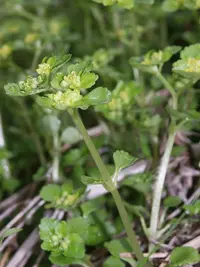
Opposite-leaved Golden Saxifrage
Chrysosplenium oppositifolium
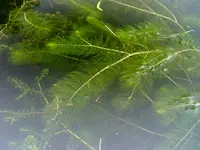
shortspike watermilfoil
Myriophyllum sibiricum
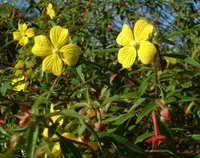
Mexican primrose-willow
Ludwigia octovalvis
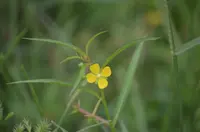
shrubby primrose-willow
Ludwigia suffruticosa
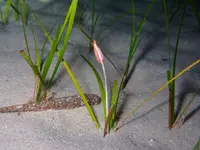
Slender Seagrass
Cymodocea nodosa
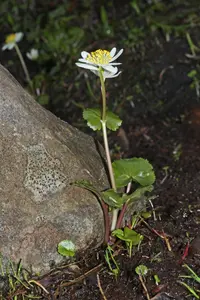
white marsh marigold
Caltha leptosepala
smallfruit primrose-willow
Ludwigia microcarpa