Haworthia cooperi var. pilifera Care

Haworthia cooperi var. pilifera

About Haworthia cooperi var. pilifera

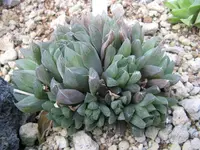
Haworthia cooperi var. pilifera is a small stemless succulent forming tight rosettes of fleshy, translucent-tipped leaves. The leaf tips often look glassy, allowing light deeper into the tissue. Native to South Africa, it grows in rocky, well-drained habitats, often shaded by grasses or stones. This origin explains its preference for bright, indirect light rather than harsh, direct sun indoors. The plant grows slowly, stays compact, and tolerates some neglect, which makes it suitable for windowsills and desks. It usually needs a gritty, fast-draining mix and careful watering to avoid rot. For most home conditions, it is considered easy to care for Haworthia cooperi var. pilifera.

Main Plant Requirements

Care Difficulty

Easy Care

Light Preference

Bright Indirect Light

Water Requirements

Low Water

Temperature Preference

Tropical / Frost Sensitive

Hardiness Zone

10–11

Soil Texture

Sandy, Loamy, Rocky

Soil pH

Acidic (5.5–6.5), Slightly acidic (6.5–7.0)

Soil Drainage

Well-drained

Fertilization

Minimal (feed rarely)

Get Personalized Care Plan

Scan your plant to receive care tips personalized for your specific plant

Available on iOS and Android

How to Care for the Haworthia cooperi var. pilifera

This compact succulent prefers bright, indirect light with gentle sun exposure.

  • Provide 3–5 hours of soft morning sun or late-afternoon sun, plus bright filtered light for the rest of the day.
  • Protect from harsh midday sun; strong, direct exposure behind glass can scorch leaves and bleach the translucent tips.
  • In low-light seasons, move Haworthia cooperi var. pilifera closer to an east- or west-facing window; stretched, pale leaves indicate insufficient light.

Watering should balance deep soaking with long drying intervals suited to a small succulent root system.

  • Allow the top 3–5 cm of soil to dry completely before watering, then soak thoroughly so excess drains away.
  • Reduce watering significantly in fall and winter, watering only when leaves begin to slightly soften or wrinkle.
  • Watch for overwatering signs such as mushy, translucent leaves and sour-smelling soil; very thin, shriveling leaves suggest underwatering in Haworthia cooperi var. pilifera.

Stable, moderate warmth supports steady growth and reduces stress for this succulent.

  • Aim for 65–80°F (18–27°C) during active growth; short spikes to 85–90°F (29–32°C) are tolerated with shade and airflow.
  • Protect from cold; growth slows below 55°F (13°C) and tissue damage can occur below 40°F (4°C), especially in wet soil.
  • Avoid frost entirely; bring plants under cover before 40°F (4°C) and shield from reflected heat on very hot days to prevent leaf scorch.

This succulent handles typical indoor humidity easily and rarely needs special humidity management.

  • Aim for 30–50% humidity, matching most heated or air-conditioned homes.
  • Dry air is tolerated, but very shriveled, soft leaves can indicate combined drought and low humidity stress.
  • Increase local humidity only if leaves wrinkle despite careful watering, for example by placing the pot near other plants or on a pebble tray without wetting the crown.

Soil for Haworthia cooperi var. pilifera must drain very quickly while keeping roots lightly anchored.

  • Use a gritty, sandy mix such as 50–70% mineral components (pumice, coarse perlite, 3–5 mm gravel) with 30–50% cactus potting mix.
  • Target slightly acidic to neutral pH, around 6.0–7.0, which suits most commercial cactus or succulent blends.
  • Improve aeration by avoiding fine peat; replace part of it with pine bark fines, pumice, or coarse sand to create large air pockets.
  • Do not use dense garden soil or moisture-retentive compost, which stays wet, collapses structure, and promotes root rot.

This compact species is very suitable for container growing.

  • Choose a shallow but wide pot that matches the shallow root system and reduces unused, moisture-holding depth.
  • Select unglazed terracotta if extra evaporation is needed, especially in cooler or low-light locations where mix dries slowly.
  • Ensure drainage holes stay fully open by covering them with a single mesh piece or large shard rather than a thick gravel layer.

This succulent needs minimal feeding, but light nutrition supports steady container growth for Haworthia cooperi var. pilifera.

  • Use a balanced liquid fertilizer (around 10-10-10 or 20-20-20) diluted to 25–50% strength for Haworthia cooperi var. pilifera plant care.
  • Apply every 4–6 weeks during spring and summer only, on already moist soil to prevent root burn.
  • Skip compost-heavy mixes; instead, use low-organic, cactus-specific products or a gentle slow-release pellet at the start of the growing season.
  • Stop feeding in fall and winter to match its semi-dormant phase and reduce soft, weak growth.

Pruning needs are minimal and focus on cleanliness and plant health for Haworthia cooperi var. pilifera.

  • Remove dead, shriveled, or damaged leaves at any time, cutting close to the base without injuring firm tissue.
  • Use small, clean scissors or pruning snips, disinfected with alcohol to limit disease spread.
  • Thin out crowded or etiolated rosettes to improve airflow, maintain compact form, and encourage offsets.
  • Cut spent flower stalks at the base after blooming to redirect energy back to root and rosette growth.

Repotting is infrequent, mainly to refresh soil and manage offsets in Haworthia cooperi var. pilifera.

  • Look for roots circling the pot, slow growth despite good light, or many crowded pups as signs repotting is due.
  • Plan repotting every 2–3 years in late spring, when active growth resumes and stress recovery is faster.
  • Ease the plant from its pot, gently tease roots apart, and remove old, compacted mix without breaking healthy roots.
  • Replant in a slightly larger container with gritty cactus mix, keep roots dry for 2–3 days, then resume light watering.

Propagation is commonly done by division of offsets for Haworthia cooperi var. pilifera.

  • Detach offsets during late spring or early summer when plants are actively growing and easier to handle.
  • Lift the clump, gently separate pups with some roots attached, using a clean knife if needed.
  • Allow cut or broken surfaces to dry and callus for 1–2 days in shade to reduce rot risk.
  • Set divisions in dry, fast-draining succulent mix, then water lightly after a few days and keep in bright, indirect light.

Winter care focuses on temperature control and very dry soil for Haworthia cooperi var. pilifera.

  • Treat it as frost-sensitive; aim to keep above 40°F, ideally 50–60°F indoors.
  • Move outdoor containers inside before frost, placing them near a bright window with indirect light.
  • Water sparingly, about once every 3–4 weeks, letting the mix dry completely between waterings to prevent rot.

Care Tips

Offset management

Remove and replant offsets only when they have at least 3–4 leaves and visible roots, then allow the cut or broken surface to dry for 1–2 days before potting to prevent rot.

Light acclimation

When moving the plant to a brighter position, increase light exposure over 1–2 weeks by gradually shifting it closer to the window to avoid leaf scorching and stress.

Compact rosette shaping

Rotate the pot by 90° every 1–2 weeks so light reaches all sides evenly, which keeps rosettes symmetrical and reduces stretching toward one direction.

Winter rest adjustment

During the darkest months, reduce disturbance, avoid repotting, and keep the plant slightly drier to support its natural semi-dormant phase and maintain dense leaf clusters.

Subtle health monitoring

Check leaf transparency and firmness every few weeks; slightly softer, less translucent leaves often indicate it is time to adjust watering or light when growing Haworthia cooperi var. pilifera.

Common Pests and Diseases

Mealybugs

This pest feeds on leaf bases and between crowded rosettes, causing distortion, yellowing, and sticky honeydew that can lead to sooty mold. Symptoms include cottony white clusters tucked into tight leaf joints and around roots in the potting mix.

Solution

Remove visible insects with a cotton swab dipped in 70% isopropyl alcohol and gently flush leaf crevices with a strong but controlled stream of water. For ongoing Haworthia cooperi var. pilifera care, keep plants in bright, dry, airy conditions, inspect regularly, and use a systemic insecticide labeled for succulents if infestations persist, following label directions carefully.

Aloe mite

This pest (also called eriophyid or gall mite) causes deformed, warty, tumor-like growths on leaves and sometimes around the crown, often with abnormal color or rough, scabby tissue. Symptoms include localized swellings that do not look like normal offsets or mechanical damage.

Solution

Isolate the plant immediately, then cut out all affected tissue well back into healthy, firm leaves and dispose of contaminated material in the trash, not compost. If deformation is extensive, discard the entire plant and potting mix, and in mild early cases consider a targeted miticide labeled for eriophyid mites while also reducing plant-to-plant contact to limit spread.

Aphids

These insects sometimes cluster on soft new growth, flower stalks, or between inner leaves, sucking sap and causing curled, weakened tissue. This pest also produces honeydew, which can attract ants and support sooty mold on the leaf surface.

Solution

Rinse infested areas thoroughly with a directed stream of water and pinch off heavily infested flower stalks. For recurring problems, apply insecticidal soap or neem oil to all leaf surfaces and the crown, repeat as needed, and reduce excess nitrogen fertilization that promotes soft, aphid-prone growth.

Fungal leaf spots

This disease causes small, sunken, brown to black spots on the translucent leaf tips or along the sides, sometimes with a yellowish halo. Symptoms include slow-spreading lesions that may coalesce, especially in plants kept too damp or crowded with poor air movement.

Solution

Remove affected leaves at the base with a sterile tool, allow the wounds to dry, and improve airflow by spacing plants and using a grittier, faster-draining mix. Water only when the soil is dry, avoid wetting the rosettes, and in persistent cases apply a copper-based or sulfur-based fungicide suitable for succulents, following label instructions.

Soft bacterial rot

This disease starts as a water-soaked, translucent area at the leaf base or crown that quickly becomes mushy and foul-smelling. Symptoms include collapse of inner leaves and easy separation of rosettes from a slimy crown in overly wet, warm conditions with stagnant air.

Solution

At the first signs, unpot the plant, cut away all soft, discolored tissue with sterile tools, and let any firm remaining offsets dry for 1–2 days before replanting in fresh, sterile, very well-draining mix. Discard severely affected plants and soil, reduce watering frequency, and keep crowns dry and well ventilated to prevent recurrence.

Interesting Facts

Translucent window leaves

This variety forms rosettes of small, bulbous leaves with translucent tips that act as light windows, allowing sunlight deeper into the tissue while the plant stays partly shaded near the soil surface in its native habitat.

Adapted to rocky crevices

In the wild, it often grows partly sunken into gritty, rocky soils in the Eastern Cape of South Africa, with only the translucent leaf tips exposed above the surface to reduce water loss in an arid environment.

Distinct leaf hair tips

The name pilifera refers to the fine, hair-like extensions at the ends of the leaf tips, a feature that distinguishes this variety from many other H. cooperi forms and contributes to its glassy, tufted appearance.

FAQs about Haworthia cooperi var. pilifera

This species grows slowly, usually adding only a few leaves each year. Expect a small offset or juvenile plant to form a modest clump in 2–3 years under stable, suitable conditions.

Grow Healthy Plants with Botan Care

Keep your plants happy and healthy with plant identification, disease detection, and easy care guidance.

Botan plant care app — identify plants on mobile

Explore More Plants