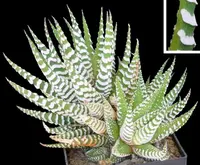
Window Haworthia Care (Haworthiopsis tessellata)

Also known as: Common Haworthia, Tessellated Haworthia
Window Haworthia

About Window Haworthia

Window haworthia (Haworthiopsis tessellata) is a compact, slow-growing succulent known for its firm, triangular leaves arranged in tight rosettes. The leaf tips often have translucent “windows” that help it use low light more efficiently.

This species is native to arid regions of South Africa, where it grows in rocky, well-drained soils and often shelters between stones or under sparse shrubs. It stays small, making it suitable for windowsills, desks, and small indoor collections.

The plant is generally easy to grow if kept in bright, indirect light, with fast-draining soil and careful watering. Understanding how to care for Window Haworthia mainly involves avoiding excess moisture and harsh, direct sun.

Main Plant Requirements

Care Difficulty

Easy Care

Light Preference

Bright Indirect Light

Water Requirements

Low Water

Temperature Preference

Tropical / Frost Sensitive

Hardiness Zone

10–11

Soil Texture

Sandy, Loamy, Rocky

Soil pH

Slightly acidic (6.5–7.0), Neutral (7.0)

Soil Drainage

Well-drained

Fertilization

Minimal (feed rarely)

Get Personalized Care Plan

Scan your plant to receive care tips personalized for your specific plant

Available on iOS and Android

How to Care for the Window Haworthia

This compact succulent prefers bright, filtered light that mimics its native, lightly shaded habitat.

  • Provide 4–6 hours of bright, indirect light daily; gentle morning sun with afternoon shade suits Window Haworthia well, especially behind sheer curtains or under light shade cloth.
  • Protect from intense midday sun, which can cause leaf scorching, bleaching, or shriveling; move the plant further from south- or west-facing windows or provide stronger shading outdoors.
  • If leaves stretch, tilt, or lose their firm texture, light is too low; shift gradually to a brighter spot, especially from autumn to spring when natural light levels drop.

This drought-tolerant succulent prefers infrequent, thorough watering with fast drainage.

  • Water only when the top 3–5 cm of soil is completely dry, then soak the root zone once and let excess drain away; avoid shallow, frequent splashes.
  • Reduce watering strongly in winter, giving just enough to prevent shriveling; in warm, bright growing periods, expect more frequent watering as soil dries faster.
  • Watch for soft, translucent, or blackened leaves as signs of overwatering and root rot risk in Haworthiopsis tessellata; persistent wrinkling and very light, papery leaves indicate underwatering.

This species prefers moderate warmth and does poorly in frost or extreme heat.

  • Aim for 65–80°F (18–27°C) for steady growth; short exposures up to 90°F (32°C) are tolerated if light is filtered and air is moving.
  • Protect from cold below 40°F (4°C); sustained temperatures under 35°F (2°C) and any hard frost can damage foliage and roots.
  • In summer heat waves above 85°F (29°C), increase shade and air circulation; in cooler seasons, slightly drier soil and stable temperatures help prevent stress.

This species handles typical indoor humidity with little adjustment needed.

  • Aim for 30–50% humidity; avoid persistently above 60% to reduce rot risk.
  • Dry household air is usually tolerated, but extreme heat plus very low humidity can cause leaf tip browning and shriveling.
  • If leaves wrinkle in hot, very dry rooms, group succulents together or place the pot on a pebble tray with water below the pot base.

This succulent needs a very fast-draining, gritty mix to prevent root and crown rot.

  • Use a cactus/succulent mix amended with 30–50% extra mineral grit such as pumice, coarse sand, or perlite.
  • Aim for a loose, airy texture that lets water run through in seconds while leaving roots lightly anchored.
  • Keep pH roughly 6.0–7.5; most commercial succulent mixes fall in this range and suit Haworthiopsis tessellata well.
  • Avoid dense peat-only or clayey mixes, water-retentive crystals, or fine sand that compacts and suffocates roots.

This compact species is highly suitable for container growing.

  • Choose a shallow but wide pot so the fibrous roots can spread horizontally without holding a deep column of wet soil.
  • Terracotta or unglazed clay is helpful because it allows evaporation and slightly shortens how long the mix stays wet.
  • Place the pot where it cannot be knocked over easily, since the rosette can become heavier than the root ball and destabilize light containers.

Haworthiopsis tessellata grows slowly and needs only light feeding in a free-draining mineral mix.

  • Use a balanced liquid succulent fertilizer (around 10-10-10) diluted to 25–50% strength.
  • Feed every 4–6 weeks in spring and summer when actively growing.
  • Skip or reduce feeding to 1 light application for the entire period in fall and winter.
  • Avoid organic composts that stay wet; excess nutrients and moisture stress roots in Window Haworthia.

Haworthiopsis tessellata needs minimal pruning, mainly for hygiene and appearance.

  • Best time is late spring or early summer, when the plant is actively growing.
  • Remove dried leaves at the base and any damaged or diseased tissue with clean scissors or snips.
  • Cut spent flower stalks at the base once they brown to redirect energy to foliage and roots.
  • Thin crowded offsets only if needed to improve airflow and maintain the rosette shape.

This compact succulent prefers slightly tight pots and infrequent repotting in a gritty mix.

  • Repot every 3–4 years or when roots circle the pot, growth slows, or the plant lifts upward.
  • Schedule repotting for late spring or early summer, avoiding very hot or very cold periods.
  • Use a shallow pot with drainage and a cactus/succulent mix amended with extra pumice or grit.
  • Gently loosen roots, remove rotten sections, replant at the same depth, then keep soil barely moist for 7–10 days.

Haworthiopsis tessellata is most commonly propagated by removing offsets from mature plants.

  • Divide offsets in late spring or early summer when plants are actively growing.
  • Lift the plant, separate pups with a clean knife, and keep at least a small root portion attached.
  • Let cut surfaces dry and callus for 1–3 days in shade before potting in barely moist gritty mix.
  • Maintain bright indirect light, 70–80°F temperatures, and light moisture until strong new roots form.

This species does best as an indoor succulent in cold climates, with cool, dry, bright winter conditions.

  • Not frost hardy; sustained exposure below 30°F can damage or kill tissues.
  • Move containers indoors before first frost, placing them in bright indirect light or under grow lights.
  • Keep soil almost dry in winter, watering lightly only when leaves show slight softening.
  • Avoid cold drafts on the rosettes; use a breathable top dressing to keep the crown dry.

Care Tips

Rotate For Symmetry

Rotate the pot 90° every 2–3 weeks so the rosette develops evenly and does not lean toward the light, which keeps the leaf windows aligned and reduces mechanical stress on one side of the plant.

Use Top Dressing

Apply a 0.5–1 cm layer of inert grit such as pumice, small lava rock, or coarse sand on the soil surface to keep leaf bases dry, discourage fungus gnats, and provide a cleaner, more stable base for the rosette.

Manage Offsets Early

Remove or thin offsets with a clean, sharp tool when they are 2–3 cm wide to prevent overcrowding in the pot and to maintain good air circulation around the leaf bases.

Quick Root Health Check

Every 12–18 months, unpot the plant carefully, inspect roots for firmness and pale color, trim any dark or mushy roots, then repot slightly snug so the rosette sits just above the soil line.

Gradual Light Shifts

When moving the plant between seasons or locations, increase light intensity gradually over 10–14 days by shifting it closer to the window in small steps to avoid sunscald and stress while growing Window Haworthia.

Common Pests and Diseases

Aloe mite

This pest causes distorted, swollen, or tufted growth on leaves and crowns, often forming rough, tumor-like galls. Symptoms include tight clusters of deformed leaves that do not grow normally.

Solution

Remove and discard all visibly deformed tissue with sterile tools, cutting back into healthy, firm tissue, and isolate the plant from other succulents. For remaining plants, use a sulfur-based miticide or a product labeled for eriophyid mites, and avoid overhead misting to reduce spread when growing Haworthiopsis tessellata.

Aloe cancer

This disease produces irregular, warty, or cauliflower-like tissue growths on leaf bases and rosettes, often linked to aloe mite feeding. Symptoms include hard, dry, crusted masses that do not resemble normal leaf tissue.

Solution

Cut out all abnormal growth several millimeters into healthy tissue using sterilized tools and destroy the removed material rather than composting it. Keep affected plants in quarantine, monitor new growth for several months, and if deformities continue to spread, consider discarding the plant to protect the rest of the collection.

Mealybugs

These insects appear as white, cottony clusters in leaf bases and roots, sucking sap and causing slow decline. Symptoms include sticky residue, yellowing, and sometimes fine webbing or sooty mold on nearby surfaces.

Solution

Physically remove visible insects with a cotton swab dipped in 70% isopropyl alcohol, then rinse the plant and pot thoroughly. For persistent infestations, unpot the plant, wash soil from roots, treat both foliage and roots with a systemic or contact insecticide labeled for succulents, and repot into fresh, well-draining mix while keeping the plant isolated until no new insects appear.

Soft rot

This disease causes leaves and crowns to turn mushy, water-soaked, and foul-smelling, usually starting at a wound or water-sitting point. Symptoms include rapid collapse of affected tissue, often during hot, humid conditions or after overwatering.

Solution

Immediately remove all soft, discolored parts with a sterile knife, leaving only firm, healthy tissue, and allow cut surfaces to dry and callus in a warm, airy place for several days. Discard the old soil, disinfect the pot, and replant only sound offsets or rosette sections into fresh, gritty medium, then water lightly and only when the mix is completely dry to prevent further bacterial spread.

Fungal leaf spots

This disease shows as small brown, black, or translucent spots on leaves, sometimes with a yellow halo, often appearing after prolonged leaf wetness or poor airflow. Symptoms include slow-expanding lesions that may merge and scar the translucent leaf tips.

Solution

Remove affected leaves or cut away heavily spotted portions with sterile tools and improve air circulation by spacing plants and using a fan in enclosed setups. Keep leaves dry, water only at the soil level, and apply a low-toxicity fungicide labeled for ornamental succulents if new spots continue to develop despite cultural corrections.

Interesting Facts

Checkerboard leaf windows

This species forms translucent, triangular windowed patches on the top of its firm leaves, arranged in a distinctive tessellated or checkerboard pattern that allows light to penetrate into the inner tissues for photosynthesis while most of the leaf remains protected below the light-exposed surface.

Adapted to harsh sun

In its native arid habitats of South Africa and Namibia, it often grows partly sunken into gritty soil, with only the windowed leaf tips exposed; this reduces water loss and heat stress while still capturing enough light to survive in an extreme climate.

Slow, clumping growth

It expands mainly by producing offsets tightly packed around the parent rosette, forming dense, slowly spreading clumps that help stabilize the plant in sandy or rocky substrates and share limited moisture within a small root zone.

Botan icon

Did you know?

Genetic and morphological studies have shown that this species, long placed in the genus Haworthia, is distinct enough in its structure and relationships that taxonomists now treat it in the separate genus Haworthiopsis, reflecting a refined understanding of its evolutionary history within the Asphodelaceae family.

FAQs about Window Haworthia

Brown leaf tips usually come from underwatering, very low humidity, or sudden temperature stress. Large brown patches or mushy tissue suggest rot from excess moisture and poor drainage. Remove damaged leaves and correct watering and airflow.

Grow Healthy Plants with Botan Care

Keep your plants happy and healthy with plant identification, disease detection, and easy care guidance.

Botan plant care app — identify plants on mobile

Explore More Plants