Protective handling
Wear gloves and long sleeves when repotting or dividing clumps, since the milky sap is irritating and you should rinse any sap off skin immediately with plenty of water.

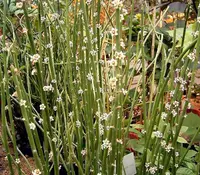
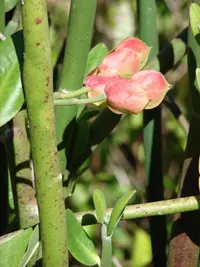
Candelilla (Euphorbia antisyphilitica) is a shrubby, clump-forming succulent native to arid regions of northern Mexico and Texas. It produces many slender, waxy, blue-green stems with very small, often inconspicuous leaves. Small, pale flowers appear along the stems, but the plant is usually grown for its architectural, upright shape and drought tolerance. In nature it thrives on rocky, well-drained soils under intense sun and low rainfall. These same traits make it relatively easy to grow in dry gardens and containers, as long as excess moisture is avoided. Understanding how to care for candelilla mainly means providing bright light, warmth, and very sharp drainage.

Care Difficulty
Easy Care

Light Preference
Full Sun

Water Requirements
Low Water

Temperature Preference
Warm Climate

Hardiness Zone
8–11

Soil Texture
Sandy, Loamy, Rocky

Soil pH
Slightly acidic (6.5–7.0), Slightly alkaline (7.0–7.5)

Soil Drainage
Well-drained

Fertilization
Minimal (feed rarely)
Scan your plant to receive care tips personalized for your specific plant
Available on iOS and Android
Euphorbia antisyphilitica prefers strong light similar to its native desert habitat for compact, healthy growth.
Watering for Euphorbia antisyphilitica should imitate desert rainfall patterns with thorough but infrequent soaking.
This desert succulent prefers warm to hot conditions and is sensitive to prolonged frost.
Humidity is rarely a concern for Euphorbia antisyphilitica, which thrives in very dry air.
This species needs very fast-draining, mineral-rich soil to prevent root and stem rot.
This species is suitable for container growing if the pot is prepared to mimic dry, rocky conditions.
This desert succulent needs only modest feeding, so focus on light, infrequent applications during active growth.
Euphorbia antisyphilitica needs only light, targeted pruning to maintain health and structure.
Container-grown plants and landscape clumps tolerate infrequent disturbance, so transplant only when clearly needed.
This species is commonly propagated from stem cuttings or seed when new plants are needed.
Mature plants are quite drought and cold tolerant but still benefit from some basic winter precautions in cooler regions.

Plant Health Check
Not sure what's wrong with your plant? Check your plant's health inside the app.
This species is one of the main natural sources of candelilla wax, a hard, high-melting-point plant wax extracted from its stems and used in cosmetics, polishes, and food coatings.
It is native to the Chihuahuan Desert in northern Mexico and Texas, where its dense clumps of waxy, pencil-like stems are adapted to intense sun, low rainfall, and highly calcareous, rocky soils.
Because of historic overharvesting for wax, wild populations in Mexico are managed under strict regulations and permits that control collection, processing, and export to support more sustainable use.

The milky latex of this species, typical of the Euphorbia genus, contains toxic diterpenoid compounds that can cause strong skin and eye irritation, which helps protect the plant from herbivores and may reduce fungal attack in its harsh desert habitat.
This species needs maturity, strong light, and seasonal temperature contrast to flower well. Overly rich soil or excess nitrogen encourages stem growth instead of blooms. Avoid frequent repotting and allow slightly cooler, drier winter conditions to set buds.
Keep your plants happy and healthy with plant identification, disease detection, and easy care guidance.