Handle Sap Safely
Wear gloves and avoid touching your face or eyes when pruning or repotting, as the milky latex sap is irritating and should be rinsed off skin immediately with plenty of water if contact occurs.

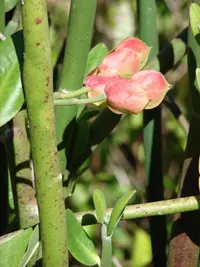
Euphorbia bracteata is a shrubby succulent from arid regions of Mexico, valued for its unusual stems and showy leaf-like bracts that surround small flowers. It typically grows with a branching, somewhat loose habit, forming a sculptural plant that suits bright indoor spaces or warm outdoor climates.
This species prefers strong light, very well-drained soil, and modest watering, which reflects its dry natural habitat. Once its basic needs are met, it can be relatively low-maintenance, though handling should be careful due to its milky sap. Understanding how to care for Euphorbia bracteata makes it a suitable choice for growers who already have some experience with succulents.

Care Difficulty
Moderate Care

Light Preference
Full Sun

Water Requirements
Low Water

Temperature Preference
Warm Climate

Hardiness Zone
10–11

Soil Texture
Sandy, Loamy, Rocky

Soil pH
Slightly acidic (6.5–7.0), Neutral (7.0)

Soil Drainage
Well-drained

Fertilization
Minimal (feed rarely)
Scan your plant to receive care tips personalized for your specific plant
Available on iOS and Android
This succulent shrub prefers bright conditions with protection from harsh extremes.
This drought-tolerant succulent needs infrequent but thorough watering.
This plant prefers warm, dry conditions and does poorly in cold, wet weather.
This species tolerates dry indoor air well, so humidity is rarely a concern.
This succulent prefers very fast-draining, mineral-based soil to prevent root rot.
This species is well suited to container culture due to its compact, succulent root system.
This species grows on poor soils and usually needs only light feeding in containers or very depleted ground.
Pruning is mainly used to keep this shrub tidy, safe to handle, and within bounds.
Container-grown plants prefer tight pots and only occasional repotting due to their drought-adapted roots.
Propagation is usually done from cuttings taken during the warm growing season, with attention to the irritating sap.
This plant is frost-sensitive and needs protection wherever winter temperatures drop below freezing.

Plant Health Check
Not sure what's wrong with your plant? Check your plant's health inside the app.
This species develops narrow, leaf-like branch segments that function as photosynthetic spurs, giving the plant a distinctive sprawling and somewhat leafless appearance compared with many other Euphorbia species.
Euphorbia bracteata is native to arid and semi-arid regions of Mexico, where it is adapted to intense sunlight, seasonal drought, and well-drained, often rocky or sandy soils.
Like many euphorbias, it produces a white, milky latex that is toxic and can irritate skin and eyes, serving as a chemical defense against herbivores and careless handling during Euphorbia bracteata care instructions.
The milky sap is irritating and potentially toxic. Contact can cause skin redness, eye injury, or mouth and stomach upset if chewed. Always wear gloves, avoid touching eyes, and keep this plant away from pets and children.
Keep your plants happy and healthy with plant identification, disease detection, and easy care guidance.