Showy stonecrop Care (Hylotelephium spectabile)

Also known as: Iceplant, Butterfly Stonecrop
Showy stonecrop

About Showy stonecrop

Showy stonecrop (Hylotelephium spectabile) is a hardy, clump-forming perennial succulent grown mainly for its fleshy leaves and late-season flower clusters. It belongs to the stonecrop group, known for storing water in their thick stems and leaves.

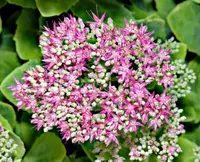
Plants usually form low mounds topped with flat heads of pink to reddish star-shaped flowers that attract bees and butterflies. Foliage is typically blue-green or gray-green, giving a clean, structured look in mixed borders or rock gardens.

Hylotelephium spectabile occurs naturally in parts of East Asia and has adapted well to many temperate garden climates. It prefers sunny, well-drained sites and tolerates drought, which makes it relatively simple to care for Showy stonecrop.

Main Plant Requirements

Care Difficulty

Easy Care

Light Preference

Full Sun

Water Requirements

Low Water

Temperature Preference

Cold Hardy

Hardiness Zone

3–9

Soil Texture

Sandy, Loamy, Rocky

Soil pH

Slightly acidic (6.5–7.0), Neutral (7.0)

Soil Drainage

Well-drained

Fertilization

Minimal (feed rarely)

Get Personalized Care Plan

Scan your plant to receive care tips personalized for your specific plant

Available on iOS and Android

How to Care for the Showy stonecrop

This sun-loving perennial thrives in open, bright positions with only light shade in hotter climates.

  • Provide 6–8 hours of direct sun daily; in hot southern regions, prioritize morning sun with light afternoon shade to reduce scorch risk.
  • In cooler climates, full sun all day gives the best flowering and compact growth for Showy stonecrop; partial shade (3–4 hours sun) is acceptable but may reduce blooms.
  • Watch stems and leaves: leggy, floppy growth and pale color indicate insufficient light, while crisped leaf edges suggest too-intense, reflected, or all-day afternoon sun.

This succulent perennial prefers infrequent, deep watering and soil that dries between waterings.

  • Outdoors in the ground, water only when the top 3–5 cm of soil are completely dry; in many climates this means every 7–14 days in summer, less if rainfall is steady.
  • Ensure sharply drained soil with added grit or sand; prolonged soggy conditions cause root rot, yellowing, and mushy stems in Hylotelephium spectabile.
  • During peak growth, slight leaf wrinkling or soft, drooping leaves indicate it is time to water; in fall and winter, reduce watering sharply once growth slows or foliage dies back.

This hardy succulent tolerates a wide temperature range but grows best in mild to warm conditions.

  • Active growth is strongest around 65–80°F (18–27°C); stable spring and summer temperatures in this range support dense foliage and abundant flower heads.
  • Mature plants in the ground tolerate winter cold down to about -20°F (-29°C), especially with well-drained soil; foliage naturally dies back and regrows in spring.
  • In heat above 90°F (32°C), growth may pause and leaves can scorch, so combine full sun with good airflow and slightly drier soil to limit stress.

Humidity is rarely a concern for Hylotelephium spectabile, which prefers dry air and typical outdoor conditions.

This species needs lean, fast-draining soil to prevent root rot and maintain compact, sturdy growth.

  • Use sandy or gritty loam with low to moderate organic matter, mimicking rocky or gravelly garden conditions.
  • Aim for slightly acidic to neutral pH, around 6.0–7.2, which supports healthy nutrient uptake without excess foliage softness.
  • Blend coarse sand, small gravel, or perlite into existing soil at 30–50% by volume to improve drainage and aeration.
  • Avoid heavy clay, peat-heavy mixes, or sites where water lingers for more than a few hours after rain.

This species is well suited to container growing, including shallow decorative pots and troughs.

  • Choose a wide, relatively shallow container so the spreading root system and stems remain stable in wind and rain.
  • Select a heavy or stone-like pot if placed outdoors, as the mature flower heads can make the plant top-heavy.
  • Fill the pot with a gritty, fast-draining mix and raise it slightly on pot feet or blocks so drainage holes never sit in pooled water.

This drought-tolerant perennial needs only light feeding, so Showy stonecrop remains healthy in fairly lean soil.

  • Apply a balanced, slow-release fertilizer (such as 10-10-10) once in early spring, worked lightly into the soil surface.
  • Avoid rich compost layers or frequent feeding, which cause floppy, weak stems and reduced flowering.
  • For container plants, use a half-strength balanced liquid feed every 4–6 weeks during active growth only.
  • Stop fertilizing in late summer and do not feed in winter dormancy to prevent soft, frost-sensitive growth.

Hylotelephium spectabile benefits from modest, well-timed pruning to keep clumps upright and flowering well.

  • In late winter or very early spring, cut back all old, dried stems to just above ground level using clean pruners.
  • During late spring, shear or pinch back up to one-third of new growth to encourage bushier plants and shorter, sturdier stems.
  • Remove dead, diseased, or storm-damaged shoots as seen, discarding any diseased material rather than composting it.
  • After flowering, leave seedheads over winter for structure and wildlife value, then tidy them when new shoots emerge.

This perennial is usually grown in the ground, so care focuses more on dividing and transplanting mature clumps than on frequent repotting.

  • Plan transplanting or division in early spring or early fall when temperatures are mild and soil is workable.
  • Look for crowded clumps, bare centers, or slow growth as signs that Hylotelephium spectabile is ready to be lifted and divided.
  • Dig up the clump carefully, tease or cut roots into sections with several shoots each, and replant at the same depth.
  • Water thoroughly after replanting, then allow soil to drain well; avoid heavy watering afterward to reduce root stress and rot risk.

This species is commonly propagated to expand plantings or renew older clumps without buying new plants.

  • Divide established clumps in early spring or fall, replanting sections with 2–3 shoots and healthy roots per division.
  • Take 5–8 cm softwood stem cuttings in late spring or early summer; let cut ends dry briefly, then place in gritty, barely moist mix.
  • Provide bright, indirect light and good air movement while cuttings root; avoid overwatering, which causes rot.
  • Sow seeds in trays with well-drained mix in spring, keeping them just moist and in bright light; expect variable seedlings.

This hardy perennial tolerates typical winters in most temperate climates and usually needs minimal winter care.

  • Plants are generally hardy in-ground, with roots tolerating freezes once established in well-drained soil.
  • After the first hard frost, stems die back naturally; leave them standing to protect crowns and add structure if desired.
  • Apply a light 2–5 cm mulch around the root zone in colder regions, keeping mulch slightly away from crowns.
  • Move containers into a sheltered, unheated area or against a house wall to reduce freeze–thaw stress on roots.

Care Tips

Divide Aging Clumps

Every 3–5 years, lift and divide congested clumps in early spring, replanting only the firm, healthy crowns to keep plants compact, floriferous, and less prone to lodging.

Discourage Flopping

In exposed or very fertile sites, lightly pinch back or shear stems by 2–3 cm in late spring before buds form to encourage shorter, sturdier growth that resists flopping without reducing flowering significantly.

Deadhead For Structure

If you prefer a tidy look, cut spent flower heads down to a low rosette in late winter rather than autumn so the dried stems can provide winter interest and shelter beneficial insects.

Enhance Autumn Color

Plant in slightly raised, open positions away from competition with vigorous perennials or shrubs so stems receive full light from several angles, which improves red and pink pigment development in late season.

Plan For Pollinators

When growing Showy stonecrop, group at least 3–5 plants together and avoid insecticidal sprays during flowering, as massed blooms provide a valuable late nectar source for bees and butterflies.

Common Pests and Diseases

Aphids

These insects cluster on young stems and flower buds, sucking sap and causing distortion, sticky honeydew, and sooty mold growth.

Solution

Spray the plant with a strong stream of water to dislodge colonies, then treat remaining insects with insecticidal soap or a neem oil spray, repeating weekly until populations drop. Encourage natural predators like lady beetles by avoiding broad-spectrum insecticides nearby.

Mealybugs

These insects appear as white, cottony clusters in stem joints and on tender growth, weakening plants by sucking sap and sometimes causing leaf yellowing and stunting.

Solution

Isolate affected plants, then dab visible mealybugs with cotton swabs dipped in 70% isopropyl alcohol and follow with a thorough application of insecticidal soap to all plant surfaces. Inspect regularly and remove any heavily infested stems to break the life cycle and improve Hylotelephium spectabile plant care outcomes.

Slugs and snails

These pests chew irregular holes in leaves, often along the lower parts of the plant, and may leave silvery slime trails on foliage and soil.

Solution

Hand-pick slugs and snails in the evening, reduce hiding spots such as dense mulch, and use barriers like copper tape or coarse grit around key clumps. In wetter gardens, apply iron phosphate slug bait according to label directions to reduce damage during peak feeding periods.

Powdery mildew

This disease shows as white, powdery patches on leaves and stems, which can cause leaf distortion and reduced vigor in dense clumps or humid conditions.

Solution

Improve air circulation by thinning crowded stems and avoiding overhead watering, then remove and discard affected leaves. If disease persists, apply a sulfur or potassium bicarbonate fungicide labeled for ornamentals, making sure to cover all leaf surfaces.

Leaf spot

Symptoms include small brown or black spots on leaves that may enlarge and cause premature leaf drop, especially during extended wet weather or overhead irrigation.

Solution

Remove and discard affected foliage and avoid wetting leaves by watering at soil level in the morning. Improve spacing and airflow, and if spotting is severe or recurring, apply a copper-based fungicide according to label instructions until new growth appears clean.

Interesting Facts

Late-season pollinator magnet

This species produces dense, nectar-rich flower clusters in late summer to fall, providing a valuable food source for bees, hoverflies, and butterflies when many other garden plants have finished blooming.

Color change with age

The star-shaped flowers typically open in pale pink and gradually deepen to a stronger rose-pink as they mature, creating a visible color shift across the inflorescences over several weeks.

Cold-hardy succulent stems

Unlike many succulent ornamentals, this plant is reliably hardy in temperate climates, dying back to fleshy underground crowns in winter and resprouting from stored reserves in spring.

Botan icon

Did you know?

This species was historically classified in the genus Sedum and known as Sedum spectabile, but detailed studies of flower structure and molecular data led taxonomists to move it into the separate genus Hylotelephium to reflect its distinct evolutionary lineage.

FAQs about Showy stonecrop

Lack of flowers usually comes from too much shade, overly rich or wet soil, or heavy nitrogen fertilization. Ensure full sun, well-drained conditions, and avoid frequent high-nitrogen feed to support reliable late-summer flowering.

Grow Healthy Plants with Botan Care

Keep your plants happy and healthy with plant identification, disease detection, and easy care guidance.


Botan plant care app — identify plants on mobile

Explore More Plants