love-in-a-mist Care (Nigella damascena)

Also known as: love in a mist, devil in the bush, Devil-in-the-bush
love-in-a-mist

About love-in-a-mist

Love-in-a-mist, Nigella damascena, is a cool-season annual grown mainly from seed for its delicate flowers and ornamental seed pods. The plant forms a loose, bushy clump with finely divided, thread-like foliage that gives a soft, misty look around the blooms.

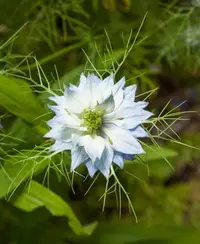
Flowers appear in shades of blue, white, pink, or purple, often with a contrasting center and decorative bracts. It is native to southern Europe and parts of North Africa, and adapts well to many temperate gardens.

This species is generally easy to grow in sunny, well-drained beds and is often used for cottage-style borders and cut flowers. Gardeners who learn how to care for love-in-a-mist usually find it low-maintenance once established.

Main Plant Requirements

Care Difficulty

Easy Care

Light Preference

Full Sun

Water Requirements

Moderate Water

Temperature Preference

Cool Climate

Hardiness Zone

2–11

Soil Texture

Sandy, Loamy, Organic-rich

Soil pH

Slightly acidic (6.5–7.0), Neutral (7.0)

Soil Drainage

Well-drained

Fertilization

Minimal (feed rarely)

Get Personalized Care Plan

Scan your plant to receive care tips personalized for your specific plant

Available on iOS and Android

How to Care for the love-in-a-mist

This annual prefers bright outdoor conditions with cool, not scorching, sun exposure.

  • Provide 6–8 hours of direct sun, ideally with morning sun and light afternoon shade, especially in hot summer regions.
  • Tolerates light partial shade (around 4–5 hours of sun), but love-in-a-mist flowers more heavily and grows sturdier in full sun.
  • In very hot climates, protect from intense afternoon sun to prevent leaf scorch and shortened bloom duration, using neighboring plants or fencing for light filtering.

This plant prefers steady soil moisture during active growth without sitting in soggy conditions.

  • Water when the top 2–3 cm of soil feels dry, applying enough to moisten the root zone while allowing excess to drain away.
  • Use well-drained soil; standing water or heavy clay encourages root rot, yellowing, and collapse, especially in cool weather.
  • In cooler seasons or after flowering, reduce frequency so soil dries slightly deeper between waterings; drooping, crisp foliage signals underwatering, while limp, yellowing stems suggest overwatering.

This cool-season annual thrives in mild conditions and dislikes both hard frost and extreme heat.

  • Optimal growth occurs around 55–70°F (13–21°C), which supports strong foliage and extended flowering.
  • Seeds and young plants tolerate light frost down to about 28–30°F (-2 to -1°C), but hard freezes below this can kill tender growth.
  • In hot summers above 85°F (29°C), flowering shortens and plants may decline; in warm regions, sow in early spring or fall to avoid peak heat.

Humidity is rarely a limiting factor for outdoor-grown Nigella damascena in typical temperate climates.

Nigella damascena prefers lean, well-aerated soil that drains quickly and does not stay waterlogged.

  • Use a sandy or loamy mix with low to moderate organic matter, such as garden soil blended with coarse sand.
  • Aim for slightly acidic to neutral pH around 6.0–7.5, avoiding strongly acidic or alkaline substrates.
  • Improve drainage and aeration by incorporating coarse sand or fine grit at 20–30% of the mix.
  • Avoid heavy clay, compacted ground, or peat-heavy mixes that hold water and suffocate fine roots.

This species adapts reasonably well to container growing when the pot and mix are chosen to prevent soggy roots.

  • Select a pot at least 20–25 cm deep so the taproot can develop without curling tightly at the base.
  • Use a relatively heavy container material or add gravel at the bottom for weight so tall, flowering stems do not tip the pot in wind.
  • Choose a free-draining mix and raise the pot slightly on feet or bricks to keep drainage holes from sealing against the ground.

This annual prefers lean soil, so love-in-a-mist usually needs only light fertilization.

  • Mix a small amount of compost into the bed before sowing to enrich poor soil without making it overly rich.
  • If growth looks weak, use a balanced liquid fertilizer at 1/4–1/2 strength every 3–4 weeks in spring–early summer.
  • Avoid high-nitrogen feeds, which encourage lush foliage at the expense of flowers.
  • Stop feeding by late summer and do not fertilize during winter, as plants complete their life cycle.

Pruning Nigella damascena is simple and mainly supports flowering and seed production.

  • In mid to late summer, deadhead spent blooms with clean scissors if more flowering is desired.
  • Leave some seed heads to mature if seed collection or ornamental pods are wanted.
  • Remove any dead, diseased, or badly damaged stems promptly to reduce disease spread.
  • Cut plants to ground level once foliage yellows and dries, then compost healthy material.

This annual is best grown direct from seed, as it dislikes root disturbance.

  • Transplant only when seedlings are young and before roots circle the container or show through drainage holes.
  • Aim to transplant in early spring while weather is cool and soil is moist but not waterlogged.
  • Move seedlings with a soil plug, handling by the leaves, to limit damage to the fine root system.
  • Plant at the same depth in loose, well-drained soil, then water gently and shade lightly for 1–2 days to reduce stress.

Nigella damascena is most commonly propagated from seed rather than vegetative methods.

  • Sow seeds in early spring outdoors, or in late fall for natural cold stratification in mild climates.
  • Choose a sunny, well-drained site and rake soil to a fine, level surface before sowing.
  • Scatter seeds thinly, cover with 3–5 mm of soil, then water carefully so they do not wash away.
  • Keep soil lightly moist until germination, then thin seedlings to improve airflow and flowering quality.

As a cool-season annual, this plant usually completes its life cycle before hard winter and needs little winter care.

  • In colder regions, allow seed pods to dry and drop so the bed can self-sow for next year.
  • A light mulch after soil cools can protect fallen seed and moderate freeze–thaw cycles.
  • Container-grown plants are typically discarded after seed collection rather than overwintered.

Care Tips

Succession Sowing

Sow small patches every 2–3 weeks in early spring to extend the bloom season, rather than putting all seed down at once.

Self-Seeding Management

After flowering, leave only the best-placed seed pods to mature and remove the rest so plants do not crowd paths or nearby crops the following year.

Support In Wind

In exposed sites, run a low string or mesh along the row at 20–25 cm high so stems lean on it rather than lodging or snapping in strong wind.

Cutting For Vaselife

Harvest stems when the first flower on each stem is open and sear the cut ends in just-boiled water for 5–10 seconds to improve vase life when growing love-in-a-mist for cutting.

Drying Seed Pods

For dried arrangements, cut pods as they turn pale tan, strip the foliage, and hang small bunches upside down in a dry, airy place until fully hardened.

Common Pests and Diseases

Downy mildew

This disease causes yellowing or pale angular spots on leaves, often with a grayish or purplish downy growth on the undersides in cool, damp weather. Symptoms include distorted growth and premature leaf drop that can weaken or ruin flowering.

Solution

Remove and dispose of affected leaves and any heavily infected plants to reduce spore spread. Improve air circulation, avoid overhead watering, water early in the day, and if the problem persists, use a labeled copper or phosphorus acid fungicide applied according to product directions as part of broader Nigella damascena care.

Powdery mildew

This disease produces a white, talcum-like coating on leaves, stems, and sometimes flower buds, especially in crowded plantings with poor airflow. Symptoms include yellowing leaves, reduced vigor, and distorted or fewer flowers.

Solution

Thin crowded plants and increase spacing to improve airflow, and water at soil level rather than on foliage. Remove badly infected leaves and, if needed, apply a sulfur or potassium bicarbonate fungicide early in the infection to limit spread.

Botrytis blight

This disease appears as soft, water-soaked spots on petals, seed pods, and stems that develop a fuzzy gray mold, especially in cool, wet conditions. Symptoms include collapsed flower stalks and rotting seed capsules, which can stop seed production.

Solution

Promptly remove and discard infected flowers, seed pods, and any dead plant debris from around the plants. Improve drainage and air circulation, avoid wetting flowers when watering, and in severe or recurrent cases consider a labeled botrytis-control fungicide applied before prolonged damp weather.

Aphids

These insects cluster on young stems, buds, and the undersides of leaves, sucking sap and excreting sticky honeydew. This pest can cause curling leaves, stunted growth, and sooty mold on the honeydew.

Solution

Spray plants with a firm stream of water to dislodge colonies, and pinch off heavily infested shoot tips. For ongoing infestations, use insecticidal soap or a light horticultural oil, making sure to cover leaf undersides and repeating as needed according to label instructions.

Leaf miners

These insects create pale, winding tunnels inside leaves as the larvae feed between leaf surfaces. Symptoms include serpentine trails and blotches that can reduce the ornamental value of the foliage, though plants often continue to flower normally.

Solution

Remove and discard affected leaves as soon as tunnels appear to physically remove larvae. Encourage beneficial insects, avoid broad-spectrum insecticides that kill predators, and if damage is severe use a targeted systemic product labeled for leaf miners, applied according to directions before heavy tunneling starts.

Interesting Facts

Unique seed capsule

The plant forms inflated, balloon-like seed capsules with a netted, bristly outer layer that gives the common name love-in-a-mist by visually enclosing the seed pod in a fine mesh of bracts and stems.

Self-sowing annual

In suitable climates this annual readily self-sows from its abundant seeds, often forming naturalized drifts in the same spot year after year without deliberate replanting.

Historical ornamental use

Love-in-a-mist has been grown as an ornamental in European cottage gardens since at least the 16th century, valued both for its finely divided, fern-like foliage and for dried seed heads used in long-lasting arrangements.

Botan icon

Did you know?

The aromatic seeds of love-in-a-mist have historically been used in traditional European baking and liqueurs as a minor flavoring spice, although they are distinct from and less commonly used than the culinary seeds of its relative Nigella sativa.

FAQs about love-in-a-mist

Lack of flowers usually comes from too much shade, rich nitrogen-heavy soil, or heat stress. This annual blooms best in cooler weather, full sun, and moderately fertile soil. Overcrowding and skipped deadheading also reduce flowering.

Grow Healthy Plants with Botan Care

Keep your plants happy and healthy with plant identification, disease detection, and easy care guidance.

Botan plant care app — identify plants on mobile

Explore More Plants