Promote Dense Clumping
Remove a few of the oldest, woody fans at the base each year to stimulate new shoots and keep the plant forming a compact, flowering clump.

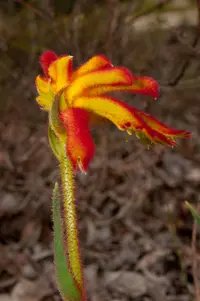
Catspaw (Anigozanthos humilis) is a compact kangaroo paw species native to southwestern Australia. It is a perennial that grows from underground rhizomes and resprouts each year.
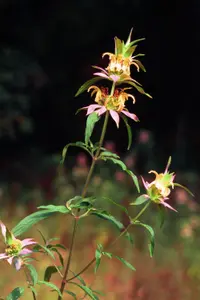
Plants form narrow, grassy clumps of foliage with slender stems topped by small, tubular flowers in warm shades of red, orange, and yellow. The fuzzy flower surface gives the blooms a distinctive texture.
In nature, Anigozanthos humilis occurs in sunny, open habitats with sandy, well-drained soils and a dry-summer climate. Its need for excellent drainage and dislike of prolonged wet conditions are the main factors that influence how to care for Catspaw.

Care Difficulty
Moderate Care

Light Preference
Full Sun

Water Requirements
Low Water

Temperature Preference
Warm Climate

Hardiness Zone
9–11

Soil Texture
Sandy, Loamy, Rocky

Soil pH
Slightly acidic (6.5–7.0), Neutral (7.0)

Soil Drainage
Well-drained

Fertilization
Minimal (feed rarely)
Scan your plant to receive care tips personalized for your specific plant
Available on iOS and Android
This Australian native needs strong light to flower well in gardens or containers.
This species prefers drying cycles between waterings and dislikes prolonged wet soil.
This plant prefers mild, dry warmth and is sensitive to hard frost and extreme humidity.
This species handles low humidity well, so moisture in the air is rarely a limiting factor.
Anigozanthos humilis needs very free-draining, low-organic soil to prevent root and crown rot.
This species can be grown in containers if drainage is excellent and the root zone stays airy.
Anigozanthos humilis benefits from light, targeted feeding to support flowering without causing soft, weak growth.
Thoughtful pruning helps Anigozanthos humilis stay compact, clean, and productive with more flowering shoots.
This species prefers stable, well-drained conditions and dislikes frequent disturbance of its root system.
Anigozanthos humilis is commonly propagated by seed and by careful division of established clumps.
This plant prefers mild winters and needs protection in regions with hard frosts or prolonged freezing.

Plant Health Check
Not sure what's wrong with your plant? Check your plant's health inside the app.
This species is one of the smallest kangaroo paws, naturally forming low clumps usually under 50 cm tall, adapted to the windy, open habitats of southwestern Western Australia.
It typically flowers from late winter into spring in its native range, providing early-season nectar for honeyeaters and other pollinators when few other plants are in bloom.
The plant is naturally restricted to nutrient-poor, well-drained sandy and gravelly soils on coastal sandplains, reflecting a high tolerance for low phosphorus conditions typical of many Western Australian flora.
Lack of flowers usually comes from insufficient light, excess nitrogen fertilizer, or old, congested clumps. Ensure full sun, use a low-phosphorus, low-nitrogen fertilizer, and divide crowded plants every few years to restore flowering.
Keep your plants happy and healthy with plant identification, disease detection, and easy care guidance.