Mark Dormant Clumps
Place discreet labels or stones at colony edges in late spring so you avoid disturbing the small rhizomes when the foliage disappears and you work the bed later in the season.

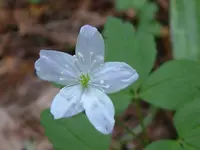
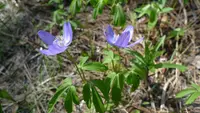
Wood anemone, Anemonoides quinquefolia, is a small spring-blooming woodland perennial native to forests and shaded slopes across eastern North America. It forms loose colonies from slender underground rhizomes, creating light carpets of delicate, divided leaves. In early spring, each stem carries a single, star-like white flower that often has a faint pink or lavender tint. Plants usually go dormant by early summer, disappearing above ground until the following year. This species suits naturalistic gardens and shaded borders but can be sensitive to disturbance and does not like heavy foot traffic. It prefers dappled light, consistently moist but well-drained soil, and a stable, cool root zone, which guides how to care for wood anemone.

Care Difficulty
Moderate Care

Light Preference
Partial Shade

Water Requirements
Moderate Water

Temperature Preference
Cold Hardy

Hardiness Zone
3–8

Soil Texture
Loamy, Silty, Organic-rich

Soil pH
Acidic (5.5–6.5), Slightly acidic (6.5–7.0)

Soil Drainage
Moist but well-drained

Fertilization
Minimal (feed rarely)
Scan your plant to receive care tips personalized for your specific plant
Available on iOS and Android
This spring woodland perennial prefers cool, dappled light that mimics natural forest conditions.
This species favors consistently moist, cool soil but reacts poorly to waterlogged conditions.
This woodland wildflower is cold-hardy and thrives in cool to mild conditions with protection from extreme heat.
Humidity is not a major factor for Anemonoides quinquefolia, which adapts well to typical outdoor conditions in its range.
Anemonoides quinquefolia prefers light, humus-rich woodland soil that stays evenly moist yet drains freely.
This species is suitable for small, cool outdoor containers that mimic woodland conditions.
This woodland native needs minimal feeding, as wood anemone is adapted to low-nutrient forest soils.
Anemonoides quinquefolia needs little structural pruning, but light cleanup supports plant health and appearance.
This species is usually grown in the ground and prefers infrequent disturbance of its rhizomes.
Multiplication of Anemonoides quinquefolia is usually done by division of rhizomes rather than cuttings.
This woodland perennial is cold hardy and generally requires no special winter care in temperate climates.

Plant Health Check
Not sure what's wrong with your plant? Check your plant's health inside the app.
This species is a classic spring ephemeral, completing most of its growth and flowering before the forest canopy leafs out, then going dormant underground for the rest of the year.
It is native to eastern and central North America, typically forming scattered colonies in deciduous forests from Canada south into the Appalachian and Great Lakes regions.
The plant spreads primarily by slender underground rhizomes, so a patch that looks like many individuals is often a single, genetically identical clone.

Early-season flowers of this species are an important nectar and pollen source for emerging native bees and small flies in hardwood forests, providing one of the first reliable floral resources after snowmelt.
This species spreads slowly by slender rhizomes, forming loose colonies over several years rather than dense mats. It usually is not aggressive in typical garden settings, especially when grown in dappled woodland-style plantings with moderate competition.
Keep your plants happy and healthy with plant identification, disease detection, and easy care guidance.