


Top-dressing control
Refresh the mineral top-dressing (grit or small stones) once a year so you can inspect the neck of the rosette for rot, mealybugs, or buried leaves and keep the crown slightly above the soil line for better air flow.

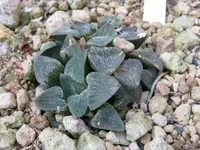
Pygmy haworthia (Haworthia pygmaea) is a small, slow-growing succulent from South Africa’s Eastern Cape, where it grows in rocky, well-drained sites. It forms compact rosettes of thick, triangular leaves, often with translucent windows and fine surface patterns that help manage strong light in its native habitat.
This species stays low and tight, making it well suited to windowsills and small indoor spaces. Its drought tolerance and preference for bright, indirect light make it relatively simple to care for Pygmy Haworthia, as long as the soil drains well and excess moisture is avoided.

Care Difficulty
Easy Care

Light Preference
Bright Indirect Light

Water Requirements
Low Water

Temperature Preference
Tropical / Frost Sensitive

Hardiness Zone
10–11

Soil Texture
Sandy, Loamy, Rocky

Soil pH
Acidic (5.5–6.5), Slightly acidic (6.5–7.0)

Soil Drainage
Well-drained

Fertilization
Minimal (feed rarely)
Scan your plant to receive care tips personalized for your specific plant
Available on iOS and Android
This compact succulent prefers bright, indirect light with limited direct sun exposure.
Water sparingly, allowing the soil to dry well between waterings.
This species prefers moderate, stable temperatures without extremes of heat or cold.
This compact succulent stays healthy in 30–50% household humidity and rarely needs special moisture adjustments.
Haworthia pygmaea needs a very fast-draining, mineral-rich substrate to protect its fleshy roots from rot.
This small species is very suitable for container growing due to its compact, shallow root system.
This compact succulent needs only light feeding, so focus on modest, diluted nutrients during active growth.
This species needs little pruning, mainly for hygiene and to maintain a compact rosette form in Haworthia pygmaea.
Repotting is infrequent, but timely moves help keep this slow-growing succulent healthy in containers.
New plants are most reliably produced from offsets, making Haworthia pygmaea propagation straightforward for patient growers.
Cold-sensitive rosettes need dry, cool, but frost-free winter conditions, especially in container culture.

Plant Health Check
Not sure what's wrong with your plant? Check your plant's health inside the app.
The leaf tips form translucent window-like areas that allow light to reach inner tissues while the plant stays partly buried, an adaptation to intense sun and sandy soils in its native South Africa.
In habitat the rosettes often sit nearly flush with the ground and can be partially covered by sand or grit, helping the plant avoid herbivores and reduce water loss.
This species is naturally restricted to small regions of the Western and Eastern Cape in South Africa, where different local populations show distinct leaf shapes and patterns, reflecting fine-scale adaptation to local conditions.

Some wild populations of this species are considered of conservation concern because their very limited natural ranges face pressure from habitat disturbance and illegal collection by succulent enthusiasts.
This species adapts well both indoors and outdoors in mild, dry climates, but most growers have better control indoors. Stable light, limited rainfall, and frost protection usually make Pygmy Haworthia indoor care more predictable and successful.
Keep your plants happy and healthy with plant identification, disease detection, and easy care guidance.

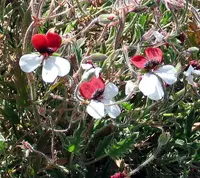
Tricolour Storksbill
Pelargonium tricolor

Arrowhead Vine
Syngonium podophyllum 'Berry Allusion'
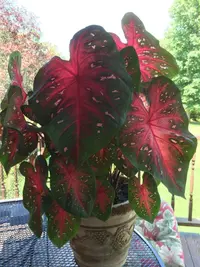
Fancy-leaf Caladium
Caladium 'Red Flash'
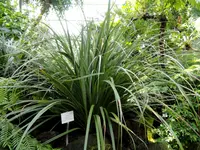
Perching lily
Astelia solandri
 POPULAR
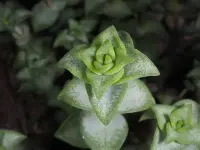
String of Buttons
Crassula perforata
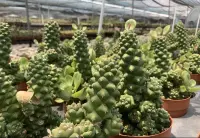
Monadenium ritchiei
Euphorbia ritchiei
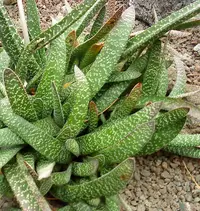
Keeled Oxtongue
Gasteria carinata
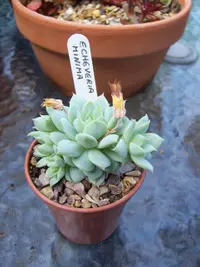
Mini echeveria
Echeveria minima