Fire Sheepfig Care (Delosperma sutherlandii)

Fire Sheepfig

About Fire Sheepfig

Delosperma sutherlandii, often called Sutherland hardy ice plant, is a low-growing, mat-forming succulent valued for its bright, daisy-like flowers and fleshy leaves. It typically forms dense groundcover with spreading stems and small, cylindrical foliage that stores water.

This species is native to rocky, well-drained habitats in South Africa, which explains its strong drought tolerance and preference for lean, gritty soils. It suits rock gardens, slopes, and containers in sunny, dry spots.

Because it is adapted to tough conditions, it is generally easy to grow as long as drainage is excellent and winters are not overly wet. Understanding how to care for Delosperma sutherlandii mainly comes down to providing full sun, minimal watering, and avoiding heavy, waterlogged soils.

Main Plant Requirements

Care Difficulty

Easy Care

Light Preference

Full Sun

Water Requirements

Low Water

Temperature Preference

Cold Hardy

Hardiness Zone

5–9

Soil Texture

Sandy, Loamy, Rocky

Soil pH

Slightly acidic (6.5–7.0), Neutral (7.0)

Soil Drainage

Well-drained

Fertilization

Minimal (feed rarely)

Get Personalized Care Plan

Scan your plant to receive care tips personalized for your specific plant

Available on iOS and Android

How to Care for the Fire Sheepfig

This succulent thrives in strong light but benefits from some protection from extreme afternoon sun in hot regions.

  • Provide 6–8 hours of direct sun daily, ideally with morning sun and light afternoon shade, especially in zones with very hot summers.
  • Plant Delosperma sutherlandii in an open, unshaded spot outdoors; it tolerates light partial shade but flowering and compact growth decline below about 4–5 hours of direct sun.
  • Watch for signs of stress: pale, stretched growth indicates too little light, while scorched, brown patches on leaves signal excessive afternoon sun.

This ice plant prefers infrequent, deep watering and very fast-draining soil.

  • Allow the top 3–5 cm of soil to dry completely before watering; in sandy ground this often means waiting several days or longer between waterings.
  • Reduce watering markedly in cool or overcast periods, and withhold almost all irrigation in winter where rainfall is present to prevent root rot.
  • Signs of overwatering include soft, splitting leaves and sudden collapse, while severe wrinkling and limp, shriveled foliage suggest underwatering in Delosperma sutherlandii.

This species is adapted to bright, dry climates and copes well with both heat and moderate cold when soil drains quickly.

  • Ideal growing temperatures are 65–80°F (18–27°C), with active growth and flowering strongest under warm days and cooler, dry nights.
  • Established plants often tolerate brief drops to about 0–10°F (-18 to -12°C) in very free-draining soil, but young plants are more vulnerable to freeze damage.
  • In hot regions, plants endure 90–100°F (32–38°C) if roots stay cool and soil does not stay wet, though flowering can slow during intense heat.

This succulent thrives in dry air and rarely needs special humidity management.

This species prefers lean, very free-draining, gritty soil that dries quickly after rain or watering.

  • Use a sandy or gravelly mix, such as 50–70% coarse sand or grit blended with a light cactus potting base.
  • Aim for slightly acidic to neutral pH, roughly 6.0–7.2, avoiding strongly acidic or alkaline extremes.
  • Improve aeration and drainage by adding pumice, perlite, or small gravel, especially in heavier garden soils.
  • Avoid dense clay, waterlogged spots, or organic-rich mixes that stay wet, which quickly lead to root rot in Delosperma sutherlandii.

This species adapts very well to container growing, especially in small, shallow pots or troughs.

  • Choose a wide, shallow container to match its mat-forming habit and prevent the center from staying too wet.
  • Use a pot with large, unobstructed drainage holes and elevate it slightly so water cannot pool under the base.
  • Select terracotta or other porous materials to let the mix dry faster after rain, reducing the risk of root rot.

This drought-tolerant succulent needs only modest feeding, so Delosperma sutherlandii performs best in lean, well-drained soil.

  • Use a light application of balanced, low-dose slow-release fertilizer or thin compost layer in early spring.
  • Feed once at the start of the growing season; a second light feed in midsummer is optional in very poor soils.
  • Dilute liquid fertilizer to 25–50% strength to avoid soft, weak growth and reduced flowering.
  • Skip feeding in late fall and winter when growth slows or stops.

Pruning is minimal but helps keep Delosperma sutherlandii compact and flowering well.

  • Best time is late winter to early spring, before strong new growth starts.
  • Shear back spent flower stems and straggly, elongated shoots to tighten the mat and encourage new blooms.
  • Remove dead, damaged, or diseased sections with clean, sharp scissors or hand pruners.
  • After heavy pruning, allow soil to dry slightly between waterings to limit stress.

This mat-forming ice plant is usually transplanted outdoors rather than repotted frequently.

  • Transplant in spring once frost risk has passed to allow strong root establishment.
  • Look for roots circling the pot, poor drainage, or slowed growth as signs a container plant needs more space.
  • Move into a shallow, wider container or well-drained outdoor spot, disturbing roots as little as possible.
  • Water lightly after transplanting, then allow soil to dry between waterings to limit transplant shock in Delosperma sutherlandii.

Delosperma sutherlandii is commonly multiplied from stem cuttings and division for consistent plants.

  • Take short, non-flowering stem cuttings in late spring or summer and let cut ends callus for 1–2 days.
  • Root cuttings in gritty, sharply drained mix under bright light and moderate warmth, around 68–75°F.
  • Divide mature clumps in spring, replanting firm, healthy segments with several rooted nodes.
  • Seeds can be sown on the surface of sandy mix, kept barely moist and warm until germination.

This ice plant is reasonably cold hardy but may need some winter care in colder regions.

  • In-ground plants tolerate light frosts when soil drains very well and stays relatively dry.
  • Apply a thin gravel mulch around the crown to improve drainage rather than retain moisture.
  • In areas below about 0°F, grow Delosperma sutherlandii in containers and move to a cold, bright, frost-free spot.

Care Tips

Improve Winter Drainage

In cold or wet climates, slightly mound or slope the planting area with extra grit or small gravel so meltwater runs off quickly and roots do not sit in icy, saturated soil over winter.

Gravel Surface Mulch

After planting, top-dress the soil around the mat with a 1–2 cm layer of sharp gravel or crushed stone to keep foliage dry at the base, reduce rot, and improve flowering performance.

Limit Plant Competition

Keep nearby groundcovers and grasses thinned or edged back so this species receives full light at the crown and does not get shaded or crowded, which can reduce flowering and vigor.

Encourage Compact Mats

Lightly pinch back or trim leggy trailing stems immediately after the main bloom flush to stimulate branching and maintain a low, dense carpet rather than open, patchy growth when caring for Delosperma sutherlandii.

Rock Crevice Placement

When planting between rocks or pavers, tuck roots into narrow, well-drained crevices and backfill with a gritty mix so stems can drape over the stone surface while roots stay cool and dry.

Common Pests and Diseases

Aphids

This pest often clusters on soft new growth and flower stems, sucking sap and causing distortion, sticky honeydew, and reduced flowering.

Solution

Rinse colonies off with a firm stream of water, then spot treat remaining clusters with insecticidal soap or a ready-to-use neem oil spray, repeating weekly until controlled and encouraging natural predators like lady beetles in outdoor plantings.

Mealybugs

These insects appear as small white cottony tufts in stem joints and among the fleshy leaves, weakening plants by feeding on sap and leaving sticky residue.

Solution

Isolate the plant if grown in containers, dab visible mealybugs with cotton swabs dipped in 70% isopropyl alcohol, then follow with several applications of insecticidal soap or neem oil, making sure to reach all crevices where they hide.

Spider mites

This pest thrives in hot, dry conditions, causing fine webbing, speckled leaves, and a dull, stressed appearance of the foliage mat.

Solution

Increase humidity around container plants if possible, hose off foliage thoroughly to knock mites off, and apply insecticidal soap or horticultural oil to both upper and lower leaf surfaces, repeating every 5–7 days until new growth appears healthy; this is especially relevant when learning how to take care of Delosperma sutherlandii in very dry indoor air.

Fungal leaf spot

This disease can appear during prolonged wet or humid periods as small, dark or tan lesions on the succulent leaves that may coalesce and cause tissue collapse.

Solution

Remove and discard affected leaves, avoid overhead watering, improve air circulation, and if the problem persists in wet climates, use a labeled copper or chlorothalonil fungicide on dry foliage, following the product directions carefully.

Crown and stem rot

This disease develops in poorly drained soil or with frequent overwatering, leading to soft, discolored stems at the base and rapid collapse of sections of the mat.

Solution

Improve drainage by amending soil with coarse grit, avoid watering until the soil is completely dry, remove and discard rotted sections, and replant only in sharply drained, raised, or sloped sites to prevent future infection.

Interesting Facts

High-altitude specialist

This species is native to high-elevation rocky slopes in South Africa, where it endures strong sun, sharp temperature shifts, and very fast-draining mineral soils, which explains its strong drought and cold tolerance compared with many other ice plants.

Distinctive large flowers

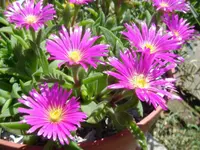
It is known for producing relatively large, flat, daisy-like flowers in shades of magenta-pink with a contrasting white eye, which makes it easy to distinguish from several other Delosperma species that have smaller or more tubular blooms.

Cold-hardy succulent

Among succulent groundcovers, it is noted for surviving winters in many temperate regions when planted in extremely well-drained soil, making growing Delosperma sutherlandii feasible even in climates that experience regular frosts.

FAQs about Fire Sheepfig

This species forms a low, slowly spreading mat, but it is not usually aggressive. It expands outward from the center over several seasons and can be controlled easily by lifting or trimming unwanted sections.

Grow Healthy Plants with Botan Care

Keep your plants happy and healthy with plant identification, disease detection, and easy care guidance.

Botan plant care app — identify plants on mobile

Explore More Plants