Encourage Compact Form
Rotate the pot 90° every 2–3 weeks and provide slightly stronger light from above than from the sides to keep stems thick, upright, and less likely to flop as they elongate.

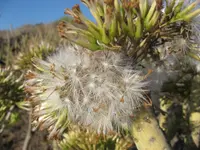
Verode (Kleinia neriifolia) is a succulent shrub from the Canary Islands, adapted to dry, rocky coastal habitats. It stores water in its smooth, segmented stems and often drops most leaves in dry periods. Mature plants form upright, branching clumps with a sculptural, almost candelabra-like silhouette that suits minimalist or desert-style plantings. In suitable conditions, it produces small, clustered flowers on the stem tips. Its drought tolerance and slow, manageable growth make it relatively easy to keep in containers, as long as the soil drains well and watering stays light. Bright light and low to moderate moisture are key when learning how to care for Verode.

Care Difficulty
Easy Care

Light Preference
Full Sun

Water Requirements
Low Water

Temperature Preference
Tropical / Frost Sensitive

Hardiness Zone
10–11

Soil Texture
Sandy, Rocky, Loamy

Soil pH
Slightly acidic (6.5–7.0), Neutral (7.0)

Soil Drainage
Well-drained

Fertilization
Minimal (feed rarely)
Scan your plant to receive care tips personalized for your specific plant
Available on iOS and Android
This succulent prefers bright, intense light similar to its native Canary Islands habitat.
This drought-tolerant succulent needs infrequent but deep watering in fast-draining soil.
This species thrives in warm, dry conditions and does poorly in cold, wet climates.
This succulent tolerates typical indoor humidity and rarely needs special humidity management.
This drought-adapted succulent needs very fast-draining, mineral-rich soil to prevent root rot.
This species is very suitable for container growing due to its compact, shrubby, succulent habit.
This drought-tolerant succulent shrub needs only modest feeding for healthy growth in containers or poor soils.
Selective pruning helps maintain a compact, stable form and removes weak growth on Kleinia neriifolia.
This species grows slowly and prefers infrequent disturbance, especially once well established.
New plants are most commonly produced from stem cuttings, with seeds used less often.
This warm-climate succulent is sensitive to prolonged frost and benefits from basic winter precautions in cooler regions.

Plant Health Check
Not sure what's wrong with your plant? Check your plant's health inside the app.
This succulent shrub is naturally restricted to the Canary Islands, where it grows on dry coastal cliffs and rocky slopes, often forming part of the native Euphorbia scrub vegetation.
Its smooth, grey-green, pencil-thick stems are modified to store water and perform most of the photosynthesis, while its narrow, oleander-like leaves are short-lived and shed during dry periods to reduce water loss.
The plant behaves almost leafless during the driest and hottest seasons in its native habitat, then produces new leaf clusters near stem tips when moisture and temperatures become more favorable.

On some Canary Island slopes, this species can form visually striking, almost pure stands of tall, upright, jointed stems, creating a distinctive landscape structure that is easily recognizable even from a distance.
Flowering is reduced by low light, excess watering, or recent repotting. Cool, bright, dryish winter conditions encourage buds. Avoid heavy fertilizing, especially high-nitrogen formulas, which push stem growth instead of flowers. Mature, unstressed plants bloom more reliably.
Keep your plants happy and healthy with plant identification, disease detection, and easy care guidance.