Jewel-leaf plant Care (Graptopetalum amethystinum)

Jewel-leaf plant

About Jewel-leaf plant

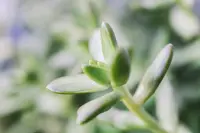
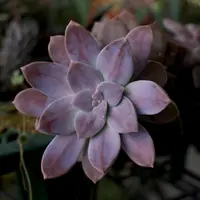
Graptopetalum amethystinum, commonly called jewel-leaf plant or lavender pebbles, is a compact, rosette-forming succulent. Its rounded, pastel leaves often show soft pink, lilac, or bluish tones.

This species is native to rocky slopes in Mexico, where it grows in bright light with sharp drainage and low to moderate rainfall. Its thick leaves store water, so it tolerates short droughts but is sensitive to excess moisture and poor drainage.

Growth is generally slow to moderate, and stems can elongate and trail slightly with age. Understanding how to care for Jewel-leaf plant mainly involves balancing strong light, well-drained soil, and careful watering to prevent rot.

Main Plant Requirements

Care Difficulty

Easy Care

Light Preference

Full Sun

Water Requirements

Low Water

Temperature Preference

Warm Climate

Hardiness Zone

9–11

Soil Texture

Sandy, Loamy, Rocky

Soil pH

Slightly acidic (6.5–7.0), Neutral (7.0)

Soil Drainage

Well-drained

Fertilization

Minimal (feed rarely)

Get Personalized Care Plan

Scan your plant to receive care tips personalized for your specific plant

Available on iOS and Android

How to Care for the Jewel-leaf plant

This succulent prefers bright light with some protection from intense midday sun.

  • Provide 6–8 hours of light daily, ideally full morning sun with light afternoon shade, especially in hot, dry regions.
  • Tolerates bright partial shade, but stems of the Jewel-leaf plant may stretch and colors fade if kept below 4–5 hours of strong light.
  • In summer, acclimate plants to stronger sun over 1–2 weeks to avoid leaf scorch, and in winter move containers to the brightest, frost-free spot available.

Watering should be infrequent and guided by soil dryness rather than the calendar.

  • Allow the top 3–5 cm of soil to dry completely before watering, then soak thoroughly so excess drains away from the root zone.
  • In spring and summer, expect more frequent watering during active growth; in fall and winter, reduce sharply as growth slows and evaporation decreases.
  • Watch for firm, plump leaves as a sign of good hydration; soft, wrinkled leaves indicate underwatering, while mushy, translucent leaves suggest overwatering and poor drainage for Graptopetalum amethystinum.

This species prefers warm, dry conditions and is sensitive to hard frost.

  • Aim for 65–80°F (18–27°C) during active growth for best color and compact rosettes.
  • Short dips to about 25–30°F (-4 to -1°C) may be survived if soil is dry, but repeated frost damages leaves and can kill the growing point.
  • In hot spells above 95°F (35°C), provide afternoon shade and good air movement, and avoid watering during the hottest part of the day to limit heat stress.

Humidity is rarely a limiting factor for this succulent when grown indoors in typical household air.

  • Aim for 30–50% relative humidity; avoid placing the plant next to humidifiers or in steamy bathrooms.
  • This species tolerates very dry air, but prolonged exposure above 60% can slow drying of leaves and soil, increasing rot risk.
  • Watch for mushy, translucent leaves or blackened leaf bases as signs of excess humidity, and improve air movement rather than misting the Jewel-leaf plant.

Provide a very fast-draining, mineral-heavy substrate to prevent root and stem rot in Graptopetalum amethystinum.

  • Use a cactus/succulent mix amended with 30–50% extra coarse materials such as pumice, perlite, or 3–5 mm grit for strong aeration.
  • Aim for a sandy or gritty structure that allows water to pass through in seconds and leaves soil dry within 2–4 days.
  • Keep pH slightly acidic to neutral, around 6.0–7.0, which supports nutrient availability without stressing the roots.
  • Avoid dense peat, clay-heavy, or water-retentive mixes; if soil compacts or stays wet, lighten it with more rock-based amendments rather than additional compost.

This species is highly suited to container culture, including small patio pots and dish gardens.

  • Choose a wide, shallow pot that gives room for spreading rosettes while limiting excess soil volume that can hold unwanted moisture.
  • Terracotta or unglazed clay pots help moisture evaporate faster, reducing the chance of roots sitting in damp conditions.
  • Use a container with multiple drainage holes and elevate it slightly on pot feet so water exits quickly and does not pool under the base.

Graptopetalum amethystinum has modest nutrient needs but responds well to light feeding during active growth.

  • Use a balanced, diluted liquid fertilizer (such as 10-10-10 at 1/4 strength) or a gentle cactus formula in spring and summer.
  • Apply every 4–6 weeks during the growing season for container plants; in-ground Jewel-leaf plant usually needs less.
  • Avoid compost-heavy mixes that stay wet, as excess organic matter can cause root rot in this succulent.
  • Stop feeding in fall and winter to allow natural dormancy and prevent weak, stretched growth.

Pruning Graptopetalum amethystinum is mainly for tidiness and to shape compact rosettes.

  • Best time is late winter to early spring, just before strong new growth begins.
  • Use clean, sharp scissors or pruning snips to remove dead, shriveled, or damaged leaves at the base.
  • Trim long, leggy stems above a node to encourage branching and denser rosettes.
  • Cut off spent flower stalks at the base to keep the plant neat and to direct energy back to vegetative growth.

Repotting Graptopetalum amethystinum is only needed occasionally, mainly when the plant outgrows its container.

  • Check for roots circling the pot, crowded rosettes, or stalled growth as signs it needs more space.
  • Plan to repot every 2–3 years in late winter or early spring, using a gritty cactus or succulent mix.
  • Choose a pot just 2–3 cm wider, with good drainage, to avoid excess wet soil around the roots.
  • Gently loosen roots, allow any damaged ones to dry briefly, then water lightly after repotting to limit stress.

Propagation of Graptopetalum amethystinum is common and straightforward using vegetative methods.

  • Take healthy leaf cuttings or short stem cuttings in spring or early summer for best rooting.
  • Let cut surfaces callus for 1–3 days in a dry, shaded place before placing on or in the substrate.
  • Use a very well-drained, barely moist cactus mix and bright, indirect light to encourage root formation.
  • Seeds can be sown on the surface of a fine, sterile mix kept slightly moist and warm, though this method is slower.

Winter care for Graptopetalum amethystinum focuses on avoiding prolonged freezing and excess moisture.

  • Hardy only to light frost; sustained temperatures below about 25°F can damage leaves and roots.
  • In cold climates, grow in containers that can be moved indoors to a bright, cool, frost-free spot.
  • Keep soil much drier in winter, watering only when the mix is completely dry to prevent rot.
  • Outdoors in mild areas, use a thin, gritty mulch around the root zone to improve drainage rather than retain moisture.

Care Tips

Rock mulching

Top-dress the soil with a thin layer of coarse gravel or small rocks to keep leaf bases dry, reduce rot at the crown, and stabilize the shallow root system.

Strategic offset removal

Twist and remove crowded offsets in late spring, then replant the healthiest rosettes in a separate pot to maintain airflow around the mother plant and extend the overall lifespan of the clump.

Controlled lean training

If stems begin to sprawl, gently reposition and pin them over the edge of the pot using horticultural pins or clean bent wire to create a cascading habit while preventing stem breakage.

Dry-season pest checks

During prolonged dry indoor heating periods, inspect leaf undersides and stem joints every 2–3 weeks for mealybugs, and remove early infestations with a cotton swab dipped in 70% isopropyl alcohol.

Winter light reset

In late winter, rotate the pot 90° every 2 weeks and remove any severely etiolated (stretched) stems, which helps the plant rebuild a compact rosette form when days lengthen and supports growing Jewel-leaf plant with a neater shape.

Common Pests and Diseases

Mealybugs

This pest feeds on sap and often hides in tight leaf clusters, causing shriveled, deformed leaves and sticky honeydew on the plant surface. Symptoms include white, cottony masses in crevices and at the base of leaves.

Solution

Isolate the plant, then dab visible insects with cotton swabs dipped in 70% isopropyl alcohol and gently wipe leaf rosettes, repeating weekly until no new pests appear. Improve airflow and avoid overfertilizing, and use a neem oil or insecticidal soap spray labeled for succulents to reach hidden insects in leaf axils.

Aphids

These insects concentrate on tender new growth, sucking sap and causing distortion, yellowing, and sticky honeydew that can attract sooty mold. Colonies are often found on flower stalks and young rosettes.

Solution

Rinse the plant with a firm but gentle stream of water to dislodge colonies, then treat remaining insects with insecticidal soap, ensuring full coverage of undersides and centers of rosettes. Reduce nearby weed hosts outdoors and monitor new growth closely, repeating treatment every 5–7 days until the infestation is gone.

Spider mites

This pest is favored by hot, dry conditions and causes fine stippling, dulling of the glaucous leaf surface, and eventual bronzing or drying of leaves. Fine webbing may appear between leaves and at the center of the rosette.

Solution

Increase local humidity slightly around the plant without wetting the soil surface, and rinse foliage thoroughly to wash off mites and webs. Apply a miticide or neem oil spray labeled for spider mites, coating all leaf surfaces, and repeat at intervals to catch newly hatched mites while also avoiding heat stress during treatment.

Edema

This disorder occurs when roots absorb water faster than leaves can transpire, leading to water-soaked blisters or corky, raised spots on the thick leaves. Symptoms include rough, scar-like patches that do not spread like a typical infection.

Solution

Allow the soil to dry more thoroughly between waterings and avoid sudden changes from very dry to very wet conditions. Provide strong light and good airflow, and use a fast-draining gritty succulent mix so excess water leaves the root zone quickly, which supports stable Graptopetalum amethystinum plant care.

Bacterial soft rot

This disease affects damaged or overwatered tissue, causing rapid softening, collapse, and foul-smelling, water-soaked areas on leaves or the crown. Symptoms include mushy, translucent patches that spread quickly in warm, wet conditions.

Solution

Remove and discard all affected leaves and any mushy crown tissue, cutting back to firm, healthy material with sterilized tools, and do not compost infected parts. Allow the plant and cut surfaces to dry thoroughly, correct overwatering, and replant only in clean, well-draining soil while improving airflow and keeping water off the rosettes.

Interesting Facts

Natural Mexican cliff dweller

This species is native to central Mexico, where it often grows on rocky slopes and cliffs, anchoring its roots in shallow crevices with very little organic soil.

Waxy pastel leaf coating

The rounded leaves are covered with a whitish waxy bloom called epicuticular wax, which gives the plant its soft pastel, sometimes lavender tone and reduces water loss and sun damage.

Color shifts with stress

Leaf color can shift noticeably toward pinker or deeper lavender tones under strong light, cooler temperatures, or mild drought stress, while lower light and more constant moisture keep it paler and more bluish.

FAQs about Jewel-leaf plant

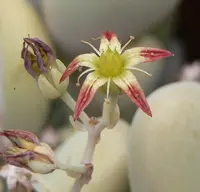
Lack of flowering often comes from insufficient light, too much nitrogen fertilizer, or very young rosettes. Cool, bright, dry winter conditions encourage bud formation, while stable, moderate feeding supports reliable spring to early-summer blooms.

Grow Healthy Plants with Botan Care

Keep your plants happy and healthy with plant identification, disease detection, and easy care guidance.

Botan plant care app — identify plants on mobile

Explore More Plants