Euphorbia squarrosa Care

Euphorbia squarrosa

About Euphorbia squarrosa

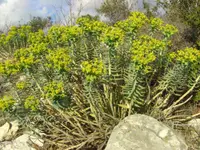
Euphorbia squarrosa is a small, shrubby succulent spurge known for its densely branched, often angular stems and small leaves that may drop in dry conditions. It typically forms a compact mound and may produce small, inconspicuous flowers typical of the Euphorbia genus.

This species is native to arid regions, where it has adapted to strong light, lean soils, and limited water. Its drought tolerance and slow, steady growth make it suitable for experienced collectors and careful beginners.

In cultivation, Euphorbia squarrosa prefers bright exposure, very well-drained mineral soil, and cautious watering. Understanding how to care for Euphorbia squarrosa mainly involves avoiding overwatering and providing enough light to maintain its compact, healthy form.

Main Plant Requirements

Care Difficulty

Moderate Care

Light Preference

Full Sun

Water Requirements

Low Water

Temperature Preference

Warm Climate

Hardiness Zone

9–11

Soil Texture

Sandy, Loamy, Rocky

Soil pH

Slightly acidic (6.5–7.0), Neutral (7.0)

Soil Drainage

Well-drained

Fertilization

Minimal (feed rarely)

Get Personalized Care Plan

Scan your plant to receive care tips personalized for your specific plant

Available on iOS and Android

How to Care for the Euphorbia squarrosa

This drought-adapted succulent needs bright light and benefits from several hours of direct sun in most climates.

  • Provide 4–6 hours of direct morning sun with bright, filtered light the rest of the day; in very hot, dry regions, limit harsh afternoon sun to prevent stem scorch.
  • In cooler or coastal climates it tolerates full sun all day, but monitor for yellowing or corky patches that signal sun stress.
  • In partial shade (3–4 hours sun) growth becomes more open and elongated; move slowly to brighter exposure over 2–3 weeks to avoid shock.

Watering should imitate an arid climate with deep but infrequent soakings and thorough drying between events.

  • Allow the top 3–5 cm of soil to dry completely before watering; in hot active growth this may mean every 10–21 days, depending on soil and climate.
  • Use very free-draining, gritty soil so water runs through in seconds; standing water or persistently damp soil leads to root rot and soft, collapsing stems.
  • Reduce watering sharply in cool seasons, only when stems start to slightly wrinkle; pale, mushy growth indicates overwatering, while shriveling with bone-dry soil signals underwatering in Euphorbia squarrosa.

This species prefers warm, dry conditions and is sensitive to prolonged cold or frost.

  • Aim for an active growth range of 65–85°F (18–29°C); short spikes up to 95°F (35°C) are tolerated if soil is dry and air movement is good.
  • Protect from temperatures below 40°F (4°C); brief dips to 35°F (2°C) may be survived if kept dry, but any frost can damage tissue.
  • Over winter, keep it cool and dry at 50–60°F (10–16°C) to slow growth and reduce rot risk, avoiding sudden swings of more than 10°F (6°C) in a day.

This species handles typical indoor humidity well and rarely needs special adjustments.

  • Thrives in 30–50% humidity, similar to most heated or air-conditioned homes.
  • Tolerates very dry air; problems usually come from overwatering, not low humidity.
  • Watch for soft, mushy stems as a sign of excess moisture rather than low humidity; ensure strong air circulation around the plant.

Euphorbia squarrosa needs a very fast-draining, mineral-based substrate that mimics arid, rocky habitats.

  • Use a cactus mix amended with extra coarse sand, fine gravel, or pumice to increase drainage and aeration.
  • Aim for a gritty, lean texture with minimal organic matter, so water flows through within seconds of watering.
  • Maintain slightly acidic to neutral pH, around 6.0–7.0, which most commercial cactus mixes provide naturally.
  • Avoid peat-heavy, compact, or water-retentive mixes that stay wet for days, as they quickly lead to root and stem rot.

This species is well suited to container growing when drainage and stability are prioritized.

  • Choose a wide, shallow pot to accommodate spreading roots while keeping the root zone from staying wet too long.
  • Select unglazed terracotta if extra evaporation is needed in cooler or less sunny locations.
  • Place a layer of coarse gravel above the drainage holes to prevent mix loss without slowing water outflow, improving stability for the plant.

This species grows well in lean, mineral soils and usually needs only light feeding in containers.

  • Use a low-strength balanced liquid fertilizer (around 10-10-10) at 1/4–1/2 label rate during the active growing season.
  • Feed every 4–6 weeks in spring and early summer for potted Euphorbia squarrosa, skipping fertilization for in-ground plants on healthy soil.
  • Stop feeding in late summer and do not fertilize in winter dormancy to avoid soft, weak growth.
  • If organic options are preferred, use a very thin top-dress of fine compost rather than rich, heavy mixes.

Pruning is mainly used to maintain shape and remove damaged tissue on Euphorbia squarrosa.

  • Carry out light pruning in late winter or early spring before strong new growth starts.
  • Remove dead, damaged, or crossing stems with clean, sharp pruners to improve air flow and plant structure.
  • Shorten overly long or unbalanced stems slightly to maintain a compact, symmetrical form.
  • Wear gloves and avoid skin contact with the milky sap, which can be irritating, and let cut surfaces dry in good ventilation.

Container-grown plants benefit from occasional repotting, while established outdoor specimens prefer minimal disturbance.

  • Check for roots circling the pot, pushing through drainage holes, or slowing growth as signs that repotting is needed.
  • Plan repotting or transplanting for late spring, when temperatures are stable and new growth begins.
  • Repot every 3–4 years into a pot only 2–3 cm wider, using a very free-draining cactus or succulent mix.
  • Handle the root ball gently, keep roots as intact as possible, and water lightly after moving to reduce stress and rot risk.

Propagation of this succulent is most reliable from stem cuttings taken in the warm season.

  • Take short, healthy stem cuttings in late spring or early summer, using a sterile, sharp knife or pruners.
  • Allow cut surfaces to dry and callus for several days so the latex sap seals and fungal risk is reduced.
  • Insert cuttings into a gritty, fast-draining mix, keeping warmth (70–80°F) and bright, indirect light.
  • Water very sparingly until roots form, then increase watering slightly while avoiding prolonged moisture around the base.

Cold sensitivity means Euphorbia squarrosa needs thoughtful winter management, especially in containers or cool climates.

  • Avoid exposure to hard frost; aim to keep temperatures above 40°F for potted plants.
  • Move containers indoors or into an unheated but frost-free space with bright light before the first freeze.
  • Keep soil almost dry in winter, watering just enough to prevent complete desiccation.
  • In mild climates, a light gravel mulch around the crown improves drainage and buffers brief cold snaps.

Care Tips

Protective handling

Wear nitrile or latex gloves and avoid touching your face when pruning or repotting, because the milky sap is irritating and should be rinsed off skin immediately with plenty of water if contact occurs.

Root-bound control

Check every 1–2 years by sliding the plant gently from its pot; if the root ball is circling tightly, shift it to a slightly wider pot and loosen the outer roots to prevent stress and stunting.

Targeted pest checks

Inspect the ribs and areole-like points with a hand lens every few weeks so early mealybug or scale colonies can be dabbed with isopropyl alcohol on a cotton swab before they spread.

Light acclimation

When moving the plant from indoor light to a sunnier outdoor spot, increase direct sun exposure over 10–14 days to prevent corky, sunken scorch patches on the stems.

Winter rest management

During cooler, low-light months, keep the plant slightly drier and avoid repotting or heavy feeding so its natural semi-dormant phase is not disrupted, which supports long-term Euphorbia squarrosa care.

Common Pests and Diseases

Spider mites

This pest often appears in warm, dry indoor conditions and can cause fine webbing, stippled patches, and a dull, dusty look on stems and leaves. Symptoms include slow decline and yellowing or bronzing of tissue on the succulent segments.

Solution

Rinse the plant thoroughly under a gentle shower or hose, focusing on stem joints and crevices, then let it dry in bright, airy conditions. Follow with 2–3 applications of insecticidal soap or a light horticultural oil at 7–10 day intervals, and reduce risk by keeping humidity moderate and avoiding hot, stagnant air around the plant.

Mealybugs

These insects cluster in grooves and joints of the branching stems, forming white, cottony patches and causing gradual weakening and distortion of new growth. Symptoms include sticky honeydew and sooty mold on nearby surfaces.

Solution

Remove visible colonies with a cotton swab dipped in 70% isopropyl alcohol, then wash the plant with lukewarm water to dislodge hidden insects. Repeat spot-treatments weekly until no new mealybugs appear, isolate heavily infested plants, and avoid overfertilizing, which encourages soft, vulnerable growth when caring for Euphorbia squarrosa.

Scale insects

This pest often appears as small, hard, brown or gray bumps attached firmly to stems and ribs, leading to yellowing and loss of vigor over time. Symptoms include sticky residue and occasional black sooty mold on the plant surface.

Solution

Gently scrape or pry individual scales off with a fingernail or soft brush, then wash the plant with mild soapy water and rinse well. For persistent cases, apply insecticidal soap or light horticultural oil to thoroughly coat stems, repeating every 10–14 days while improving light and airflow to support recovery.

Powdery mildew

This disease can develop on shaded or crowded plants, forming white, powdery patches on stems and any leafy growth. Symptoms include dull, patchy discoloration and slow growth if the problem persists.

Solution

Improve air circulation and light by spacing plants and providing bright, indirect sun, then remove heavily affected segments and discard them. Treat remaining tissue with a sulfur-based fungicide or a labeled bio-fungicide, keeping the plant dry at night and avoiding frequent overhead misting.

Cercospora leaf and stem spots

This disease, caused by Cercospora fungi, produces small, dark, sunken spots on stems or occasional leaves that may coalesce into larger necrotic patches. Symptoms include localized dieback of affected segments if humidity remains high and surfaces stay damp for long periods.

Solution

Cut off and discard all visibly spotted sections with a sterile tool, then keep the plant in a bright, drier, well-ventilated location. Avoid wetting stems when watering, disinfect tools and pots, and if needed apply a copper-based or other labeled fungicide according to directions until new growth appears clean.

Interesting Facts

Horned cushion morphology

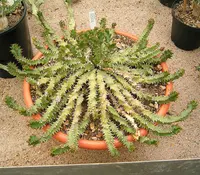
This species forms a low, cushion-like clump with many short, angular, horned stems rather than a single columnar trunk, giving it a compact and highly branched silhouette that distinguishes it from many other spiny euphorbias.

Adaptation to aridity

It has thick, segmented stems with a waxy surface that helps limit water loss, an adaptation typical of succulent euphorbias from seasonally dry habitats.

Latex defense system

Like many members of its genus, it produces a white, milky latex that deters most herbivores and can cause strong skin and eye irritation, so handling should be careful and sap contact avoided.

FAQs about Euphorbia squarrosa

This species generally performs better outdoors in bright, dry conditions with good airflow. Indoors, it needs very high light, careful watering, and a gritty substrate. Euphorbia squarrosa indoor care is possible but more challenging for beginners.

Grow Healthy Plants with Botan Care

Keep your plants happy and healthy with plant identification, disease detection, and easy care guidance.

Botan plant care app — identify plants on mobile

Explore More Plants