Lithops lesliei Care

Lithops lesliei

About Lithops lesliei

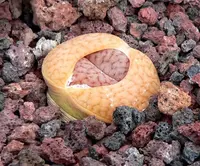
Lithops lesliei is a small succulent often called a living stone. It forms paired, fleshy leaves that mimic surrounding pebbles to avoid herbivores and harsh sun. Native to arid regions of southern Africa, it grows almost flat to the soil surface and expands slowly, usually producing only a few leaf pairs and occasional daisy-like flowers. Its strong seasonality, sensitivity to overwatering, and need for sharp-draining mineral soil make it more challenging than typical houseplants. Good light, restrained watering, and a gritty substrate are essential to care for Lithops lesliei successfully.

Main Plant Requirements

Care Difficulty

Hard Care

Light Preference

Full Sun

Water Requirements

Low Water

Temperature Preference

Tropical / Frost Sensitive

Hardiness Zone

10–11

Soil Texture

Sandy, Rocky

Soil pH

Slightly acidic (6.5–7.0), Neutral (7.0)

Soil Drainage

Well-drained

Fertilization

Minimal (feed rarely)

Get Personalized Care Plan

Scan your plant to receive care tips personalized for your specific plant

Available on iOS and Android

How to Care for the Lithops lesliei

This desert succulent needs strong light but must be protected from intense summer scorch.

  • Provide 4–6 hours of direct morning sun with bright, filtered light the rest of the day, especially in hot, dry climates.
  • Allow light partial shade during harsh afternoon sun, particularly above 90°F (32°C), to prevent leaf scorching and bleaching.
  • In winter, give Lithops lesliei the brightest possible exposure; stretch, taller leaves, or dull color indicate it is not receiving enough light.

Watering must mimic sparse desert rains and respect the plant’s seasonal growth cycle.

  • Use a fast-draining mineral mix; water only when the root zone is completely dry, not just the top 2–3 cm.
  • During active growth and flowering, give a deep soak, then let excess drain away and keep the soil dry for several weeks.
  • In summer dormancy and while new leaf pairs replace old ones, withhold water; soft, splitting leaves suggest overwatering, while prolonged wrinkling suggests cautious rehydration.

Stable warmth with cool, dry winters suits this species best.

  • Aim for 65–80°F (18–27°C) during active growth, with good air movement to reduce rot risk.
  • Protect from frost; short dips to 35–40°F (2–4°C) are usually survivable only if soil is completely dry, but freezing damages the leaf bodies.
  • In hot spells above 90–95°F (32–35°C), give light shade and avoid watering hot soil to prevent root damage and sudden tissue collapse.

Humidity plays a minor role for this desert succulent, which prefers dry air similar to most heated indoor homes.

  • Aim for 20–40% relative humidity, avoiding persistently above 50%.
  • Plant tolerates very dry air; problems arise more from excess moisture around the leaves and roots than low humidity.
  • If air is unusually humid and leaves look swollen or translucent, increase air movement with a fan and avoid grouping near moisture-loving plants.

Soil for Lithops lesliei must drain extremely fast and contain very little organic matter.

  • Use a gritty, mineral-based mix such as 70–90% pumice, coarse sand, or fine gravel with only 10–30% inorganic potting substrate.
  • Ensure the mix is sharply draining so water runs through in seconds and the root zone dries quickly between sparse waterings.
  • Aim for slightly acidic to neutral pH around 6.0–7.2, avoiding strongly acidic or alkaline garden soil.
  • Avoid peat-heavy, loamy, or compact mixes; add extra pumice or coarse grit to improve aeration and prevent root rot.

This species is well suited to container growing when the pot strongly limits excess moisture retention.

  • Choose a shallow, wide pot so the small taproot can spread slightly while the surface stays open to rapid drying.
  • Prefer unglazed clay over plastic to allow evaporative moisture loss that matches the plant’s low water use.
  • Fill the container with coarse top-dressing gravel to keep leaf bodies above any lingering surface moisture and stabilize the plant.

This species needs very little feeding, and excess nutrients can damage Lithops lesliei.

  • If growth is weak, use a very dilute (25% strength) balanced liquid NPK fertilizer once in late spring or early summer.
  • Apply only to slightly moist, fast-draining soil, never to dry roots, to reduce burn risk.
  • Do not use slow-release pellets or rich compost that hold nutrients for long periods.
  • Avoid all feeding during summer dormancy and in winter, when the plant is resting.

Pruning needs are minimal and mainly involve hygiene rather than shaping for Lithops lesliei.

  • Best timing is late spring or after old leaf pairs have fully dried and been replaced.
  • Gently remove only completely dead, papery leaf skins by hand to prevent rot around the new bodies.
  • Use clean tweezers or fingers; avoid cutting into living tissue or forcing partly attached material.
  • No structural pruning is needed, as pruning does not improve shape, growth, or flowering.

This species dislikes frequent disturbance, so repot only when clearly necessary.

  • Repot every 3–5 years or when roots circle the pot, growth stalls, or the mix breaks down and stays wet too long.
  • Best timing is early spring before strong active growth, using a shallow pot with excellent drainage.
  • Use a very gritty, mineral mix; gently loosen the root ball, keeping fine roots as intact as possible.
  • After repotting, keep the plant mostly dry for 7–10 days to let any root injuries seal and reduce rot risk.

Propagation of Lithops lesliei is usually done by seed and requires patience and stable conditions.

  • Sow fresh seeds in late spring or early summer on the surface of a sterile, very gritty mix.
  • Maintain bright, indirect light, 68–77°F temperatures, and consistently slight moisture until germination.
  • Cover the pot with a clear lid or bag for humidity, ventilating daily to limit fungal problems.
  • Division is possible only when clusters form, gently separating heads with roots and replanting in dry mix.

Winter care is important because Lithops lesliei is not frost hardy and is easily damaged by freezing.

  • Maintain indoor temperatures above 40°F, ideally 50–65°F, with bright light.
  • Keep soil almost completely dry in winter, watering only if bodies begin to wrinkle excessively.
  • Do not mulch or insulate heavily; the plant prefers dry, airy conditions around the roots.
  • For outdoor containers, move pots indoors or into an unheated but frost-free, bright space.

Care Tips

Seasonal growth check

Use the yearly leaf replacement cycle as a guide: reduce water to almost zero once the new pair of leaves appears and only resume very sparingly after the old leaves are fully shriveled and dry.

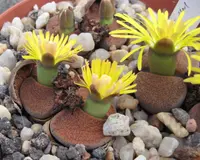
Top-dress with stone

Apply a 1–2 cm layer of coarse mineral grit or small stones on the soil surface to stabilize the plant, keep the neck dry, and reduce the risk of rot from splashing water.

Secure against stretching

If plants start leaning or stretching toward light, gently rotate the pot 90° every 1–2 weeks during active growth to maintain compact, upright bodies instead of replanting too often.

Dormancy protection

During hot, dry summer dormancy, place pots where they receive strong light but less intense afternoon sun and completely avoid overhead watering so the bodies do not split.

Use deep, narrow pots

Choose pots that are deeper than they are wide to accommodate the long taproot and keep the lower substrate dry, which supports healthier roots when growing Lithops lesliei.

Common Pests and Diseases

Mealybugs

This pest feeds on sap and hides in the fissure between the leaf pairs and at the base of the plant, often appearing as small white cottony clusters. Symptoms include slight shriveling, slow growth, and sticky honeydew on the plant or pot surface.

Solution

Isolate the plant, then remove visible mealybugs with a cotton swab dipped in 70% isopropyl alcohol, focusing on the central fissure and base. Improve air movement, avoid excess fertilizer, and repeat spot treatment weekly until no new insects appear; for severe infestations, use a low-dose systemic insecticide labeled for succulents and follow directions carefully.

Root mealybugs

This pest lives in the soil, coating roots and the base of the plant with white, cottony masses and causing unexplained shriveling despite normal watering. Symptoms include poor growth, reduced root mass, and plants that loosen easily in the substrate.

Solution

Unpot the plant, gently shake or rinse off all soil, and inspect roots; remove all white masses by hand and with a soft brush if needed. Discard the old soil, soak the root zone briefly in diluted systemic insecticide or 70% isopropyl alcohol, allow roots to dry for 1–2 days, then repot in fresh, very gritty mix and water lightly once recovery starts; monitor nearby pots for spread as part of careful Lithops lesliei care instructions.

Fungal leaf spot

This disease causes small translucent or tan spots on the leaf surface, sometimes slightly sunken, often appearing after accidental overhead watering or prolonged surface moisture. Symptoms include localized discoloration that does not follow the normal seasonal wrinkling and renewal pattern of the plant body.

Solution

Keep the plant completely dry on the body, stop overhead watering, and improve air circulation around the pot. Remove severely damaged plants from close contact with healthy ones, avoid high humidity, and use a targeted succulent-safe fungicide only if new lesions continue to appear.

Soft rot

This disease leads to rapid softening and collapse of the plant body, often starting at a small water-soaked area that turns yellowish or brown and becomes mushy. Symptoms include a foul smell and plant tissue that easily breaks when touched.

Solution

At the earliest sign, stop all watering and isolate the plant; if only one head is affected, it may be cut away with a sterile blade, leaving only firm, healthy tissue. Dust cuts with dry sulfur or cinnamon, keep completely dry in bright, airy conditions, and discard any plant that is mostly mushy to prevent spreading pathogens to other pots.

Spider mites

These insects are tiny and often invisible to the naked eye but may cause fine speckling, roughened patches, or dull, scarred areas on the leaf surface, especially on older heads. Symptoms include very fine webbing in crevices and a dry, sandblasted look to the plant body over time.

Solution

Rinse the plant gently with a strong but controlled stream of water, avoiding damage to the bodies, then allow to dry in good airflow. Follow with repeated treatments of insecticidal soap or a miticide labeled for succulents at 5–7 day intervals, keep the plant slightly cooler and less stressed, and check nearby plants regularly for early signs of reinfestation.

Interesting Facts

Stone-like leaf windows

The leaf tops often show translucent or patterned windows that allow light to penetrate into the photosynthetic tissues buried below the soil surface, an adaptation to intense sun in its natural South African habitats.

Color linked to geology

Populations vary from gray-green to brown or orange tones that closely match the specific quartzite, ironstone, or other local rocks where they grow, providing highly localized camouflage against herbivores.

Distinctive fissure blooming

Its daisy-like yellow flowers emerge from the central fissure between the two leaf lobes in late summer to fall, often opening in the afternoon and closing again toward evening.

Botan icon

Did you know?

In the wild, this species often grows almost flush with the soil surface so that, when covered by wind-blown sand or pebbles, only the patterned tops remain visible, making individual plants extremely hard to locate even for experienced botanists.

FAQs about Lithops lesliei

This species usually flowers in late summer–fall once fully mature, often after several years. Lack of flowers is commonly due to immaturity, insufficient light, or disruptions to its seasonal dry rest period following old leaf absorption.

Grow Healthy Plants with Botan Care

Keep your plants happy and healthy with plant identification, disease detection, and easy care guidance.

Botan plant care app — identify plants on mobile

Explore More Plants