Controlled size shaping
Pinch back soft shoot tips in early spring to keep stems compact, encourage branching, and prevent the plant from becoming top-heavy or leggy as it matures.

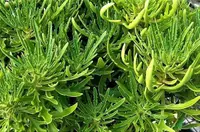
Kalanchoe laciniata is a small, shrubby succulent valued for its deeply divided, fleshy leaves and clusters of tubular flowers in warm colors. It forms a compact, branching plant that can look almost fernlike, but with thick, water-storing foliage.
This species is native to arid and semi-arid regions of Africa and the Indian subcontinent, where it thrives in rocky, well-drained habitats. Its drought tolerance and adaptable growth make it relatively easy to keep as a container plant.
Understanding how to care for Kalanchoe laciniata starts with bright light, infrequent watering, and a gritty, fast-draining soil mix to prevent roots from staying wet for long periods.

Care Difficulty
Easy Care

Light Preference
Full Sun

Water Requirements
Low Water

Temperature Preference
Tropical / Frost Sensitive

Hardiness Zone
10–12

Soil Texture
Sandy, Loamy, Organic-rich

Soil pH
Acidic (5.5–6.5), Slightly acidic (6.5–7.0)

Soil Drainage
Well-drained

Fertilization
Light (every 4–6 weeks)
Scan your plant to receive care tips personalized for your specific plant
Available on iOS and Android
This succulent needs bright light but must be protected from extreme midday sun in hot climates.
Watering should follow soil dryness rather than a fixed calendar for this drought-tolerant species.
Stable warm conditions support healthy growth and flowering for this succulent.
This species prefers fairly dry room air and rarely needs special humidity management.
Use a sharply draining, mineral-rich mix that mimics arid, rocky soils.
This species adapts very well to container growing for both indoor and outdoor displays.
Feeding supports compact growth and flowering of Kalanchoe laciniata in containers.
Thoughtful pruning keeps Kalanchoe laciniata dense, neat, and flowering well.
Repotting helps this shallow-rooted succulent stay healthy in containers without becoming rootbound.
This species is commonly multiplied from cuttings, making it practical to share or renew plants.
Cool-season protection is important where temperatures fall near or below freezing.

Plant Health Check
Not sure what's wrong with your plant? Check your plant's health inside the app.
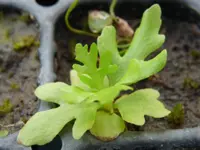
This species is recognized by its deeply lobed, almost fern-like leaves, which are unusual within the genus and increase the leaf surface area for light capture in bright but arid habitats.
It is naturally distributed in dry regions of eastern and northeastern Africa, where it grows on rocky slopes and disturbed ground, tolerating strong light and seasonal drought.
Older, trailing stems can root where they touch loose soil, allowing the plant to slowly spread and form small clumps in its natural environment and in cultivation.
Lack of flowering usually comes from insufficient light, too much nitrogen fertilizer, or no dry rest period. Provide strong light, avoid heavy feeding, and allow slightly cooler, drier conditions for several weeks to trigger bud formation.
Keep your plants happy and healthy with plant identification, disease detection, and easy care guidance.