


Prevent legginess
Pinch out soft shoot tips when stems reach 20–30 cm to keep the plant compact, encourage branching, and reduce the risk of wind damage to tall, weak growth.

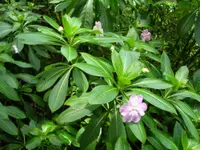
Shrub balsam, Impatiens sodenii, is a fast-growing evergreen shrub in the busy Lizzie family, valued for its long-lasting flowers. It typically forms a soft, upright clump with fleshy stems and broad, light green leaves.
Plants carry large, open-faced flowers in pink or white tones that appear over a long season in mild climates. It is native to tropical East Africa, where it grows in moist, sheltered mountain habitats.
Shrub balsam is generally easy to grow in frost-free areas, provided it has protection from harsh sun and soil that stays evenly moist but not waterlogged. These traits make it straightforward for gardeners who want to learn how to care for shrub balsam without complex techniques.

Care Difficulty
Moderate Care

Light Preference
Partial Shade

Water Requirements
Keep Soil Moist

Temperature Preference
Tropical / Frost Sensitive

Hardiness Zone
10–11

Soil Texture
Loamy, Silty, Organic-rich

Soil pH
Acidic (5.5–6.5), Slightly acidic (6.5–7.0)

Soil Drainage
Moist but well-drained

Fertilization
Moderate (every 2–4 weeks)
Scan your plant to receive care tips personalized for your specific plant
Available on iOS and Android
Impatiens sodenii grows best in bright, indirect light with some gentle sun.
This species prefers evenly moist but not waterlogged soil throughout the growing season.
This plant prefers mild, frost-free conditions for steady growth and flowering.
This species prefers moderate to high humidity for sustained flowering and healthy foliage.
Impatiens sodenii grows best in loose, moisture-retentive but fast-draining soil.
This species adapts well to container growing outdoors when given stable support and controlled moisture.
Impatiens sodenii responds well to modest, consistent feeding during the active growing season.
Pruning Impatiens sodenii keeps the plant compact, healthy, and flowering well.
Container-grown Impatiens sodenii benefits from occasional repotting or transplanting to maintain strong growth.
Impatiens sodenii is most often propagated from softwood or semi-ripe stem cuttings.
This species is frost-tender and needs protection in regions with cold winters.

Plant Health Check
Not sure what's wrong with your plant? Check your plant's health inside the app.
This species is one of the largest balsams, forming woody, shrub-like plants that can reach well over human height in mild, frost-free climates, unlike most Impatiens that remain small and herbaceous.
Its large, pale pink flowers open widely and are lightly scented, an adaptation that makes them accessible to a variety of insect pollinators in the cool, misty montane habitats where the species evolved.
The plant is native to higher-elevation regions of East Africa, where it typically grows along forest edges and moist slopes, which explains its preference for bright light without prolonged harsh sun and consistently moist soils in cultivation.

In suitable subtropical or mild oceanic climates, this species can develop a substantial, woody framework and live as a long-lived evergreen shrub, making it one of the few Impatiens that can be used as a near-permanent landscape shrub rather than as a short-lived bedding annual.
Lack of flowering usually comes from insufficient light, depleted nutrients, or old, exhausted stems. Improve light exposure, feed with a balanced fertilizer, and prune back woody, overgrown branches to stimulate new flowering shoots and better bud formation.
Keep your plants happy and healthy with plant identification, disease detection, and easy care guidance.

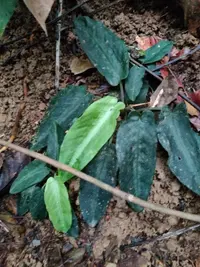
Scindapsus treubii
Scindapsus treubii
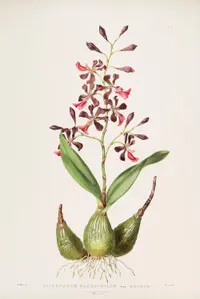
Encyclia cordigera
Encyclia cordigera
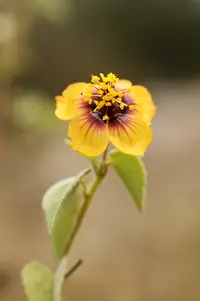
anglestem Indian mallow
Abutilon trisulcatum
Dendrobium leonis
Dendrobium leonis
Skinner's false foxglove
Agalinis skinneriana
Haworthia cooperi var. pilifera
Haworthia cooperi var. pilifera
Great bougainvillea
Bougainvillea spectabilis
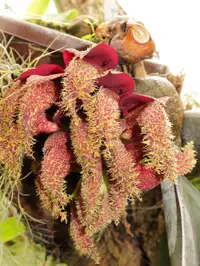
Bulbophyllum phalaenopsis
Bulbophyllum phalaenopsis