


Optimize mounting
Mount plants on cork or hardwood with a thin pad of long-fiber sphagnum only around the roots, not the pseudobulbs, so they dry quickly after watering and develop strong, branching root systems.

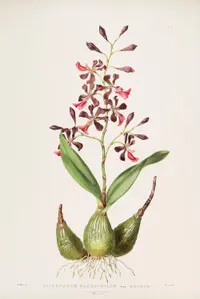
Encyclia cordigera is a warm-growing epiphytic orchid that usually anchors itself on tree branches rather than in soil. It forms clustered pseudobulbs with narrow, arching leaves and produces tall flower spikes.
The plant is known for its showy, fragrant flowers, often with broad lips in shades of white, pink, or purple, contrasting with darker petals. It occurs naturally in lowland forests of Central America and northern South America.
This orchid prefers bright, filtered light, good air movement, and moisture around the roots that alternates with light drying. With stable conditions and moderate attention, it is considered manageable for growers who want to learn how to care for Encyclia cordigera.

Care Difficulty
Moderate Care

Light Preference
Partial Sun

Water Requirements
Moderate Water

Temperature Preference
Tropical / Frost Sensitive

Hardiness Zone
11–12

Soil Texture
Sandy, Rocky, Organic-rich

Soil pH
Acidic (5.5–6.5)

Soil Drainage
Well-drained

Fertilization
Light (every 4–6 weeks)
Scan your plant to receive care tips personalized for your specific plant
Available on iOS and Android
This orchid needs bright, indirect light to flower well without leaf damage.
This epiphytic orchid prefers thorough watering followed by a short dry period around the roots.
This species thrives in warm to intermediate conditions with a slight day–night temperature drop.
This orchid needs moderately high humidity to maintain healthy pseudobulbs and flowers.
This epiphytic orchid prefers a very airy, fast-draining medium rather than conventional potting soil.
This species is well suited to container culture when drainage and stability are carefully managed.
This orchid benefits from light, consistent feeding during active growth for reliable flowering.
Pruning needs are minimal and mainly focus on hygiene and maintaining a tidy plant.
Repotting is infrequent but important to maintain aeration around the roots and support healthy growth.
Division is the standard method for multiplying this sympodial orchid while preserving cultivar traits.
This warmth-loving orchid is not frost hardy and needs sheltered conditions in cool climates.

Plant Health Check
Not sure what's wrong with your plant? Check your plant's health inside the app.
This orchid is named for its distinctive heart-shaped labellum, a specialized petal that helps guide pollinators toward the flower’s reproductive structures.
In many cultivated forms, the flowers release a powerful sweet scent, especially during the day, which is thought to attract bee pollinators over relatively long distances.
Although often seen with purple to magenta petals and a contrasting white and purple lip, this species naturally occurs in several color forms, including lighter and more uniformly colored clones that are prized by orchid collectors.

Encyclia cordigera was originally described in the early 19th century and has since become a foundational parent in orchid hybridization, contributing its large, long-lasting, fragrant flowers to numerous modern Encyclia and related hybrids.
This species usually blooms in late winter to spring, sometimes extending into early summer. Flowering often lasts several weeks, with multiple buds opening in succession, giving a long display if the plant is mature and well-established.
Keep your plants happy and healthy with plant identification, disease detection, and easy care guidance.

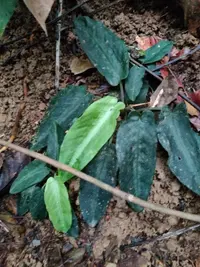
Scindapsus treubii
Scindapsus treubii

Great bougainvillea
Bougainvillea spectabilis
Fruit-scented Sage
Salvia dorisiana
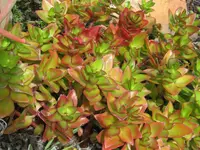
Crassula sarmentosa
Crassula sarmentosa
Beardlip penstemon
Penstemon barbatus
Chacruna
Psychotria viridis
 POPULAR
Lady of the Night Orchid
Brassavola nodosa
Columnea oerstediana
Columnea oerstediana