Columnea oerstediana Care

Columnea oerstediana

About Columnea oerstediana

Columnea oerstediana is a tropical flowering plant in the Gesneriaceae family, often grown as a cascading houseplant. It produces arching or trailing stems with fleshy, dark green leaves.

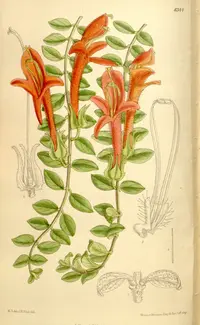
Bright tubular flowers, usually in warm red or orange tones, appear along the stems and are shaped to attract hummingbirds in its native Central American cloud forests. The plant naturally grows as an epiphyte, anchored on trees rather than in heavy soil.

Understanding how to care for Columnea oerstediana starts with stable warmth, high humidity, and bright, filtered light. Its moderate difficulty level mostly comes from needing consistent moisture without waterlogging and an airy, well-drained substrate.

Main Plant Requirements

Care Difficulty

Moderate Care

Light Preference

Bright Indirect Light

Water Requirements

Moderate Water

Temperature Preference

Tropical / Frost Sensitive

Hardiness Zone

11–12

Soil Texture

Loamy, Peaty, Organic-rich

Soil pH

Acidic (5.5–6.5), Slightly acidic (6.5–7.0)

Soil Drainage

Moist but well-drained

Fertilization

Light (every 4–6 weeks)

Get Personalized Care Plan

Scan your plant to receive care tips personalized for your specific plant

Available on iOS and Android

How to Care for the Columnea oerstediana

This rainforest epiphyte prefers bright, filtered light that mimics light under a tree canopy.

  • Provide 6–8 hours of bright, indirect light each day, such as near an east window or set back from a bright south window behind sheer curtains.
  • Tolerates light shade, but flowering in Columnea oerstediana declines if grown in dim corners or under less than 4 hours of strong indirect light.
  • Avoid harsh midday sun; prolonged direct sun after 11 a.m. can scorch leaves, so shift exposure seasonally as summer light intensifies.

This species prefers evenly moist but never waterlogged substrate around its roots.

  • Water when the top 2–3 cm of the mix feels dry, allowing moisture deeper down to remain slightly damp without turning soggy.
  • Slow watering until excess drains freely; a loose, airy mix with added perlite or bark reduces the risk of root rot in Columnea oerstediana.
  • In winter, when growth slows, let the top 3–4 cm dry and watch leaves: limp, dull foliage suggests underwatering, yellowing and mushy stems suggest overwatering.

This plant thrives in stable, warm conditions similar to a tropical understory.

  • Aim for 65–80°F (18–27°C) for active growth, with the warmest range supporting better flowering and rooting of stems.
  • Avoid temperatures below 55°F (13°C); brief drops to 50°F (10°C) may be survived but can cause leaf drop and slowed recovery.
  • Protect from cold drafts, heating vents, and hot, dry air; above 85°F (29°C) increase humidity and airflow to prevent heat stress and leaf scorch.

This species benefits from sustained high humidity to keep foliage and flowers healthy.

  • Aim for 60–80% humidity, as drier indoor air slows growth and reduces flowering.
  • Tolerates brief dips to 40–50%, but prolonged dryness causes leaf edge browning and bud drop.
  • Increase humidity with a room humidifier, grouping plants together, or placing the pot on a pebble tray above (not in) water.

Columnea oerstediana prefers a loose, airy, organic-rich mix that drains quickly yet holds moderate moisture.

  • Use a mix of roughly 40% peat or coco coir, 30% fine bark, 20% perlite, and 10% compost for structure and nutrients.
  • Ensure fast drainage; water should exit the pot within seconds rather than pooling on the surface.
  • Keep pH slightly acidic, around 5.5–6.5, which supports nutrient uptake and root health.
  • Avoid dense garden soil, heavy clay, or mixes that stay wet for days, which promote root rot and fungal issues.

This trailing species is very suitable for container and hanging basket culture.

  • Choose a wide, relatively shallow pot to match its fibrous, surface-leaning roots and to prevent water sitting in a deep column of mix.
  • Select a lightweight hanging basket or container that will not deform under the weight of wet potting mix and trailing stems.
  • Use a pot with multiple side or base drainage points so water exits evenly, preventing localized soggy pockets that damage fine roots.

Nutrient support keeps Columnea oerstediana flowering well in containers.

  • Use a balanced liquid fertilizer (for example 10-10-10) at 1/4–1/2 strength on moist soil during active growth.
  • Feed every 2–4 weeks in spring and summer, adjusting if foliage pales or flowering declines.
  • Switch to a mild slow-release fertilizer or stop liquid feeding in fall.
  • In winter, reduce feeding to once every 6–8 weeks or pause entirely if growth is very slow.

Thoughtful pruning keeps Columnea oerstediana compact and encourages more blooms.

  • Time most pruning for late winter or early spring before strong new growth starts.
  • Use clean, sharp scissors or snips to remove dead, diseased, or damaged stems first.
  • Shorten leggy or overcrowded shoots to just above a leaf node to promote branching.
  • Pinch soft tips after flowering to thicken the plant and maintain a balanced, trailing shape.

Occasional repotting supports healthy roots and consistent flowering in Columnea oerstediana.

  • Check for roots circling the pot, emerging from drainage holes, or slowed growth as signs repotting is needed.
  • Plan to move up 1 pot size every 2–3 years in late winter or early spring.
  • Use a light, airy mix such as peat- or coco-based substrate with added perlite for drainage.
  • Water lightly before and after repotting, keep roots at the same depth, and shade from strong sun for 3–5 days to limit stress.

Stem cuttings are the most practical method for Columnea oerstediana plant care.

  • Take 7–10 cm non-flowering tip cuttings in late spring or early summer.
  • Remove lower leaves and insert cuttings into moist, airy mix such as peat and perlite; rooting hormone is optional.
  • Maintain 70–80°F, bright indirect light, and high humidity using a clear cover with ventilation.
  • After firm rooting, gradually increase light and reduce humidity before potting each cutting individually.

Cool-season care focuses on temperature stability and frost avoidance for this tropical species.

  • Columnea oerstediana is frost-sensitive and should be kept above 55°F, ideally 60–70°F in winter.
  • Move outdoor containers indoors before nights drop below 55°F and place in bright, indirect light.
  • Avoid cold drafts and sudden temperature swings near windows or doors.
  • Water less often, letting the top of the mix dry slightly, but do not allow the root ball to become bone dry.

Care Tips

Encourage Bushy Growth

Pinch back the soft tips of each vine every 4–6 weeks during active growth to promote branching and a fuller, cascading habit rather than a few long, bare stems.

Rotate Hanging Planters

If grown in a hanging basket near a window, rotate the pot 90° every 1–2 weeks so the shoots develop evenly and do not lean strongly toward the light source.

Support Young Stems

Use small wire hoops or a loose ring of soft ties near the pot rim to gently guide young shoots outward before they lengthen and become brittle, which reduces breakage and creates a more even display.

Seasonal Rest Adjustment

In late fall and winter, shorten daylength stress by moving the plant slightly farther from bright windows or using a sheer curtain, as a modestly softer light period can help set flower buds for the following season when caring for Columnea oerstediana.

Hygienic Flower Removal

Remove spent flowers and dropped petals promptly with clean fingers or tweezers to prevent fungal spotting on leaves and to reduce attraction of fungus gnats around the pot surface.

Common Pests and Diseases

Mealybugs

This pest feeds on tender stems and leaf nodes, sucking sap and leaving cottony white clusters that can stunt growth and deform new shoots.

Solution

Isolate the plant, then dab visible insects with cotton swabs dipped in 70% isopropyl alcohol and gently wipe stems and the undersides of leaves; repeat weekly and support recovery by improving light and airflow while avoiding overfertilizing, which encourages soft, pest-prone growth.

Western flower thrips

These insects scrape and suck plant tissues, causing silvery streaks, distorted new leaves, and premature flower drop on hanging shoots.

Solution

Rinse foliage and stems thoroughly with lukewarm water, introduce sticky traps near the plant to reduce adults, and apply a targeted insecticidal soap or neem oil spray to both leaf surfaces every 7–10 days until new growth appears clean, which is essential for stable Columnea oerstediana indoor care.

Brazilian red mite

This pest favors the slightly fuzzy leaves, producing fine webbing, dull gray-green foliage, and gradual leaf drop, especially in warm, dry rooms.

Solution

Increase humidity to above 50%, rinse foliage under a gentle spray to remove webbing, and apply a miticidal soap or horticultural oil to all leaf surfaces, repeating at least twice at 5–7 day intervals to break the life cycle.

Botrytis blight

This disease thrives in cool, humid, still air and causes soft brown lesions on leaves, petioles, and flowers that develop fuzzy gray mold.

Solution

Remove and discard all infected parts, increase air movement around the plant, keep leaves dry by watering at the base, and apply a fungicide labeled for ornamental houseplants if new spots continue to appear despite improved airflow and more spaced-out watering.

Edema

Symptoms include translucent blisters or corky patches on the underside of leaves when roots absorb water faster than the plant can transpire in cool, low-light conditions.

Solution

Allow the top 2–3 cm of the potting mix to dry before watering again, reduce excess watering during cloudy, cool periods, and ensure the plant receives bright but indirect light so the water balance between roots and leaves stabilizes and new foliage forms normally.

Interesting Facts

Velvet-edged tube flowers

The bright red tubular flowers of this species have a distinct velvety outer surface and flared yellow mouths, a combination that helps guide hummingbirds directly to the nectar-rich interior.

Hummingbird pollination strategy

In its native Central American cloud forests, the plant is primarily pollinated by hummingbirds, which are attracted by the flower’s color contrast, elongated tube, and suspended position along arching stems.

Epiphytic trailing habit

This species often grows as an epiphyte on tree trunks and branches rather than in soil, using its long pendent stems to suspend flowers away from the host surface for better access by flying pollinators.

FAQs about Columnea oerstediana

This species usually performs best indoors or in sheltered, climate-controlled spaces, as it prefers stable warmth, high humidity, and protection from strong sun and wind. Outdoor growing suits only frost-free, humid, shaded locations that closely mimic cloud-forest conditions.

Grow Healthy Plants with Botan Care

Keep your plants happy and healthy with plant identification, disease detection, and easy care guidance.

Botan plant care app — identify plants on mobile

Explore More Plants