Aglaonema rotundum Care

About Aglaonema rotundum

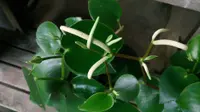
Aglaonema rotundum is a compact, slow-growing tropical foliage plant from the humid forests of Sumatra. It is valued for its rounded, dark green leaves marked with pink to red midribs and veins. The plant forms a low clump, making it suitable for tabletops and small indoor spaces. Its ornamental foliage is the main feature, rather than flowers. In cultivation, it prefers stable warmth, evenly moist but not waterlogged soil, and protected, shaded light similar to its forest-floor habitat. Once conditions are stable, it is moderately easy to care for Aglaonema rotundum, but it dislikes cold drafts and sudden changes.

Main Plant Requirements

Care Difficulty

Moderate Care

Light Preference

Bright Indirect Light

Water Requirements

Moderate Water

Temperature Preference

Tropical / Frost Sensitive

Hardiness Zone

11–12

Soil Texture

Loamy, Peaty, Organic-rich

Soil pH

Acidic (5.5–6.5), Slightly acidic (6.5–7.0)

Soil Drainage

Moist but well-drained

Fertilization

Light (every 4–6 weeks)

Get Personalized Care Plan

Scan your plant to receive care tips personalized for your specific plant

Available on iOS and Android

How to Care for the Aglaonema rotundum

This shade-tolerant aroid prefers soft, indirect light rather than direct sun.

  • Provide 6–8 hours of bright, filtered light per day, such as behind a sheer curtain or under a tree canopy for Aglaonema rotundum.
  • Allow light to be weakest at midday; gentle morning sun is acceptable, but avoid harsh midday or afternoon rays that scorch leaves and fade variegation.
  • In darker seasons or north-facing rooms, move the plant closer to a bright window or supplement with a weak grow light to prevent stretched, leggy growth.

This species prefers evenly moist but not saturated soil with brief drying between waterings.

  • Water when the top 2–4 cm of soil feels dry, using enough water for slight drainage, then discard excess to avoid root rot.
  • In spring and summer, soil may dry within a few days; in cooler or lower-light seasons, expect slower drying and reduce watering frequency accordingly.
  • Watch for yellowing, mushy stems as a sign of overwatering, and for drooping, thin leaves and dry edges as signs of underwatering; adjust timing, not volume.

This tropical plant grows best in consistently warm, stable temperatures without sudden swings.

  • Aim for 70–80°F (21–27°C) for active growth, which supports steady leaf production and healthy root activity.
  • Keep temperatures above 60°F (16°C); brief drops to 55°F (13°C) may be tolerated but can slow growth and increase stress.
  • Protect from frost and cold drafts near doors or windows, and in hot weather above 86°F (30°C), increase shade and airflow to prevent leaf scorch and wilting.

This species benefits from moderately high humidity to keep foliage healthy and vivid.

  • Aim for 50–70% air humidity; lower levels slow growth and can dull leaf color.
  • Dry air causes brown, crispy leaf edges and curling, especially near heating or AC vents.
  • Increase humidity by grouping plants, using a pebble tray with water below the pot base, or running a small room humidifier nearby.

Aglaonema rotundum prefers a loose, airy, organic-rich substrate that drains freely yet retains some moisture.

  • Use a mix of 40% peat or coco coir, 30% perlite, and 30% fine bark or compost for a fibrous, well-structured medium.
  • Ensure fast drainage so water runs through in seconds, leaving the mix evenly moist but never waterlogged.
  • Aim for slightly acidic to neutral pH around 6.0–7.0, which keeps nutrients available without causing leaf burn.
  • Avoid heavy garden soil, fine sand-only mixes, or compacted substrates that suffocate roots and encourage rot.

This species is well suited to container culture for controlled moisture and root protection.

  • Choose a pot only 2–4 cm wider than the root ball to maintain stable moisture without prolonged sogginess.
  • Select stable, heavier containers if foliage becomes lush and top-heavy to prevent tipping after watering.
  • Use a pot material that matches your environment, such as terracotta to dry faster in humid homes or plastic to retain moisture in drier rooms.

This plant responds well to light, consistent feeding during active growth.

  • Use a balanced liquid fertilizer (such as 10-10-10 or 20-20-20) at 1/4–1/2 strength for Aglaonema rotundum.
  • Apply every 4–6 weeks in spring and summer, on already moist soil to avoid root burn.
  • Pause feeding in late fall and winter when growth slows in indoor conditions.
  • Slow-release granules or a thin layer of mature compost can substitute for frequent liquid feeding.

Pruning focuses on tidying growth and maintaining a compact, leafy plant.

  • Best time for pruning Aglaonema rotundum is late winter to early spring, before strong new growth starts.
  • Remove yellow, dead, or damaged leaves at the base using clean, sharp scissors or pruners.
  • Thin crowded stems lightly to improve light penetration and keep a balanced, bushy shape.
  • Disinfect tools before and after use to reduce the risk of spreading disease.

This species prefers slightly snug pots but benefits from periodic repotting to refresh the root zone.

  • Check for roots circling the pot, pushing through drainage holes, or slow, weak growth as signs Aglaonema rotundum needs repotting.
  • Plan to move up 1 pot size every 2–3 years, ideally in spring when active growth resumes.
  • Gently loosen circling roots, trim any rotten sections, and place in fresh, airy mix to limit transplant shock.
  • Water thoroughly after repotting, then keep in bright, indirect light and slightly drier soil for 1–2 weeks to reduce stress.

Propagation is most reliable through division and stem cuttings from healthy, mature plants.

  • Divide clumps of Aglaonema rotundum in spring, separating sections with several stems and roots attached.
  • Take 8–12 in stem cuttings with at least 2–3 nodes and remove lower leaves to expose nodes.
  • Root cuttings in warm (70–80°F), humid conditions using a loose, well-drained mix, keeping it just slightly moist.
  • Provide bright, indirect light and avoid strong fertilization until new roots and leaves are clearly established.

This tropical plant is not frost tolerant and must be treated as a warm indoor plant in winter.

  • Move Aglaonema rotundum indoors before temperatures fall below 55°F and keep it away from cold drafts.
  • Maintain indoor temperatures around 65–80°F with stable humidity, using trays or humidifiers if air is very dry.
  • Reduce watering and stop or greatly reduce feeding, letting the top soil layer dry slightly between waterings.
  • Avoid placing the plant near single-pane windows where foliage can be chilled or damaged.

Care Tips

Acclimate After Purchase

Keep the plant in its nursery pot for 2–3 weeks after buying, placing it in stable indoor conditions so it can adapt before any repotting or major changes.

Rotate For Even Growth

Turn the pot 90° every 2–3 weeks so the leaf rosette develops evenly and stems do not lean or twist toward the light source.

Use Stable Supports

If stems become top-heavy, insert a short, smooth stake near the base and loosely tie stems with soft plant ties to prevent mechanical damage and tipping.

Quarantine New Arrivals

Place any new houseplants at least 1–2 m away for 2–3 weeks to reduce the risk of introducing pests to a collection when caring for Aglaonema rotundum.

Dust Leaves Gently

Wipe leaves every 3–4 weeks with a soft, barely damp cloth, supporting each leaf from below, to remove dust without scratching the waxy surface or using leaf-shine products.

Common Pests and Diseases

Spider mites

These pests thrive in warm, dry indoor air and often appear as fine webbing on the undersides of leaves, causing stippling and dull, faded foliage. Symptoms include reduced vigor and possible leaf edge browning, especially on the colorful variegation.

Solution

Rinse leaves thoroughly with lukewarm water, including the undersides, and repeat every few days for 2–3 weeks. Increase humidity, isolate the plant, and if needed apply a targeted miticide or insecticidal soap, ensuring full coverage of both leaf surfaces and petioles.

Mealybugs

These insects appear as white, cottony clusters in leaf axils, along stems, and sometimes on roots, sucking sap and weakening the plant. Symptoms include sticky honeydew, distorted new growth, and yellowing patches on leaves.

Solution

Physically remove visible insects with cotton swabs dipped in isopropyl alcohol and rinse foliage to dislodge remaining pests. For heavier infestations, use a systemic insecticide labeled for indoor foliage plants and inspect nearby plants regularly as part of consistent Aglaonema rotundum care instructions.

Scale insects

These pests show up as small, brown or tan bumps on stems and leaf undersides, remaining fixed in place while feeding on sap. Symptoms include gradual yellowing, leaf drop, and sticky honeydew that can encourage sooty mold.

Solution

Scrape off individual scales gently with a fingernail or soft brush and wipe stems with a cloth lightly moistened with isopropyl alcohol. Follow up with several applications of horticultural oil or insecticidal soap at 7–10 day intervals, focusing on stems and leaf midribs, and monitor new growth closely.

Bacterial leaf blight

This disease causes water-soaked, translucent patches on leaves that turn brown and may have a yellow halo, often starting at leaf margins or tips. Symptoms include rapid spread in warm, humid, low-airflow conditions and possible foul odor in advanced stages.

Solution

Immediately remove and discard affected leaves, sterilizing pruning tools between cuts, and avoid overhead watering or water sitting on foliage. Improve air circulation, keep leaves dry, and if the plant is badly affected, consider discarding it to protect nearby plants, then adjust watering practices to avoid prolonged leaf wetness.

Anthracnose leaf spot

This disease produces small, tan to dark-brown leaf spots that can merge into irregular dead patches, often along veins on the decorative leaf surface. Symptoms include thinning foliage and loss of ornamental value, especially under cool, damp, low-light conditions.

Solution

Prune and dispose of heavily spotted leaves and avoid splashing water from soil onto foliage. Provide brighter indirect light, better airflow, and if the problem persists, use a fungicide labeled for anthracnose on indoor ornamentals, following label directions and spacing treatments 7–14 days apart.

Interesting Facts

Central Sumatra native

This species is naturally restricted to lowland rainforests in central Sumatra, Indonesia, where it grows on the forest floor under dense, year-round shade and high humidity.

Striking leaf patterning

Its broad, rounded leaves show deep green to black-green backgrounds with pink to red midribs and irregular silvery bands, a color combination that is far more pronounced than in most other Aglaonema species.

Compact understory growth

In the wild it forms tight clumps with short internodes and relatively small, rounded leaves, an adaptation to very low light that gives the plant its characteristic compact, ornamental habit.

Botan icon

Did you know?

Aglaonema rotundum is considered one of the most ornamental and sought-after species in its genus by aroid collectors, and wild populations are regarded as vulnerable to habitat loss and over-collection in parts of its limited Sumatran range.

FAQs about Aglaonema rotundum

This species performs best indoors or in sheltered, shaded outdoor spots in warm, frost-free climates. It dislikes direct sun, cold drafts, and large temperature swings, so stable indoor conditions often give more reliable foliage color and growth.

Grow Healthy Plants with Botan Care

Keep your plants happy and healthy with plant identification, disease detection, and easy care guidance.

Botan plant care app — identify plants on mobile

Explore More Plants