Brown Rock Orchid Care (Coelogyne fimbriata)

Brown Rock Orchid

About Brown Rock Orchid

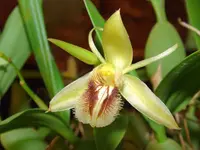
Coelogyne fimbriata is a small to medium epiphytic orchid that forms compact clumps of pseudobulbs with narrow, pleated leaves. It produces delicate, fringed flowers in shades of yellow-green to olive with darker markings on the lip.

This species occurs naturally from the eastern Himalayas through Southeast Asia, usually on trees in humid forests at moderate elevations. It is considered moderately easy to grow if its preference for consistent moisture, good air movement, and bright, filtered light is respected.

For anyone learning how to care for Coelogyne fimbriata, its main demands are stable temperatures, high humidity, and a free-draining orchid mix that never stays waterlogged or completely dry for long.

Main Plant Requirements

Care Difficulty

Moderate Care

Light Preference

Bright Indirect Light

Water Requirements

Regular Water

Temperature Preference

Tropical / Frost Sensitive

Hardiness Zone

12–13

Soil Texture

Peaty, Organic-rich, Loamy

Soil pH

Acidic (5.5–6.5)

Soil Drainage

Moist but well-drained

Fertilization

Moderate (every 2–4 weeks)

Get Personalized Care Plan

Scan your plant to receive care tips personalized for your specific plant

Available on iOS and Android

How to Care for the Brown Rock Orchid

This orchid prefers bright, filtered light that mimics dappled forest conditions.

  • Provide 6–8 hours of bright, indirect light daily, such as under 40–60% shade cloth or beneath open tree canopy.
  • Allow gentle morning sun but protect from strong midday and afternoon sun, which can cause yellowing leaves or scorch marks.
  • In winter, move Coelogyne fimbriata to a slightly brighter position, watching that leaves stay medium green rather than dark (too dim) or pale (too bright).

This species prefers evenly moist conditions but is sensitive to both drought and waterlogging.

  • Water when the top 2–3 cm of the mix feel just starting to dry, keeping roots lightly moist during active growth.
  • Reduce watering in cooler months, letting the surface dry a bit deeper while still preventing the entire root zone from becoming bone dry.
  • Watch for wrinkled pseudobulbs and limp leaves as signs of underwatering, and for black, mushy roots or a sour smell as signs of overwatering; use a free-draining orchid mix.

This orchid thrives in intermediate temperatures with mild seasonal shifts.

  • Aim for 65–80°F (18–27°C) during active growth, with a gentle drop at night to support healthy development.
  • Avoid exposing the plant below 50°F (10°C); brief dips to 45°F (7°C) are usually tolerated but sustained cold stresses pseudobulbs and roots.
  • Protect from extreme heat above 90°F (32°C) by increasing shade, airflow, and humidity, and reduce watering slightly in cool, dull weather to prevent chill damage.

This orchid prefers consistently moist air to maintain healthy leaves and roots.

  • Aim for 60–80% humidity, using a room humidifier or evaporation tray near the plant.
  • Tolerates short dry spells, but prolonged air below 40% can cause wrinkled pseudobulbs and browned leaf tips.
  • Increase humidity by grouping plants, using a wide pebble tray, and ensuring gentle air movement to prevent fungal problems.

This species needs a very airy, fast-draining medium that mimics an epiphytic orchid habitat.

  • Use a mix of medium orchid bark, perlite, and a small amount of sphagnum moss to hold some moisture without becoming waterlogged.
  • Aim for a loose, chunky texture that allows air around the roots and lets water drain through in seconds, not minutes.
  • A slightly acidic to neutral reaction (around pH 5.5–7) suits Coelogyne fimbriata and helps nutrient uptake remain stable.
  • Avoid dense peat-only mixes or garden soil, which compact around roots, limit oxygen, and promote rot.

This orchid grows well in containers when the pot supports its creeping rhizomes and drainage needs.

  • Choose a shallow, wide pot or orchid basket so new growths can spread horizontally without crowding the rim too quickly.
  • Select breathable materials such as terracotta or slatted baskets to let excess moisture escape and keep the root zone cooler.
  • Secure the plant with clips or rhizome stakes so the container does not tip as the growths extend outward over the pot edge.

Feeding supports compact growth and flowering in Coelogyne fimbriata when grown in pots or mounted indoors.

  • Use a balanced NPK orchid fertilizer at 1/4–1/2 strength, formulated for epiphytes.
  • Apply every 2–3 weeks during active growth in spring and summer on moist medium, not on dry roots.
  • Reduce feeding to once a month or stop entirely in fall–winter, especially in cooler conditions.
  • Flush the potting mix with plain water monthly to prevent salt buildup and root burn.

Pruning needs are low and focus on cleanliness and maintaining flowering performance.

  • In late winter or after flowering, remove dead, yellow, or shriveled leaves and spent flower spikes at the base.
  • Trim only fully dry pseudobulbs; keep firm green bulbs to support future growth and blooms.
  • Thin crowded or tangled growth lightly to improve air flow around the plant and reduce fungal issues.
  • Use clean, sharp scissors or snips disinfected with alcohol between cuts to limit disease spread.

Repotting Coelogyne fimbriata helps prevent overcrowded pseudobulbs and exhausted potting mix.

  • Repot every 2–3 years or when roots circle the pot, growth slows, or the medium becomes broken down and sour.
  • Choose late winter to early spring, just before new root and shoot growth starts, for the quickest recovery.
  • Gently loosen the root mass, remove dead or mushy roots, and keep the plant slightly raised to allow new bulbs to advance across the medium.
  • Use a shallow, snug pot with fresh fine to medium orchid bark and keep the plant shaded and evenly moist for 1–2 weeks after repotting.

Propagation of Coelogyne fimbriata is usually done by division of mature clumps.

  • Divide in late winter or early spring, when repotting and before strong new growth begins.
  • Use a sterile knife or pruners to separate sections with at least 3–4 healthy pseudobulbs and active eyes.
  • Plant divisions in fresh orchid bark, keeping rhizomes just at the surface and bulbs stable.
  • Maintain high humidity, bright indirect light, and slightly reduced watering until strong new roots and shoots appear.

This orchid requires cool, frost-free winter conditions, especially in temperate climates.

  • Keep plants above 50°F; avoid any exposure to frost, which can damage leaves and pseudobulbs.
  • For container plants outdoors, move them indoors or into a cool greenhouse before night temperatures drop below 55°F.
  • Provide bright, indirect light and good air movement, while allowing a slight reduction in watering to reflect slower growth.

Care Tips

Cool rest period

Give the plant a distinct cool, drier rest from late fall to late winter by lowering night temperatures to 50–55°F and slightly reducing water, which promotes stronger flowering the following season.

Horizontal mounting

Mount the rhizome slightly off-center on cork or hardwood with the newest growth pointing toward open space so the plant can creep forward and form an even mat of pseudobulbs over time.

Compact division timing

When dividing, wait until there are at least 6–8 healthy pseudobulbs, then cut into sections of 3–4 bulbs each so the divisions reestablish quickly and resume flowering with minimal setback.

Targeted air movement

Use a small, quiet fan aimed past rather than directly at the plant to keep the foliage and roots dry after watering, which helps prevent bacterial spotting and rot on the fine roots and pseudobulbs.

Systematic pest checks

Inspect leaf undersides, pseudobulb bases, and rhizomes every 2–3 weeks with a hand lens so scale and mites are found early and can be removed with cotton swabs and a light horticultural oil before they spread along the mat-forming growth habit common when growing Coelogyne fimbriata.

Common Pests and Diseases

Scale insects

These insects attach to pseudobulbs and leaf sheaths, sucking sap and causing yellowing, wrinkled pseudobulbs, and sticky honeydew that can encourage sooty mold.

Solution

Isolate the plant, then wipe affected pseudobulbs and leaves with cotton pads soaked in isopropyl alcohol and rinse with lukewarm water; repeat weekly until no new scale appears, and improve air movement and light to support plant recovery as part of Coelogyne fimbriata care instructions.

Spider mites

This pest thrives on Coelogyne grown too dry, leading to stippled leaves, dull foliage, and fine webbing on the undersides of leaves and between pseudobulbs.

Solution

Shower the plant thoroughly with lukewarm water, focusing on leaf undersides, then maintain higher humidity and better air circulation; for persistent infestations, use a targeted miticide or insecticidal soap applied according to label directions and repeat after 7–10 days.

Soft bacterial rot

This disease affects fleshy pseudobulbs and rhizomes, which become soft, water-soaked, and foul-smelling, often starting where water stays trapped at the base.

Solution

Remove the plant from its pot, cut away all soft or discolored tissue with sterile tools, dust cuts with powdered sulfur or cinnamon, then repot in fresh, free-draining orchid mix and adjust watering so the medium dries slightly between waterings and water does not sit in leaf bases.

Leaf spot fungi

This disease causes small yellow, brown, or black spots on leaves that may enlarge and merge under cool, humid, stagnant-air conditions typical of poorly ventilated orchid growing areas.

Solution

Remove and discard badly spotted leaves, increase spacing and airflow around plants, water early in the day to let foliage dry quickly, and if spotting continues, use a labeled orchid-safe fungicide applied at the recommended interval.

Interesting Facts

Fringed lip flowers

Its small yellow‑green flowers have a distinctive fringed lip with brown markings, a key feature taxonomists use to identify the species within the genus.

Creeping pseudobulb habit

This orchid forms a creeping chain of ovoid pseudobulbs connected by a thin rhizome, allowing the plant to slowly spread over tree bark or rocks in its native habitats.

Wide Asian distribution

The species occurs across a broad range from the eastern Himalayas through Southeast Asia to parts of southern China, typically in humid, shaded forests at low to mid elevations.

Botan icon

Did you know?

In parts of its range, this orchid often grows as a lithophyte on moss-covered limestone rocks rather than on trees, showing a high degree of adaptation to mineral-rich, well-drained substrates that many other forest orchids cannot tolerate.

FAQs about Brown Rock Orchid

Lack of flowers usually comes from insufficient light, no slight winter rest, or depleted pseudobulbs. Provide bright but indirect light, cooler and drier conditions in winter, and regular balanced feeding in the growing season to restore blooming.

Grow Healthy Plants with Botan Care

Keep your plants happy and healthy with plant identification, disease detection, and easy care guidance.

Botan plant care app — identify plants on mobile

Explore More Plants