asam gelugur Care (Garcinia atroviridis)

asam gelugur

About asam gelugur

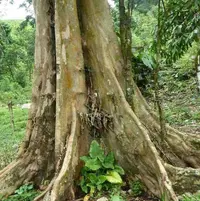
Asam gelugur, Garcinia atroviridis, is a tropical evergreen tree valued for its sour, ribbed fruits used in cooking and traditional preparations. It typically grows with a straight trunk, dense glossy foliage, and a rounded canopy that can become quite tall in suitable climates.

This species is native to Southeast Asia, especially Malaysia and surrounding regions, where it thrives in warm, humid lowland forests. It prefers consistently moist, well-drained soil and sheltered, bright conditions, which can make how to care for asam gelugur more demanding in cooler or very dry areas.

In home gardens, it is usually grown outdoors in frost-free regions or in large containers under controlled conditions. Growth is moderate but steady when temperature, moisture, and soil conditions remain stable.

Main Plant Requirements

Care Difficulty

Moderate Care

Light Preference

Partial Sun

Water Requirements

Regular Water

Temperature Preference

Tropical / Frost Sensitive

Hardiness Zone

11–12

Soil Texture

Loamy, Sandy, Organic-rich

Soil pH

Acidic (5.5–6.5), Slightly acidic (6.5–7.0)

Soil Drainage

Moist but well-drained

Fertilization

Minimal (feed rarely)

Get Personalized Care Plan

Scan your plant to receive care tips personalized for your specific plant

Available on iOS and Android

How to Care for the asam gelugur

Garcinia atroviridis thrives in bright, warm conditions with consistent, non-scorching light.

  • Provide 4–6 hours of direct morning sun with light afternoon shade; young asam gelugur trees benefit from filtered light under taller plants or shade cloth.
  • Allow partial shade (up to 50% shade cloth) in very hot climates to prevent leaf scorch and sunburn on tender new growth.
  • In cooler or cloudy seasons, ensure a more open position so the canopy receives as close to full sun as possible to maintain dense foliage and fruiting.

Garcinia atroviridis prefers evenly moist, not saturated, soil throughout the active growing season.

  • Water when the top 3–5 cm of soil feels dry, applying a deep soak that reaches the root zone rather than frequent light sprinkling.
  • Use well-drained, loamy soil; standing water, sour smell, yellowing leaves, or blackened roots indicate overwatering and poor drainage.
  • In cooler months, reduce frequency as growth slows; dull, curling leaves and very dry soil around the root zone suggest the tree needs a thorough watering.

This tropical tree needs consistently warm temperatures and does not tolerate frost.

  • Aim for 75–90°F (24–32°C) for strong growth; growth slows noticeably below 68°F (20°C).
  • Protect Garcinia atroviridis from temperatures below 50°F (10°C); brief drops near 40°F (4°C) can damage foliage and young shoots.
  • In hot spells above 95°F (35°C), provide extra mulch and some afternoon shade to limit heat stress and leaf scorch, especially on young trees.

This species prefers consistently moist air similar to tropical conditions.

  • Target 60–80% relative humidity for healthiest foliage and steady growth when caring for asam gelugur.
  • It tolerates short periods at 40–50% but prolonged dry air leads to curled leaf edges, browning tips, and slower growth.
  • Increase humidity with a nearby humidifier, grouped plants, or a wide pebble tray under the pot, keeping the pot base above standing water.

Garcinia atroviridis performs best in deep, loose, well‑drained, organically enriched soil.

  • Use a loamy mix with 40–50% rich compost, 30–40% coarse sand, and 10–20% perlite to balance moisture retention and drainage.
  • Aim for slightly acidic conditions around pH 5.5–6.5 to support nutrient availability and root health.
  • In heavy or clay soils, incorporate coarse sand, fine bark, or rice hulls to increase aeration and prevent waterlogging.
  • Avoid dense, compacted, or constantly wet substrates that encourage root rot and nutrient lockout.

This species can be grown in large containers if root space and stability are carefully managed.

  • Choose a tall, heavy container to counterbalance the developing woody canopy and reduce the risk of tipping in wind.
  • Select a pot material that moderates moisture, such as thick-walled terracotta or insulated planters, to prevent rapid drying in hot weather.
  • Elevate the container on blocks or pot feet so drainage holes remain clear and excess water exits quickly after heavy rain or deep watering.

This tropical fruit tree benefits from moderate feeding, especially when grown asam gelugur in containers or poor soil.

  • Use a balanced, slow-release NPK fertilizer or well-rotted compost at the start of the warm growing season.
  • Feed every 6–8 weeks during active growth, adjusting based on leaf color and shoot vigor.
  • Dilute liquid feeds to 50% strength to avoid root burn, especially in young plants.
  • Reduce or stop fertilization in cooler months when growth slows or becomes dormant.

Pruning helps Garcinia atroviridis develop a strong framework and maintain manageable size for harvest and care.

  • Carry out main pruning at the end of the dry season or just before active growth resumes.
  • Remove dead, diseased, crossing, or inward-growing branches to improve air movement and light penetration.
  • Shorten overly long shoots to encourage a balanced, open canopy and stronger lateral branches.
  • Use clean, sharp bypass pruners or a pruning saw, making smooth cuts just outside the branch collar.

Young trees often start in containers, then Garcinia atroviridis is transplanted outdoors once established.

  • Look for roots circling the pot drainage holes, soil drying very fast, or slowed growth as signs it needs a larger space.
  • Plan transplanting or up-potting in warm, stable weather, typically late spring or early summer in mild climates.
  • Move up 1 pot size or into a well-drained ground site, keeping the root ball intact and at the same planting depth.
  • Water thoroughly after planting, shade for several days if sun is intense, and maintain even moisture to limit transplant shock.

Propagation of this species is usually done by seeds, with vegetative methods used where equipment and skill allow.

  • Sow fresh seeds in warm conditions (75–85°F) at the start of the rainy or warm season for best germination.
  • Use a free-draining mix of sand and compost, keeping it evenly moist but never waterlogged.
  • For semi-hardwood cuttings, provide high humidity, bottom warmth, and a rooting hormone to improve success.
  • Label seedlings or clones and keep them in bright, indirect light until roots and new growth are strong.

This tropical tree is frost sensitive and needs protection in regions with cool or cold winters.

  • In areas below 40°F, grow in large containers that can be moved indoors or into a heated greenhouse for winter.
  • Keep indoor plants in bright light, above 55°F, with slightly reduced watering during the cool season.
  • In marginal climates, apply 5–10 cm of organic mulch around the root zone, keeping it away from the trunk.

Care Tips

Early structural training

Start shaping the young tree at 40–60 cm height by selecting 3–4 strong scaffold branches and removing steep, crossing, or very low shoots to create a balanced, wind-stable crown for long-term fruit production.

Mulch for root health

Apply a 5–8 cm layer of coarse organic mulch around the drip line, keeping it 5–10 cm away from the trunk, to stabilize soil temperature, conserve moisture, and reduce weed competition without risking stem rot.

Wind and stake management

In exposed sites, use 2–3 loose stakes for the first 2–3 years, tying with a soft, wide tie and checking every few months so the trunk can flex slightly and develop stronger wood while still being protected from snapping.

Targeted fruit thinning

On heavily flowering and fruiting trees, selectively remove small, damaged, or crowded young fruits so that remaining fruits have more space and resources, which improves size and reduces limb breakage.

Preventive pest inspection

Inspect new flushes of leaves and young shoots every 1–2 weeks for scale insects, mealybugs, and leaf miners, using a hand lens if possible, and remove early infestations by hand or with a directed horticultural oil spray as part of caring for asam gelugur.

Common Pests and Diseases

fruit borer

This pest tunnels into developing fruits, causing internal feeding damage, premature fruit drop, and brown, rotting patches around the entry holes.

Solution

Collect and destroy infested and fallen fruits regularly, prune to keep the canopy open, and use fine mesh bags on young fruits where practical; in orchard settings, monitor with pheromone or light traps and apply targeted biological or selective insecticides only during peak moth activity.

leaf miner

This pest creates winding, pale tunnels within young leaves, which can lead to distorted growth and reduced photosynthesis when infestations are heavy.

Solution

Remove and destroy leaves with fresh mines, encourage natural predators by avoiding broad-spectrum insecticides, and if needed use neem-based or systemic treatments early in the infestation, focusing on young flushes of growth.

scale insects

These insects attach firmly to stems and leaf undersides, sucking sap and excreting sticky honeydew that encourages black sooty mold growth.

Solution

Wipe or gently scrub infested areas with a cloth dipped in mild soapy water, prune heavily infested twigs, and apply horticultural oil thoroughly to stems and leaf undersides, repeating after 7–14 days if new crawlers appear.

anthracnose

This disease causes dark, sunken lesions on leaves, twigs, flowers, and fruits, often leading to fruit spotting and premature drop in warm, humid conditions.

Solution

Remove and destroy infected leaves and fruits, keep the canopy well pruned for good airflow, avoid overhead watering, and in humid regions use preventative copper or other labeled fungicidal sprays during flowering and early fruit development as part of Garcinia atroviridis plant care.

sooty mold

This disease appears as a black, velvety coating on leaves and stems that grows on honeydew secreted by sap-sucking insects, reducing light reaching the leaf surface.

Solution

Control underlying pests such as scale, mealybugs, or aphids, then gently wash affected leaves with water to remove mold; improve airflow and light penetration through pruning so new foliage stays clean and functional.

Interesting Facts

Distinctive ribbed fruits

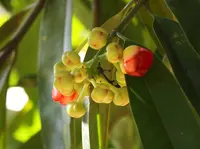
The yellow to orange fruits develop pronounced vertical ribs as they ripen, which increase the surface area of the rind and concentrate the extremely sour flavor used in cooking.

Malaysian rainforest native

This evergreen tree is naturally distributed in lowland rainforests of Peninsular Malaysia and parts of Thailand, where it grows in warm, humid, high-rainfall habitats.

Culinary acid source

The sliced, dried fruit rinds are a traditional souring agent in Southeast Asian dishes, often used in curries and fish preparations as an alternative to tamarind.

Botan icon

Did you know?

The leaves of Garcinia atroviridis are strongly clustered at the tips of branches, giving the canopy a layered, whorled appearance that makes the tree easy to recognize even from a distance in its native forests.

FAQs about asam gelugur

The sour, ribbed fruits are edible and commonly used fresh, dried, or powdered in Southeast Asian cooking for their sharp acidity. The rind is preferred, while seeds are very bitter and usually discarded rather than eaten.

Grow Healthy Plants with Botan Care

Keep your plants happy and healthy with plant identification, disease detection, and easy care guidance.

Botan plant care app — identify plants on mobile

Explore More Plants