Wind-hardening young trees
Stake young plants only during the first 1–2 years in very windy sites, then gradually loosen and remove ties so the trunk can flex and strengthen naturally without rubbing damage.

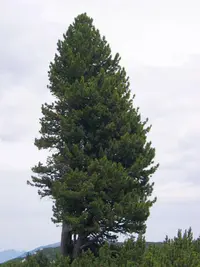
Swiss stone pine, Pinus cembra, is a slow-growing evergreen conifer valued for its dense, rounded crown and soft, bluish-green needles. It typically forms a compact, upright tree that stays relatively narrow, which makes it suitable for small gardens and large containers when young.
This species is native to high mountain regions of central and eastern Europe, where it endures cold, wind, and poor soils. Its natural hardiness and slow growth habit make it relatively easy to manage, though it does not respond well to heavy pruning or root disturbance.
It prefers full sun, cool conditions, and well-drained, slightly acidic soil. Understanding these basic needs helps gardeners know how to care for Swiss Stone Pine in temperate climates.

Care Difficulty
Moderate Care

Light Preference
Full Sun

Water Requirements
Moderate Water

Temperature Preference
Cold Hardy

Hardiness Zone
3–7

Soil Texture
Sandy, Loamy, Rocky

Soil pH
Strongly acidic (4.5–5.5), Acidic (5.5–6.5)

Soil Drainage
Well-drained

Fertilization
Minimal (feed rarely)
Scan your plant to receive care tips personalized for your specific plant
Available on iOS and Android
This high-mountain conifer prefers bright, cool conditions with consistent light for dense, healthy growth.
This slow-growing pine prefers evenly moist but not saturated soil, especially while establishing.
This species is naturally adapted to cold climates and performs best in cool to moderate temperatures.
This conifer handles a wide humidity range and usually does not need special humidity management indoors or outdoors.
Pinus cembra prefers cool, well-aerated, mineral soils that stay moist yet never waterlogged.
This species can grow in containers for many years when given a stable, deep, and well-drained setup.
This slow-growing conifer needs modest feeding, especially when young or container-grown.
Pruning needs for Pinus cembra are light and mainly corrective.
This species is usually planted directly in the ground, with container repotting mainly for young nursery plants.
Pinus cembra is most often propagated from seed rather than cuttings.
This cold-hardy alpine pine tolerates severe winter conditions and usually needs minimal special care outdoors.

Plant Health Check
Not sure what's wrong with your plant? Check your plant's health inside the app.
This species belongs to the white pine group and has soft, flexible needles arranged in bundles of 5, a key diagnostic feature that distinguishes it from many other European pines with 2-needle bundles.
Its heavy, wingless seeds are dispersed mainly by the spotted nutcracker (Nucifraga caryocatactes), which stores the seeds in the soil; forgotten caches often germinate and form new trees, making the bird essential for its natural regeneration.
The species is naturally found near or at the timberline in the Alps and Carpathians, where it tolerates long, cold winters, strong winds, and short growing seasons that exclude many other tree species.

The wood of this species, often called Swiss stone pine wood, is unusually light, fine-grained, and pleasantly aromatic, and has a long tradition in Alpine regions for carved interiors and bedroom furniture because it is easy to work and retains its scent for many years.
This species grows slowly, usually 10–20 cm per year in suitable climates. Growth is slower in poor soil, exposed windy sites, or containers. Expect a compact tree for many years before it reaches notable height.
Keep your plants happy and healthy with plant identification, disease detection, and easy care guidance.