Bailey's Cypress-pine Care (Callitris baileyi)

Bailey's Cypress-pine

About Bailey's Cypress-pine

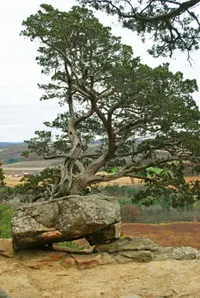
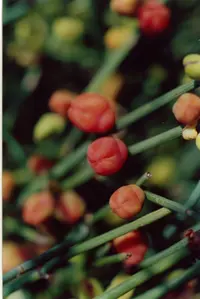
Bailey's cypress-pine, Callitris baileyi, is a small to medium conifer native to eastern Australia, mainly found on rocky hills and woodland ridges. It forms a narrow, upright crown with fine, scale-like foliage and small woody cones, giving a tidy, architectural look.

This species grows slowly and tends to stay compact, which can suit smaller gardens or container use in mild climates. It prefers full sun, well-drained soil, and relatively low to moderate moisture, so good drainage is important. These traits make it appealing to gardeners who want to learn how to care for Bailey's Cypress-pine without frequent pruning or intensive watering.

Main Plant Requirements

Care Difficulty

Moderate Care

Light Preference

Full Sun

Water Requirements

Low Water

Temperature Preference

Warm Climate

Hardiness Zone

10–11

Soil Texture

Sandy, Loamy, Rocky

Soil pH

Slightly acidic (6.5–7.0), Neutral (7.0)

Soil Drainage

Well-drained

Fertilization

Minimal (feed rarely)

Get Personalized Care Plan

Scan your plant to receive care tips personalized for your specific plant

Available on iOS and Android

How to Care for the Bailey's Cypress-pine

This drought-tolerant conifer prefers bright, direct sun for compact, healthy growth.

  • Provide 6–8 hours of direct sun daily; full sun exposure promotes dense foliage and strong wood in Bailey's Cypress-pine.
  • Tolerates light or partial shade (around 3–4 hours direct sun) but growth becomes more open and sparse, with thinner, paler shoots.
  • In hot inland climates, prioritize strong morning sun with some protection from intense late-afternoon summer sun to limit foliage scorch.

This species prefers relatively dry, well-drained conditions once established.

  • Allow the top 5–8 cm of soil to dry before watering young plants, then apply a deep soak that drains away fully.
  • In the first 1–2 growing seasons, monitor closely in warm, dry spells; drooping or dull, shriveling foliage indicates underwatering.
  • Avoid soggy or compacted soil; yellowing tips, dieback at the base, or a sour soil smell often signal overwatering and poor drainage for Callitris baileyi.

This hardy conifer adapts to a wide temperature range but grows best in moderate warmth.

  • Optimal growth occurs around 65–80°F (18–27°C), with steady shoot extension in spring and early summer.
  • Mature plants tolerate down to about 20°F (−6°C); brief light frosts are acceptable, but prolonged freezes below this increase risk of tip dieback.
  • Handles hot summers up to about 95°F (35°C) if soil is not waterlogged; in heatwaves, recent transplants benefit from extra mulch to buffer root temperatures.

This species tolerates relatively dry air and does not need elevated humidity indoors or outdoors.

  • Aim for 30–50% humidity, similar to most heated homes, without special humidification.
  • Dry, browning scale-like leaves at the tips may indicate prolonged very low humidity combined with underwatering.
  • Increase local humidity slightly by grouping plants or placing the container away from direct heat vents and strong drafts.

This conifer prefers mineral, well-drained soil that mimics its native rocky habitats.

  • Use a sandy or sandy-loam mix with coarse particles that keep the structure open and free-draining.
  • Combine roughly 50–60% coarse sand or grit with 20–30% loam and 10–20% fine bark or compost for Callitris baileyi.
  • Keep pH slightly acidic to neutral, around 6.0–7.0, avoiding strongly alkaline mixes that can restrict nutrient uptake.
  • Avoid heavy clay, compacted substrates, or peat-heavy mixes that stay wet and reduce root aeration, increasing rot risk.

This species can be grown in containers, mainly for young plants or compact specimens in outdoor settings.

  • Choose a deep, weighty pot to provide root depth and prevent the upright plant from tipping in wind or rain.
  • Use a mineral-based mix that drains quickly so excess water can exit within minutes through unobstructed drainage holes.
  • Select less porous materials like glazed ceramic if you need slightly slower drying in hot, exposed sites while still maintaining drainage channels.

Callitris baileyi usually needs minimal feeding when grown in the ground in suitable soil.

  • For container or poor-soil plants, use a balanced slow-release fertilizer (around 10-10-10).
  • Apply lightly once in early spring and again in midsummer during active growth.
  • Use 1/2-strength compared to label rates to avoid excessive, weak growth.
  • Avoid fertilizing in late fall and winter to prevent tender, frost-vulnerable shoots.

Pruning is modest for Callitris baileyi and mainly focuses on health and safe structure.

  • Best time is late winter to early spring before vigorous growth starts.
  • Remove dead, diseased, rubbing, or storm-damaged branches with clean, sharp bypass pruners or a pruning saw.
  • Limit cuts to minor shaping of outer shoots to maintain the plant’s natural conical form.
  • Avoid cutting back into bare, older wood, as this species does not regenerate well from it.

This species is usually grown in the ground, so focus on careful transplanting rather than frequent repotting.

  • Transplant in late winter to early spring when growth is just about to resume.
  • Look for signs such as roots circling a nursery container, slow growth, or the plant drying out very quickly.
  • Shift to a slightly larger hole or pot with free-draining, sandy soil to reduce root stress.
  • Water thoroughly after planting, then keep soil evenly moist but not waterlogged until new growth indicates establishment.

Propagation of Callitris baileyi is usually done by seed and is considered specialized rather than routine for home growers.

  • Collect ripe cones, extract seeds, and use fresh for better germination.
  • Sow in late winter to early spring in a free-draining, sandy mix under bright, indirect light.
  • Lightly cover seeds and keep the medium just moist, not saturated, at 65–75°F.
  • Provide good air movement and avoid high humidity to limit damping-off, a fungal seedling disease.

Bailey's Cypress-pine is generally cold hardy in suitable climates and needs little active winter care once established.

  • In colder areas, apply a 5–8 cm mulch layer around the root zone, keeping it away from the trunk.
  • Young or container plants benefit from a sheltered site away from harsh winter winds.
  • Move pots into an unheated garage or cold frame where temperatures stay above severe freeze levels.

Care Tips

Root zone protection

Apply a 5–8 cm layer of coarse, low-nutrient mulch (pine bark, wood chips, or gravel) around the dripline, keeping it 5–8 cm away from the trunk to stabilize soil moisture and protect fine feeder roots from heat and compaction.


Single-leader training

In the first 3–5 years, select one strong central stem and gently remove or shorten competing uprights during late winter to maintain a stable, single leader and reduce the risk of future storm damage.

Wind exposure management

Site young plants where they receive some shelter from prevailing strong winds or use a breathable windbreak for the first 2–3 years, which helps prevent wind-rock that can loosen and distort the developing root system.

Low-impact staking

If staking is needed, use 2–3 stakes outside the rootball with soft, flexible ties set low on the trunk, and remove all supports after 12–18 months so the tree can strengthen its own structure.

Stress monitoring routine

During very dry or unusually wet spells, check for early signs of stress such as dull foliage color or sudden needle drop, and adjust irrigation or drainage promptly as part of systematic caring for Bailey's Cypress-pine.

Common Pests and Diseases

Cypress tip beetle

This pest causes browning and dieback of young shoot tips where larvae feed inside the tissue. Symptoms include distorted new growth and scattered dead tips that do not recover.

Solution

Prune out and destroy affected shoot tips as soon as browning is noticed, cutting back into healthy green tissue. For repeated problems on landscape trees, apply a targeted systemic insecticide labeled for conifers in early spring so larvae are controlled before they tunnel into new shoots, and keep the tree well watered during dry periods to reduce stress.

Cypress bark scale

These insects form small, waxy white patches on twigs and branches and can cause thinning foliage and branch dieback when populations are high. Honeydew excretions may lead to sooty mold on nearby foliage and bark.

Solution

Trim out heavily infested twigs and dispose of them, then wash remaining branches with a firm spray of water to dislodge scales where possible. For persistent infestations, use a horticultural oil spray during the dormant season or just after crawler emergence, thoroughly coating bark and inner branches while monitoring for natural predators such as lady beetles.

Cypress canker

This disease produces sunken, resin-soaked lesions on branches and stems, leading to sudden browning of foliage beyond the canker. Symptoms include resin exudation, cracked bark around the lesion, and progressive branch dieback, especially in stressed trees.

Solution

Prune out affected branches at least 20–30 cm below visible cankers, disinfecting tools between cuts with alcohol or a 10% bleach solution. Improve plant vigor by avoiding mechanical injury, providing deep but infrequent watering during drought, and spacing trees to maintain good airflow; in high-value plantings, consult a local arborist about fungicide options where cypress canker is confirmed.

Armillaria root and collar rot

This disease causes gradual decline, reduced growth, and yellowing or browning foliage, often followed by sudden death in stressed or poorly drained sites. Symptoms include white fungal sheets under the bark near the base and sometimes honey-colored mushrooms at the soil line in wet periods.

Solution

Remove severely affected trees including as much of the root system as possible and avoid replanting conifers in the same spot. Improve drainage, reduce soil compaction, and avoid overwatering remaining plants; only establish new Callitris baileyi in well-drained, low-organic soils that do not stay wet for extended periods.

Cypress aphids

These insects cluster along young stems and branchlets, sucking sap and causing localized yellowing that can progress to browning and dieback on fine foliage. Honeydew deposits may attract ants and support black sooty mold growth on nearby tissues.

Solution

Prune out heavily infested sections and hose down remaining foliage with a strong stream of water to remove aphids. Encourage natural predators, and if needed use insecticidal soap or a light horticultural oil, applying in the cool part of the day and thoroughly wetting the foliage while monitoring for reinfestation as part of Callitris baileyi plant care.

Interesting Facts

Endemic to eastern Australia

This species occurs naturally only in a restricted area of eastern Australia, mainly in parts of New South Wales and Queensland, where it grows on rocky ridges and shallow, nutrient-poor soils.

Distinctive cone structure

Male and female cones grow on the same tree but in different positions, with small male cones shedding pollen and woody female cones forming tight clusters that persist on branches for many years.

Scaled foliage adaptation

Its foliage consists of tiny overlapping scale leaves pressed against thin branchlets, an adaptation that reduces water loss and suits the dry, exposed habitats where the species often occurs.

Botan icon

Did you know?

Callitris baileyi belongs to a small Gondwanan conifer lineage in the family Cupressaceae, representing one of the few surviving Southern Hemisphere cypress-pines whose ancestors were present on the ancient supercontinent Gondwana.

FAQs about Bailey's Cypress-pine

This species is evergreen, keeping its fine, scale-like foliage year-round rather than dropping leaves seasonally. Older interior foliage may shed gradually, but the plant maintains a persistent green canopy when kept healthy and not severely stressed.

Grow Healthy Plants with Botan Care

Keep your plants happy and healthy with plant identification, disease detection, and easy care guidance.

Botan plant care app — identify plants on mobile

Explore More Plants