Douglas' sagewort Care (Artemisia douglasiana)

Also known as: California mugwort, dream plant, mugwort
Douglas' sagewort

About Douglas' sagewort

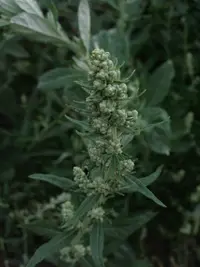
Douglas' sagewort (Artemisia douglasiana) is a hardy, aromatic perennial herb in the sagebrush group of artemisias. It forms upright stems with narrow, gray-green leaves and can spread into dense patches by underground rhizomes.

This species is native to western North America, commonly found along streams, moist slopes, and open woodlands. It is valued for erosion control and habitat plantings because it establishes quickly.

The plant tolerates poor soils and seasonal drought once established, which makes it relatively easy to grow in suitable climates. It prefers sun to light shade and moderately moist, well-drained soil, so understanding these needs helps gardeners know how to care for Douglas' sagewort.

Main Plant Requirements

Care Difficulty

Easy Care

Light Preference

Full Sun

Water Requirements

Moderate Water

Temperature Preference

Cold Hardy

Hardiness Zone

7–10

Soil Texture

Sandy, Loamy, Clay

Soil pH

Slightly acidic (6.5–7.0), Neutral (7.0)

Soil Drainage

Moist but well-drained

Fertilization

Minimal (feed rarely)

Get Personalized Care Plan

Scan your plant to receive care tips personalized for your specific plant

Available on iOS and Android

How to Care for the Douglas' sagewort

This sun-loving perennial thrives in open sites with strong light and seasonal moisture.

  • Provide 6–8 hours of direct sun daily; morning sun plus light afternoon shade suits most climates and reduces leaf scorch risk.
  • In hotter inland areas, give Douglas' sagewort protection from intense 1–4 p.m. sun with high, filtered shade or neighboring taller plants.
  • In partial shade (3–4 hours sun), stems stretch and foliage thins, so prune lightly and site new plants in brighter positions when possible.

This species prefers moist winters and springs with drier conditions in summer once established.

  • Water only when the top 3–5 cm of soil feels dry, then soak deeply so water reaches the full root zone and drains away quickly.
  • Use well-drained, sandy or loamy soil; Artemisia douglasiana tolerates short wet periods but yellowing, limp stems often signal chronic overwatering.
  • In summer drought, watch for dull, drooping foliage and slowed growth as cues for a deep soak, then allow the soil surface to dry again.

This hardy perennial is adapted to temperate climates with cool, moist winters and warm, dry summers.

  • Active growth is strongest at 60–80°F (16–27°C), with good vigor and foliage density in spring and early summer.
  • Mature plants tolerate down to about 10–15°F (-12 to -9°C); top growth may die back, but roots usually resprout in spring if soil is not waterlogged.
  • In heat above 90°F (32°C), growth can slow and leaves may scorch, so rely on mulch and slight afternoon shade rather than extra watering alone.

This species handles low humidity well, so air moisture is rarely a concern indoors or outdoors.

This plant prefers lean, well-drained mineral soils that do not stay wet.

  • Use sandy or sandy-loam soil with low to moderate organic matter to mimic its native riparian banks and dry slopes.
  • Ensure very sharp drainage by blending roughly 50–60% native or bagged sandy soil with 40–50% coarse sand, fine gravel, or perlite.
  • Aim for slightly acidic to neutral pH around 6.0–7.5, avoiding strongly acidic mixes rich in peat that hold water too long.
  • Do not plant Artemisia douglasiana in compacted clay or soggy beds, as poor aeration around roots encourages rot and decline.

This species can grow in containers if the pot and substrate control its vigorous, spreading root system.

  • Choose a deep, heavy pot that resists tipping as tall stems and rhizomes increase top weight and lateral spread.
  • Use a gritty, fast-draining mix, and elevate the pot on feet so water clears the drainage holes quickly after rain or irrigation.
  • Place the container where runoff cannot re-enter the pot, preventing re-saturation of the lower root zone from standing water.

This tough native herb needs only light feeding in most garden soils, so focus on moderation when fertilizing Douglas' sagewort.

  • Use a balanced, low-strength liquid fertilizer (for example 5-5-5) diluted to 25–50% strength during active growth.
  • Apply fertilizer sparingly, about once every 6–8 weeks in spring and early summer only.
  • Avoid feeding in fall and winter when growth slows or the plant goes semi-dormant.
  • In poor soils, incorporate a thin layer of well-aged compost around the root zone instead of frequent synthetic feeding.

Thoughtful pruning keeps Artemisia douglasiana dense, upright, and healthy in garden settings.

  • Cut back dead, damaged, or broken stems at any time using clean, sharp hand pruners.
  • In late winter or very early spring, reduce older, woody canes to encourage vigorous new shoots.
  • Thin crowded stems at the base to improve air flow and reduce flopping in taller clumps.
  • Lightly shear spent flowering stems after bloom if a tidier shape is desired, leaving green growth intact.

This species is more often grown in the ground than in containers, so focus on dividing and transplanting mature clumps as needed.

  • Transplant or divide every 3–4 years in early spring or early fall, when temperatures are mild.
  • Look for signs such as crowded stems, dead centers in clumps, or slowed vigor as cues to move or divide plants.
  • Lift the clump carefully, shake or wash off soil, and gently tease apart sections, keeping healthy roots and several shoots per division.
  • Replant divisions at the same depth in well-drained soil, water thoroughly, then keep evenly moist for 1–2 weeks to limit transplant shock.

Artemisia douglasiana is commonly propagated by division, stem cuttings, and occasionally seed for restoration or larger plantings.

  • Divide established clumps in early spring or fall, replanting vigorous outer sections into prepared, well-drained soil.
  • Take 8–10 cm softwood or semi-ripe cuttings in late spring to summer and root them in a gritty, moist, but not waterlogged mix.
  • Provide bright, indirect light and stable moisture until cuttings root, then gradually acclimate them to drier, sunnier conditions.
  • Sow fresh seed on the surface of a sandy mix in late winter to spring, keeping it lightly moist and cool to aid germination.

This cold-hardy perennial usually needs minimal winter care in much of its range.

  • Artemisia douglasiana tolerates frost and light freezes once established in the ground.
  • In colder zones, apply a 5–8 cm layer of loose mulch around the root zone after the first hard frost, keeping mulch off stems.
  • Container-grown plants are more vulnerable; move pots to a sheltered, unheated but frost-free spot or against a protected wall.

Care Tips

Control underground spread

Install a root barrier 20–30 cm deep around beds or use large bottomless containers sunk in the ground to prevent rhizomes from spreading into nearby plantings.

Managed patch renewal

Every 2–3 years, lift and divide overcrowded clumps in late winter or very early spring, replanting only the healthiest outer sections to maintain vigorous, upright growth.

Wind and flop control

In exposed sites, lightly pinch or cut back stems by 5–10 cm in late spring to encourage sturdier, branching growth that resists wind damage and flopping.

Self‑seeding management

If unwanted seedlings are an issue, cut back spent flower stalks before seeds mature, leaving only selected stems to set seed where natural spread is desired.

Wildlife and footpath planning

Site plants a short distance away from high‑traffic paths and seating areas, especially in public or family gardens, to reduce incidental contact with the aromatic foliage while still benefiting from growing Douglas' sagewort as a habitat plant.

Common Pests and Diseases

Powdery mildew

This disease causes a white, powdery coating on leaves, often in late spring or summer when days are warm and nights are cool. Symptoms include distorted new growth and a dull, dusty look to the foliage.

Solution

Remove and discard heavily infected leaves to reduce spore load, then increase air movement by thinning crowded stems and avoiding overhead watering. If the problem recurs, apply a sulfur or potassium bicarbonate fungicide labeled for ornamentals, following directions carefully and treating at the first sign of infection as part of Artemisia douglasiana care instructions.

Rust

This disease shows as orange, yellow, or brown pustules on the undersides of leaves, with pale or yellow areas on the upper surface. Symptoms include early leaf drop and reduced vigor in dense, moist plantings.

Solution

Prune and dispose of affected leaves and any heavily infected stems, and avoid wetting foliage by using drip or soaker hoses. Improve spacing and airflow, and if needed apply a copper-based fungicide at label rates during humid periods to protect new growth.

Aphids

These insects cluster on young stems and leaf undersides, sucking sap and causing curling or distorted growth. This pest often leaves sticky honeydew that can attract sooty mold on nearby surfaces.

Solution

Spray the plant thoroughly with a strong stream of water to dislodge colonies, repeating every few days as needed. For persistent infestations, use insecticidal soap or a light horticultural oil, ensuring full coverage of shoot tips and leaf undersides while treating during cooler parts of the day.

Spider mites

These pests are tiny sap-feeding arachnids that cause fine stippling, bronzing, and a dry, rough texture on leaves, especially in hot, dry conditions. Symptoms include very fine webbing between stems and leaves when populations are high.

Solution

Rinse foliage with a firm but gentle spray of water, focusing on leaf undersides, and repeat regularly to disrupt the population. Increase humidity around the plant if grown in very dry sites and, if needed, apply insecticidal soap or horticultural oil, taking care to treat both sides of the leaves.

Leaf spot

This disease produces small brown, tan, or dark spots on leaves that may merge into larger blotches, sometimes with yellow halos. Symptoms include premature leaf drop on stressed or overcrowded plants, especially in prolonged damp weather.

Solution

Remove and discard affected leaves, clean up fallen debris around the base, and water at soil level to keep foliage dry. Improve spacing and airflow, and if leaf spot is severe or recurrent, use a broad-spectrum fungicide labeled for ornamental leaf spots, applying at the first appearance of new lesions.

Interesting Facts

Native riparian specialist

Douglas' sagewort commonly grows along streambanks, seeps, and marsh edges in western North America, where its dense rhizome network helps stabilize moist, disturbed soils.

Strong aromatic chemistry

The foliage releases a strong sage-like aroma due to volatile compounds such as terpenoids, which likely help deter herbivores and may protect leaves from certain fungal pathogens.

Clonal rhizome colonies

This species spreads vigorously via underground rhizomes, allowing a single genetic individual to form large, dense colonies that can quickly reclaim open or disturbed ground.

Botan icon

Did you know?

Indigenous communities across California and the Pacific Northwest have long used Douglas' sagewort in cultural practices, including as a ceremonial and seasonal plant, and this ethnobotanical significance is one reason it is sometimes prioritized in native habitat restoration projects.

FAQs about Douglas' sagewort

This species spreads by rhizomes, forming colonies over time. In loose or irrigated soil it can travel several feet. Use root barriers, edging, or regular division to keep clumps contained in smaller gardens or mixed borders.

Grow Healthy Plants with Botan Care

Keep your plants happy and healthy with plant identification, disease detection, and easy care guidance.

Botan plant care app — identify plants on mobile

Explore More Plants