Bugleweed Care (Ajuga reptans 'Burgundy Glow')

Also known as: Bugle, Carpet Bugle
Bugleweed

About Bugleweed

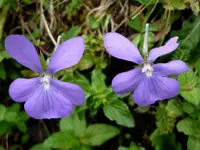
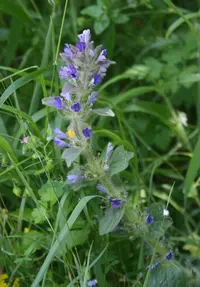
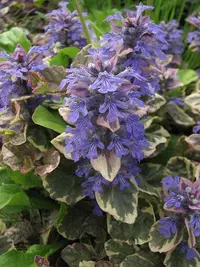
Bugleweed, Ajuga reptans 'Burgundy Glow', is a low-growing perennial groundcover valued for its colorful foliage and dense, spreading habit. It forms tight mats of leaves in cream, pink, and burgundy tones, with short spikes of blue flowers in spring.

The species is native to Europe but is widely grown in temperate gardens and lawns in North America. It spreads by short runners, which helps it fill gaps between stepping stones, under shrubs, or at the front of borders.

This cultivar is generally easy to grow, provided it has reasonably moist soil and protection from harsh, drying sun. Learning how to care for Bugleweed mainly involves managing its spread and choosing a suitable light level and soil type.

Main Plant Requirements

Care Difficulty

Easy Care

Light Preference

Partial Shade

Water Requirements

Moderate Water

Temperature Preference

Cold Hardy

Hardiness Zone

3–10

Soil Texture

Loamy, Sandy, Organic-rich

Soil pH

Acidic (5.5–6.5), Slightly acidic (6.5–7.0)

Soil Drainage

Moist but well-drained

Fertilization

Minimal (feed rarely)

Get Personalized Care Plan

Scan your plant to receive care tips personalized for your specific plant

Available on iOS and Android

How to Care for the Bugleweed

Ajuga reptans 'Burgundy Glow' grows best in bright, cool light conditions rather than intense midday sun.

  • Provide 3–5 hours of morning sun or light dappled shade, with protection from strong afternoon sun that can scorch leaves and fade color.
  • Plant in partial shade in warmer climates; in cooler regions it can tolerate more sun as long as soil stays evenly moist.
  • Watch foliage for cues: pale, scorched, or crispy edges indicate too much sun, while elongated, sparse growth suggests insufficient light.

Ajuga reptans 'Burgundy Glow' prefers consistently moist but not waterlogged soil.

  • Water when the top 2–3 cm of soil feels dry, aiming for slightly moist soil that does not stay saturated or form puddles.
  • Ensure well-draining soil; mix in compost or fine bark to reduce standing water that can cause root rot and crown rot.
  • Increase watering during hot, dry spells when Bugleweed is actively spreading, and reduce frequency in cool, rainy, or dormant periods while monitoring wilting or leaf yellowing.

This groundcover handles a wide temperature range but grows best in moderate, stable conditions.

  • Optimal growth occurs around 60–75°F (16–24°C), when foliage colors stay richest and the plant spreads steadily.
  • Mature plants typically survive down to about 0°F (−18°C) in the ground, with foliage dieback but roots regrowing in spring.
  • Heat tolerance extends to about 85–90°F (29–32°C) if soil moisture is maintained and the plant has partial shade, especially during hot afternoons.

Ajuga reptans 'Burgundy Glow' handles typical outdoor humidity well and rarely needs special adjustment.

Ajuga reptans 'Burgundy Glow' prefers moist, loose, humus-rich soil that drains freely but does not dry out quickly.

  • Use a loamy mix with 40–60% garden soil, 20–30% compost, and 10–20% coarse material such as grit, bark, or perlite.
  • Aim for slightly acidic to neutral pH around 6.0–7.0 to support nutrient uptake and healthy foliage color.
  • Improve drainage and aeration by integrating coarse sand or fine gravel into heavy clay before planting runners or plugs.
  • Avoid compacted, waterlogged, or very sandy soil where roots either suffocate or dry out rapidly.

This spreading groundcover adapts well to container growing outdoors.

  • Choose a wide, shallow container to allow stolons to spread while keeping soil depth around 15–20 cm.
  • Use a heavier ceramic or clay pot outdoors to stabilize the plant as the mat thickens and becomes side-heavy.
  • Leave a 2–3 cm gap below the rim for efficient overhead watering without soil washing over the edges.

This low-maintenance groundcover needs modest feeding to support dense foliage and flowering.

  • Use a balanced, slow-release granular fertilizer (for example 10-10-10) or a light top-dressing of compost in early spring.
  • Apply once in spring and, if growth is weak, once again in midsummer during active growth.
  • Dilute liquid feeds to 1/2 strength to avoid soft, weak growth in Bugleweed.
  • Stop feeding in late summer; do not fertilize in fall or winter when growth slows.

Thoughtful pruning keeps Ajuga reptans 'Burgundy Glow' dense, healthy, and less invasive.

  • Shear back spent flower spikes and straggly runners in late spring or early summer to tidy mats.
  • Remove dead, damaged, or diseased foliage whenever noticed using clean, sharp hand pruners or scissors.
  • Thin crowded patches by cutting out whole rosettes to improve air circulation and reduce mildew risk.
  • Edge along paths or beds to define boundaries and limit spread into lawns or neighboring plantings.

This plant is most often grown as a groundcover, so transplanting in beds matters more than container repotting.

  • Lift and transplant clumps in early spring or early fall, when temperatures are mild and soil is workable.
  • Transplant when mats become overcrowded, bare in the center, or when plants need redirecting in the garden.
  • For container-grown plants, shift up a size every 2–3 years if roots circle the pot or growth slows.
  • Reduce stress by watering deeply before and after moving, trimming excess runners, and shading for 3–5 days.

Ajuga reptans 'Burgundy Glow' is commonly propagated by division and rooting runners for uniform plants.

  • Divide established clumps in early spring or early fall, lifting and separating rosettes by hand or knife.
  • Use rooted runners: cut a stolon once its tip has formed roots, then transplant into moist, well-drained soil.
  • Keep divisions evenly moist in light shade for 1–2 weeks to encourage re-establishment.
  • Seed is less reliable for maintaining variegation, so use vegetative methods when precise coloring matters.

This hardy perennial usually needs minimal winter care in most temperate gardens.

  • Plants tolerate typical freezes in USDA zones 3–9 once established.
  • Apply a light 3–5 cm mulch after the ground cools to buffer soil temperature and reduce heaving.
  • Avoid heavy, soggy winter soils that increase crown rot; ensure drainage is adequate.
  • For containers in colder regions, move pots to a sheltered, unheated area to prevent repeated freeze–thaw cycles.

Care Tips

Control Spreading Edges

Once or twice a year, slice straight down with a sharp spade around beds or paths to cut off advancing runners and immediately lift and remove any unwanted rosettes before they root deeper.

Renew Aging Patches

Every 3–4 years, lift crowded or thinning mats in early spring, discard woody centers, and replant only the youngest vigorous rosettes at 15–20 cm spacing to refresh color and density.

Strategic Weed Blocking

Before planting, remove perennial weed roots carefully and lay a breathable landscape fabric in narrow strips between stepping stones or around shrubs, then slit and plant through it so the ajuga forms a living mulch with reduced weed invasion.

Root Rot Prevention

In low spots or heavy soil areas, plant on slight mounds 3–5 cm high and avoid piling mulch against crowns so excess water drains away from the root zone and crowns stay aerated.

Protect From Lawn Encroachment

Install a solid edging barrier 5–7 cm deep between the ajuga bed and turf, and when mowing, use a string trimmer rather than mower wheels on the mat to avoid scalping foliage and tearing runners when growing Bugleweed.

Common Pests and Diseases

Crown rot

This disease causes the central growing point and surrounding foliage to become brown, mushy, and collapse, often in low, wet spots. Symptoms include rapid thinning or complete loss of patches in warm, saturated soils.

Solution

Improve drainage, avoid overwatering, and do not allow mulch or soil to bury the crowns. Remove and discard affected plants and surrounding soil, then replant into a better-drained area and keep foliage dry when possible, especially in warm, humid weather.

Southern blight

This disease produces sudden wilt and collapse of plants, with white fungal threads and small tan to orange spherical structures at the base of stems. Symptoms include rapid die-off of patches in hot, moist conditions.

Solution

Promptly remove and discard infected plants and nearby soil to reduce the fungus in the area. Improve drainage, reduce overhead watering, and consider replanting in a different location or using a physical barrier or mulch layer to limit spread through the soil surface.

Powdery mildew

This disease shows up as white or gray powdery patches on leaves, which may yellow, curl, and decline over time. Symptoms include reduced vigor and poor appearance, especially in shaded, crowded plantings with poor air movement.

Solution

Increase spacing and airflow, water at soil level, and remove heavily infected leaves to reduce spores. In persistent cases, use a labeled fungicide or a horticultural oil spray applied according to instructions, starting at the first sign of powdery growth.

Leaf spot

This disease causes small purple, brown, or black spots on leaves that may merge into larger blotches, leading to patchy dieback in dense mats. Symptoms include thinning foliage and unsightly planting areas after prolonged wet or humid periods.

Solution

Remove and discard affected leaves and any plant debris on the soil surface to lower disease pressure. Improve air circulation, avoid overhead irrigation, and, if needed, apply a suitable fungicide early in the season when spots first appear, following label directions as part of broader Bugleweed care instructions.

Crown-boring weevils

These insects tunnel into the crown and lower stems, causing plants to wilt, yellow, and die back in irregular patches. This pest often leaves notched or chewed foliage along with damaged crowns.

Solution

Dig out and destroy badly affected plants and inspect crowns for larvae or adults. Reduce nearby weeds, encourage natural predators, and, if damage is recurring, use a targeted soil or crown-level insect treatment labeled for ornamental groundcovers, applying during active weevil stages as directed.

Interesting Facts

Stable tricolor foliage

This cultivar maintains a stable mix of cream, pink, and burgundy variegation in each rosette, a trait selected and fixed through horticultural breeding rather than commonly found in wild Ajuga reptans populations.

Cool-season color shifts

Leaf coloration in this plant intensifies in cooler temperatures, with burgundy and pink tones becoming stronger in spring and fall due to higher concentrations of anthocyanin pigments that protect leaf tissues from light and cold stress.

Low, clumping ground pattern

Unlike some more aggressively spreading Ajuga types, this selection typically forms tighter, lower mats with shorter runners, creating a patterned, patchwork appearance rather than a uniform carpet.

Botan icon

Did you know?

Ajuga reptans 'Burgundy Glow' originated as a horticultural sport of common bugleweed and has been clonally propagated ever since, meaning virtually all plants sold worldwide are genetically identical copies of the first discovered plant.

FAQs about Bugleweed

This species spreads by surface runners that root as they go, forming a dense mat. In favorable conditions it can spread quickly, so edging, dividing clumps, or removing unwanted stolons helps keep it within bounds when growing Bugleweed.

Grow Healthy Plants with Botan Care

Keep your plants happy and healthy with plant identification, disease detection, and easy care guidance.

Botan plant care app — identify plants on mobile

Explore More Plants