Early structural training
While the tree is young, select a single strong leader and 3–5 evenly spaced scaffold branches, removing competing shoots gradually over 2–3 years to build a stable framework that can carry the heavy fruit crop later.

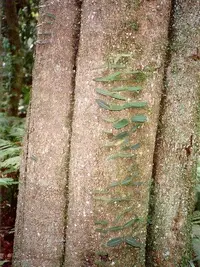
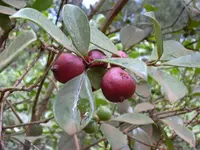
Black apple (Planchonella australis) is an evergreen tree from eastern Australia, grown both as an ornamental and for its dark, edible fruits. It forms a dense, rounded canopy with glossy green leaves and small, creamy flowers that develop into purple-black berries.
In gardens and larger containers, it grows steadily but not rapidly, and can be pruned to maintain a manageable size. This species prefers mild, frost-free climates, consistent moisture, and well-drained soil, so learning how to care for Black Apple focuses mainly on providing stable conditions.
Its toughness, tolerance of coastal conditions, and attractive foliage make it suitable for sheltered urban gardens and larger outdoor spaces in warm regions.

Care Difficulty
Moderate Care

Light Preference
Partial Shade

Water Requirements
Moderate Water

Temperature Preference
Warm Climate

Hardiness Zone
10–11

Soil Texture
Sandy, Loamy, Organic-rich

Soil pH
Acidic (5.5–6.5), Slightly acidic (6.5–7.0)

Soil Drainage
Moist but well-drained

Fertilization
Minimal (feed rarely)
Scan your plant to receive care tips personalized for your specific plant
Available on iOS and Android
This evergreen rainforest tree prefers bright, gentle light that mimics its understory habitat.
This species prefers consistently moist but not saturated soil once established in the ground.
This tree grows best in mild, frost-free climates with warm summers and gentle winters.
This coastal rainforest tree prefers moderate humidity but usually adapts to typical indoor air.
This species grows best in deep, free-draining, moderately fertile soil that stays evenly moist.
This tree can be grown in large containers for several years if managed carefully for stability and root space.
This species grows acceptably in average soil but benefits from modest, targeted feeding in cultivation, especially as a young Black Apple.
Pruning Planchonella australis is mainly done to manage size, structure, and safety rather than to stimulate flowering.
This species is usually grown in the ground, so care focuses more on transplanting young trees than on frequent repotting.
Propagation of Planchonella australis is possible but slow, so it is usually done by specialists or patient home growers.
This evergreen tree is moderately frost-tender and benefits from some winter attention in cooler climates.

Plant Health Check
Not sure what's wrong with your plant? Check your plant's health inside the app.
This species is native to subtropical and warm-temperate rainforests of eastern Australia, where it often grows as an understorey to canopy tree, contributing to long-lived rainforest structure and shade.
The fruits contain a sticky latex-like pulp that adheres to bird bills and feathers, helping birds disperse the seeds after they feed on the fleshy fruit.
The tree contains white, milky latex in its tissues, a common feature in the Sapotaceae family, which helps seal wounds and deter many herbivores due to its sticky texture.

Black apple wood is very hard and dense, and has been used in Australia for specialty applications such as tool handles and small turned objects where strength and fine finishing are important.
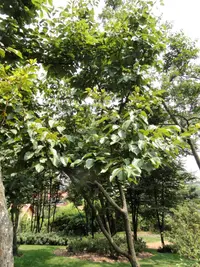
Growth is moderate. Young trees often add 20–40 cm per year, then slow with age. In good conditions it can eventually reach 8–15 m tall and several meters wide, forming a dense canopy.
Keep your plants happy and healthy with plant identification, disease detection, and easy care guidance.