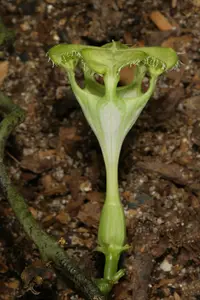
Shaggy Leaf Fig Care (Ficus villosa)

Shaggy Leaf Fig

About Shaggy Leaf Fig

Ficus villosa is a climbing fig species valued for its distinctive, velvety leaves and strong clinging habit. It is an evergreen plant that often covers trunks, branches, or supports with a dense, textured layer of foliage.

In nature, it occurs in humid tropical forests of Southeast Asia, where it grows as an epiphyte or root-climbing vine on trees and rocks. Its fuzzy leaf surface and vigorous growth give it a striking, almost mossy appearance as it matures.

This species prefers warm, stable conditions with bright, filtered light, consistent moisture, and well-drained, airy growing media. Understanding these natural conditions helps guide how to care for Ficus villosa in home or greenhouse settings.

Main Plant Requirements

Care Difficulty

Moderate Care

Light Preference

Bright Indirect Light

Water Requirements

Moderate Water

Temperature Preference

Tropical / Frost Sensitive

Hardiness Zone

11–12

Soil Texture

Loamy, Peaty, Organic-rich

Soil pH

Acidic (5.5–6.5), Slightly acidic (6.5–7.0)

Soil Drainage

Moist but well-drained

Fertilization

Light (every 4–6 weeks)

Get Personalized Care Plan

Scan your plant to receive care tips personalized for your specific plant

Available on iOS and Android

How to Care for the Shaggy Leaf Fig

This species prefers bright, indirect light similar to a bright forest understory.

  • Provide 6–8 hours of filtered light each day, such as near an east window or under light shade cloth outdoors, to support compact growth and leaf color.
  • Tolerate light morning sun but protect from direct midday or afternoon sun, which can scorch the textured leaves and cause pale, dry patches.
  • In winter or in darker rooms, move Ficus villosa closer to the light source or supplement with a grow light to avoid leggy, sparse growth.

Watering should mimic a humid, lightly moist forest floor without staying soggy.

  • Allow the top 2–3 cm of soil to dry before watering, then water thoroughly so excess drains away, avoiding standing water around the roots.
  • In warm, bright months, expect to water more often as the top layer dries faster; in cooler or low-light periods, extend intervals to prevent constant wetness.
  • Watch for yellowing, soft leaves and a sour smell as signs of overwatering, and for dull, curling, or crispy leaf edges as indicators of underwatering.

Stable warm conditions support steady growth and reduce stress.

  • Aim for 65–80°F (18–27°C) for active growth, with the warm end of this range encouraging faster development and larger leaves.
  • Avoid exposing the plant below 55°F (13°C), since chilling can cause leaf drop; it has no frost tolerance and should be protected from any freeze.
  • Tolerate short periods up to 86°F (30°C) if humidity is high and soil does not dry out completely, but shield from hot, dry drafts or heat vents that desiccate foliage.

This species prefers consistently moist air and reacts quickly to dry indoor conditions.

  • Aim for 60–80% humidity to keep leaves velvety and growth steady.
  • Tolerates brief dips to 40–50%, but prolonged dry air causes crisp leaf edges, curling, and slow growth.
  • Increase humidity with a nearby humidifier, grouping plants, or a pebble tray, and avoid placing Ficus villosa near heating or AC drafts.

This climbing fig prefers airy, organic-rich, well-draining substrate that stays lightly moist but not waterlogged.

  • Use a mix of roughly 40% peat or coco coir, 30% fine bark, and 30% perlite or pumice for structure and drainage.
  • Aim for slightly acidic to neutral pH around 6.0–7.0, which supports nutrient uptake and root health.
  • Ensure the mix feels springy, not compact; add extra perlite or bark if water lingers on the surface for more than a few seconds.
  • Avoid heavy garden soil, dense clay, or mixes with a high proportion of fine sand that stay wet and suffocate roots.

This species adapts very well to container culture and can be managed as a compact climber or trailer.

  • Choose a stable, relatively wide container so the vine can climb or trail without tipping as biomass increases on one side.
  • Use slightly deeper pots than typical houseplants to allow fine roots to spread vertically without circling densely near the surface.
  • Opt for a breathable material such as unglazed terracotta if overwatering is a risk, as it allows faster evaporation from the root zone.

This species benefits from light, consistent feeding during the warm growing season.

  • Use a balanced liquid fertilizer (around 10-10-10) diluted to 25–50% strength for Ficus villosa in active growth.
  • Apply every 4–6 weeks in spring and summer, always onto pre-watered soil to reduce root burn risk.
  • Pause feeding in late fall and winter when growth slows under cooler temperatures or lower light.
  • Organic options like fine compost or slow-release pellets can be used sparingly, mixed into the top 2–3 cm of potting mix.

Pruning helps maintain compact growth and good light penetration in the canopy.

  • Carry out structural pruning in late winter or early spring before strong new growth starts.
  • Remove dead, diseased, or crossing stems first, then thin overcrowded shoots to open the plant center.
  • Use clean, sharp scissors or bypass pruners to make angled cuts just above a node or side branch.
  • Light tip trimming during the growing season keeps Ficus villosa bushier and encourages more lateral shoots.

Container-grown plants benefit from occasional repotting to refresh substrate and manage root growth.

  • Check for roots circling the pot, emerging from drainage holes, or unexplained slow growth as cues to repot.
  • Plan repotting in spring, every 2–3 years, moving to a container only 2–5 cm wider with fresh, well-drained mix.
  • Water thoroughly 1–2 days before and after repotting to limit root stress and help soil settle around roots.
  • Keep the plant shaded from strong sun and maintain moderate moisture for 1–2 weeks after the move while it re-establishes.

This species is usually propagated from cuttings under warm, humid conditions.

  • Take semi-ripe stem cuttings in spring or early summer, 8–12 cm long, with 2–3 nodes each.
  • Remove lower leaves, optionally dip the cut end in rooting hormone, and insert into a sterile, airy mix such as perlite and peat.
  • Maintain 75–80°F, high humidity, and bright, indirect light to support root formation over several weeks.
  • For advanced growers, air-layering mature stems offers a higher success rate when expanding a Ficus villosa collection.

This tropical plant is not frost tolerant and needs protection in cool climates.

  • Keep indoor temperatures above 60°F and away from cold drafts or single-pane windows in winter.
  • Move outdoor containers indoors before nights drop below 55°F, giving bright, indirect light.
  • Water less frequently but do not allow complete dryness; growth usually slows in short-day conditions.
  • In mild outdoor climates, a light mulch over the root zone helps buffer brief cool spells without waterlogging.

Care Tips

Provide climbing support

Install a rough, moisture-retentive moss pole or cork slab so the vine can attach with its aerial roots, which encourages larger, better-textured leaves and a more natural growth habit.


Use breathable containers

Grow the plant in a tall, narrow, well-draining pot or a slotted/terracotta container to keep roots aerated and reduce the risk of chronic root rot in this moisture-loving but sensitive species.

Control internode length

If stems start stretching with long gaps between leaves, slightly increase light and pinch back the tips to promote branching and denser foliage rather than one long, sparse vine.

Monitor aerial roots

Check aerial roots regularly and lightly mist or moisten the support they are attaching to, since keeping these roots just slightly damp improves climbing stability and leaf size.

Quarantine and scout

Quarantine new plants for 2–3 weeks and use a magnifying glass to check the hairy leaves and stems for early signs of spider mites or scale, which are easier to control at the first small outbreak when caring for Ficus villosa.

Common Pests and Diseases

Spider mites

This pest thrives on the velvety undersides of the leaves, sucking sap and causing stippling, dulling, and eventual bronzing of foliage. Symptoms include fine webbing between leaves and along stems, especially in warm, dry indoor air.

Solution

Rinse foliage thoroughly with a strong but gentle stream of lukewarm water, paying special attention to the underside of the leaves, then allow the plant to dry in bright, indirect light with higher humidity. For persistent infestations, use repeated applications of insecticidal soap or a light horticultural oil at 7–10 day intervals and increase ambient humidity to discourage reinfestation.

Mealybugs

These insects often hide in the hair-covered leaf surfaces and nodes, appearing as white, cottony clusters that excrete sticky honeydew. Symptoms include distorted new growth, yellowing leaves, and sooty mold developing on the honeydew in stagnant conditions.

Solution

Remove visible insects with a cotton swab dipped in 70% isopropyl alcohol, then rinse the plant with lukewarm water to clear honeydew and mold. Follow up with targeted insecticidal soap or horticultural oil sprays, ensuring thorough coverage in leaf axils and along stems, and isolate the plant until no new insects appear for several weeks.

Scale insects

This pest appears as small, dome-shaped or flat brown bumps on stems and leaf midribs that do not rub off easily and may be partly hidden by the plant’s dense hairs. Symptoms include sticky honeydew, leaf drop, and general decline over time.

Solution

Gently scrape or wipe off individual scale with a fingernail or soft brush, then wash the plant to remove honeydew. Apply horticultural oil or insecticidal soap, repeating every 10–14 days as needed, and improve light and air movement to support recovery and reduce stress while following Ficus villosa care instructions for watering and humidity.

Leaf spot (fungal)

This disease causes small dark or water-soaked spots that slowly enlarge on the soft, hairy leaves, sometimes with yellow halos or a slightly sunken center. Symptoms include premature yellowing and shedding of affected leaves when humidity stays very high with poor air circulation.

Solution

Remove and discard affected leaves, avoid wetting the foliage when watering, and increase air movement around the plant without exposing it to cold drafts. Allow the top layer of the substrate to dry slightly between waterings, and in persistent cases apply a labeled broad-spectrum fungicide according to directions, focusing on the foliage but avoiding runoff into living spaces.

Edema

This physiological disorder occurs when roots take up more water than the hairy leaves can transpire, leading to corky, blister-like bumps or rough patches on the leaf surface. Symptoms include scattered raised lesions that do not spread like a typical infection and often appear after sudden changes in moisture or humidity.

Solution

Adjust watering so the substrate dries slightly between waterings, especially in lower light, and avoid sudden shifts from dry to very wet soil. Improve light levels and gentle airflow to support steady transpiration, and remove only the most damaged leaves, as new growth should appear normal once conditions are stabilized.

Interesting Facts

Juvenile shingling habit

Young plants grow as a shingling climber, with small, flat leaves that press closely against tree trunks or other rough surfaces to capture light efficiently in shaded rainforest understories.

Dramatic leaf dimorphism

Mature plants develop much larger, more elongated leaves with a different shape and texture than the juvenile foliage, a growth pattern known as leaf dimorphism that reflects the shift from shingling juvenile to free-climbing adult stage.

Velvety, hairy foliage

The leaves are densely covered with fine hairs that create a velvety texture and may help reduce water loss and diffuse intense light in its native lowland tropical habitats.

FAQs about Shaggy Leaf Fig

Brown leaves usually result from low humidity, underwatering, or excess fertilizer salts at the root zone. Check soil moisture, flush the pot occasionally, and increase ambient humidity to reduce crisp edges and dry patches over time.

Grow Healthy Plants with Botan Care

Keep your plants happy and healthy with plant identification, disease detection, and easy care guidance.

Botan plant care app — identify plants on mobile

Explore More Plants