Pinch For Bushiness
Pinch back soft stem tips by 1–2 nodes during active growth to keep the plant compact, increase branching, and encourage denser foliage instead of long, weak trails.

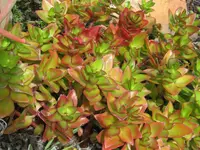
Crassula sarmentosa is a small trailing succulent from South Africa, often grown in containers, hanging baskets, or as a groundcover in warm climates. It forms cascading stems with fleshy, toothed, oval leaves that may show red edges in bright light.
This species comes from rocky slopes and coastal areas, so it is adapted to sun, drainage, and periods of dryness. It is considered an easy plant for beginners who want to care for Crassula sarmentosa, as long as it receives strong light, fast-draining soil, and protection from prolonged cold or excess moisture.

Care Difficulty
Easy Care

Light Preference
Partial Sun

Water Requirements
Low Water

Temperature Preference
Tropical / Frost Sensitive

Hardiness Zone
10–11

Soil Texture
Sandy, Loamy, Rocky

Soil pH
Slightly acidic (6.5–7.0), Neutral (7.0)

Soil Drainage
Well-drained

Fertilization
Minimal (feed rarely)
Scan your plant to receive care tips personalized for your specific plant
Available on iOS and Android
This trailing succulent prefers bright, indirect light with some direct sun for best color and compact growth.
Watering should mimic dry, bright habitats, allowing the soil to dry between thorough soakings.
This species prefers warm, frost-free conditions with mild temperature variation across the year.
This species tolerates typical indoor humidity and rarely needs special adjustments.
Crassula sarmentosa prefers a fast-draining, gritty substrate that prevents waterlogging around the roots.
This species is well suited to growing in containers due to its compact, trailing habit.
This succulent needs modest feeding to support compact, healthy growth in containers.
Thoughtful pruning helps keep Crassula sarmentosa dense, trailing, and well-shaped.
This species tolerates being slightly rootbound but benefits from periodic repotting in containers.
Crassula sarmentosa is commonly propagated from cuttings, which root reliably in warm, bright conditions.
Container-grown plants need cool, dry winter conditions indoors, as this succulent is not reliably frost hardy.

Plant Health Check
Not sure what's wrong with your plant? Check your plant's health inside the app.
This species naturally produces long, slender stolons that root at the nodes, allowing it to form loose, scrambling mats on rocky slopes and cliffs in its native southern African range.
Its small, saw-toothed leaves develop distinct reddish to pink margins in strong light or cooler temperatures, a response linked to anthocyanin pigments that help protect leaf tissues from excess solar radiation.
In the wild it often grows in shallow, stony soils and rock crevices, where good drainage and periodic drought favor its succulent growth form and help reduce competition from less drought-tolerant plants.

This species has been used in breeding to create ornamental hybrids, such as Crassula sarmentosa 'Comet', which combines its trailing habit with variegated foliage that is popular in container and hanging basket culture.
This species usually performs better outdoors in mild, frost-free climates, where light and airflow are stronger. Indoors it can grow well if near a bright window, kept dry, and turned regularly to avoid lopsided growth.
Keep your plants happy and healthy with plant identification, disease detection, and easy care guidance.