


Encourage Strong Stems
Pinch back the top 2–3 cm of young, soft shoots once in late spring to encourage branching and sturdier flowering stems that are less likely to flop in wind or rain.

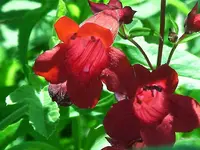
Beardlip penstemon (Penstemon barbatus) is a perennial flowering plant known for its tall spikes of tubular red, pink, or coral blooms. It has narrow, lance-shaped leaves and a clumping habit, giving a vertical accent in mixed borders or wildflower plantings.
This species is native to the southwestern United States and Mexico, where it grows in open, often rocky habitats. It is typically drought-tolerant once established and prefers sun, well-drained soil, and relatively low to moderate moisture.
Beardlip penstemon is valued for its long flowering season and strong appeal to hummingbirds. Its resilience in lean soils and dry conditions makes it a suitable choice for gardeners learning how to care for Beardlip penstemon with minimal intervention.

Care Difficulty
Easy Care

Light Preference
Full Sun

Water Requirements
Low Water

Temperature Preference
Cold Hardy

Hardiness Zone
4–9

Soil Texture
Sandy, Loamy, Rocky

Soil pH
Acidic (5.5–6.5), Slightly acidic (6.5–7.0)

Soil Drainage
Well-drained

Fertilization
Minimal (feed rarely)
Scan your plant to receive care tips personalized for your specific plant
Available on iOS and Android
Penstemon barbatus thrives in bright, direct sun typical of open, dry habitats.
This species prefers dry to moderately moist soil and is sensitive to sitting in water.
This plant is adapted to continental climates with cold winters and warm to hot summers.
Humidity is not a major factor for Penstemon barbatus, which is adapted to dry climates.
Penstemon barbatus prefers lean, well-drained soil that does not stay wet after rain or irrigation.
This species can be grown in containers if the pot and medium are managed to stay free-draining.
Penstemon barbatus prefers lean soils and needs only light, targeted feeding for best flowering.
Pruning Penstemon barbatus is useful for maintaining a tidy shape and encouraging repeat flowering.
This species is most often grown in garden beds, with transplanting more common than routine repotting.
Penstemon barbatus is commonly propagated from seed or softwood cuttings under the right seasonal conditions.
This species is generally cold hardy in much of the US and needs only modest winter care in the ground.

Plant Health Check
Not sure what's wrong with your plant? Check your plant's health inside the app.
The tubular, bright red corollas of this species are shaped and colored to match hummingbird vision and bill structure, making it a classic North American example of bird-pollinated floral evolution.
In its native habitats of the Rocky Mountains and Southwest, this species often appears or increases after fire or soil disturbance, taking advantage of open, sunny ground where competition is reduced.
Penstemon barbatus is naturally found on slopes and canyons from roughly 1,500–3,000 m in elevation, which explains its tolerance of strong sun, cool nights, and relatively low-fertility soils.

Penstemon barbatus has been widely used by plant breeders as a parent in ornamental hybrids because its red, pendulous flower spikes and long blooming season cross relatively easily with other Penstemon species, expanding the range of colors and garden forms available.
This species is highly attractive to hummingbirds and also visited by bees. The tubular red flowers provide nectar, especially in late spring and summer. Planting several together increases visibility and creates a reliable food source for pollinators.
Keep your plants happy and healthy with plant identification, disease detection, and easy care guidance.

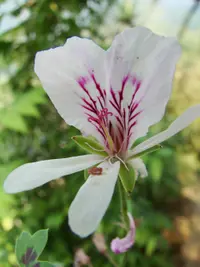
Regal geranium
Pelargonium grandiflorum
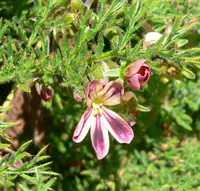
Night-Scented Pelargonium
Pelargonium triste
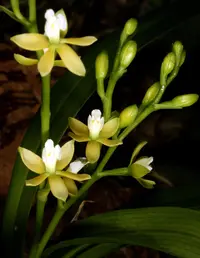
Prosthechea ochracea
Prosthechea ochracea
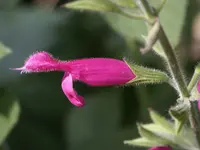
Fruit-scented Sage
Salvia dorisiana
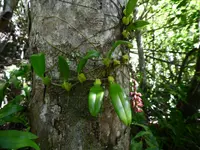
Bulbophyllum incurvum
Bulbophyllum incurvum
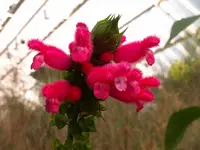
Bolivian hummingbird sage
Salvia oxyphora
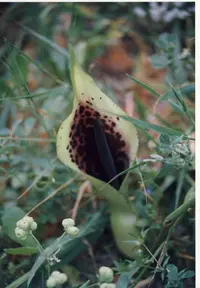
Dioscorides Arum
Arum dioscoridis
Aphelandra sinclairiana
Aphelandra sinclairiana